Boštjan Čadež aka FŠK explains it like this:
Vodolivka is a low-cost automated system for watering up to 16 plants, each on its own schedule. It’s my second attempt at solving this problem.
The usual way to build something like this is with one solenoid valve per output. They work, but they get expensive at 16 channels, they need more electronics to drive them, and in my experience, they don’t always close reliably, which is a real problem when a leak means an overwatered plant or an empty tank.
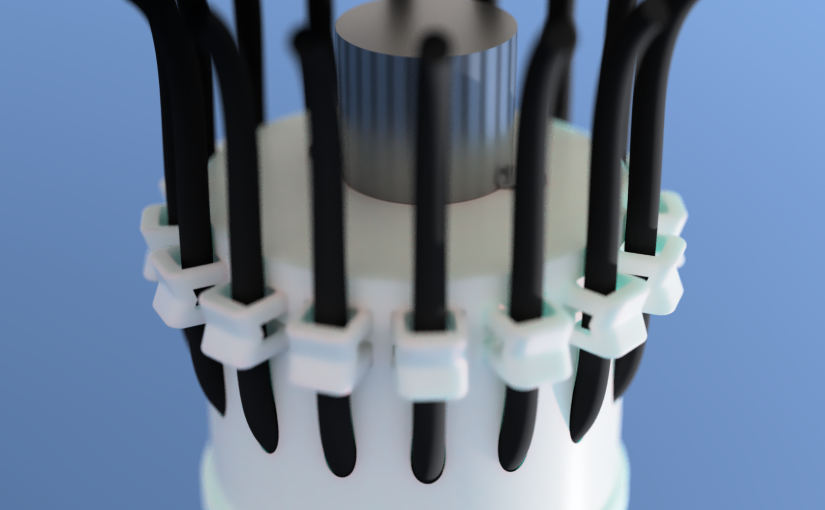
So Vodolivka tries a different approach. The 16 lines run through 3D-printed pinch valves arranged in a circle, each squeezed closed by default. In the middle sits a stepper motor with an arm that rotates to point at any one of them, pushing that valve open while the rest stay shut. One motor operates all sixteen valves instead of sixteen solenoids.
The rest is straightforward: an ESP32 for the brains, a DC pump to move the water, and a flow sensor that confirms water is actually moving, so the system can tell if the tank is empty or the pump has failed rather than quietly watering nothing. Everything is configured through a web interface served from the ESP32 itself, where you set the amount and interval for each output. No app, no cloud.
It’s still very much a plan rather than a proven system. The whole point is to find out whether one cheap actuator and some clever geometry can do the job more reliably than a pile of solenoids. That’s the experiment. And if it works, I won’t have to bother my friends to water my plants next year. ;)