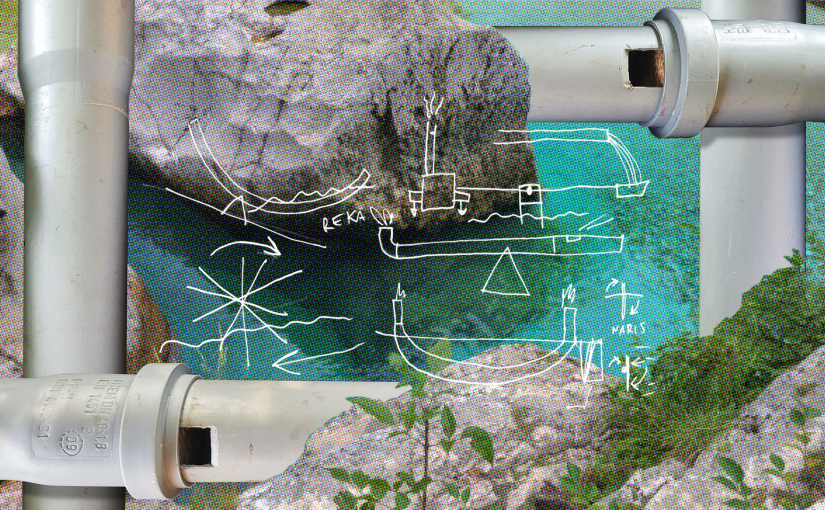
Chirping Machines by So Kanno

I love birds. Whenever I’m walking outside and hear birdsong, I cock my ear to listen. It’s been a few years since I started paying attention to their voices, and little by little I’ve learned to tell species apart by sound—and in doing so, to feel the passing of the seasons.

I’m fond of the voices of small creatures. The owner of an enchanting chirp is hard to spot. A crow’s call isn’t all that appealing and the bird itself is easy to find, but a nightingale that sings beautifully is much harder to pin down.

Other animals whose calls I enjoy are frogs and crickets, and they, too, are difficult to locate.

Since ancient times, instruments that imitate these animal sounds have existed—what we now call folk instruments. Long before instruments could change pitch precisely or play harmonies, such tools were used to communicate with animals or to express a bond with them in rituals and festivals.

Why do the animals whose sounds I love make those sounds? The Japanese researcher Toshitaka Suzuki discovered linguistic structure in the calls of the Japanese tit: they carry on conversations with grammar. Frog choruses are thought to mark territory, yet in field recordings of Australian frogs captured by the artist Felix Hess, two frogs can be heard skillfully adjusting their timing so their calls don’t overlap—fascinating to hear. For them it may be a territorial display, but to me it sounds like experimental music generating intricate rhythms.

It’s only natural that animals respond to recordings of their own calls, provided the frequencies fall within their hearing range; playback is routine in ethology. But do they ever react to the sounds of instruments that only resemble their calls to human ears?

At the very least, an AI birdsong detector didn’t respond to the sound of a bird-call whistle. I wonder if animals in the mountains would react somehow. What is at the heart of their acoustic communication—frequency, timing? Within the same species? Between different species? Does the predator–prey relationship change things?

I’m neither a bird nor a frog, so I can’t know what mood they’re in or what meaning their sounds carry. Yet as I imagine it, I design sound-making robots and devise algorithms. The robots are programmed to produce sounds in a way that, in my own way, lets them “become” those animals.

Text and photo: So Kanno

Get Ready to Amplify: Dive into DIY Electronics with Piezos!

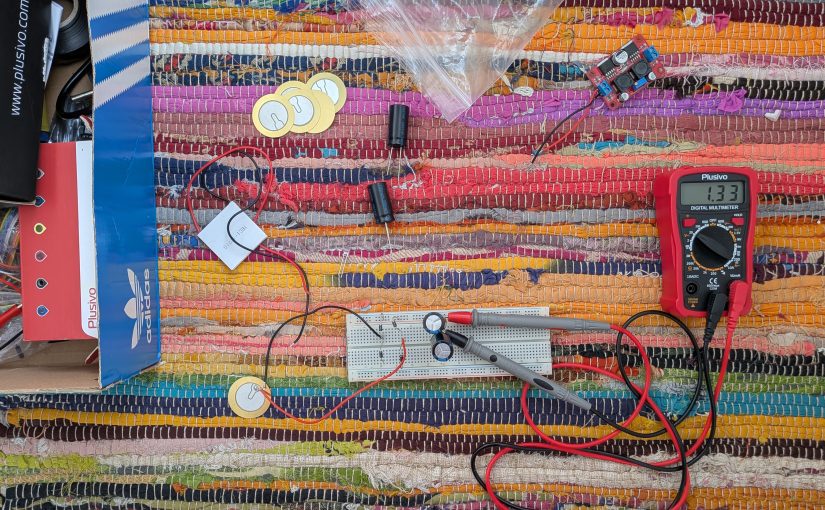
Join Alevtina Senik for a beginner-friendly DIY electronics workshop exploring the creative possibilities of piezo elements. Participants will build a small preamp on an etched PCB, based on a Ralf Schreiber’s schematics. Along the way, they’ll delve into the basics of the piezoelectric effec its function and potential in artistic practice, while learning (or refreshing) soldering skills and experimenting with various capacitor values to hear how they affect the sound.

Everyone will leave with a fully functioning preamp board, ready for further sonic exploration, recording, or circuit-bending adventures. A great first step into the vast, swampy world of analog sound!

Alevtina Senik is a media artist currently based in Bremen, Germany. With a background in liberal arts and sciences, their practice is rooted in anthropological interests and expands through a growing engagement with technological systems, DIY practices, and material exploration (such as ceramics).

“Sonifying frequencies” Vol. 2

The open-source electromagnetic spectrum listening device workshop is happening again!

Elektrosluch Mini City is a DIY kit of Elektrosluch, an open-source device for electromagnetic listening. It allows one to discover sonic worlds of electromagnetic fields, surrounding our every step. Just plug your headphones & explore. Concept & electronics were developed by Jonáš Gruska.

Elektrosluch Mini kit is easy to assemble ans it’s a very good start to pick up your basic soldering skills and start reading a schematic. Bernhard Rasinger will guide you through the workshop. Be sure to bring headphones with a TRS connector!

The Sound of Rocks: Speculating on Future Geologies

Martina M. Yáñez’s project is an ongoing research endeavor, diving deep into the connections between art, our planet, and the more-than-human elements that shape our world. In her work, she explores the intricate links between sound, rocks, time, and memory.

Central to the project is a speculation: imagining a rock created not by nature, but by artificial means. How would such a “geological dislocation” a rock fundamentally out of place in terms of its origin force us to rethink history and nature itself?

For Martina, sound plays a crucial role. She sees it as a way to both speculatively translate the materiality of rocks and to uncover their hidden histories, delving into the intricate connections binding sound, geological formations, the passage of time, and collective memory.

During her time at the camp, a geological-inspired study will take center stage. She plans to scan the shape and sound of diverse rocks, carefully chosen from different geological eras and formations. These scans won’t just be raw data; they’ll merge into what Martina calls an archive of future geologies. Essentially, she’s proposing the creation of a multimodal archive of fictional sedimentation, a speculative exercise where alternative pasts and geological futures blend together, inviting us to imagine new narratives for our planet.

Vytautas Bikauskas: WEBPIT 3.0 to 4.0

The WEBPIT project by Vytautas Bikauskas explores the creative possibilities of wireless (WLAN) and portable networks that operate off-grid. Its latest version, WEBPIT 3.0, is a portable system featuring a crank generator, a printed circuit board (PCB), and a microcontroller. This system creates a WLAN and hosts a local server, allowing users to connect and read HTML poetry for as long as someone is manually cranking the generator.

When showing the work to others, Vytautas noticed that users frequently broke the generator. This experience (while repairing) prompted him to reflect on the importance of designing with failure and maintenance in mind. Therefore, he plans to run a workshop focused on making repair kit prototypes and broadening the discussion on the significance and necessity of repair practices in media art. He also aims to draw attention to the sometimes neglected questions of power access and consumption, especially for on-grid media works. Finally, he intends to further experiment with interactive poetry designed for minimal resources and implementable on an ESP32 microcontroller.

More-than-human entanglements

How can designers and artists meaningfully engage with more-than-human contexts? How do we avoid superficial conclusions and instead uncover situated relationships? How might we navigate the intricate entanglements of humans, non-human organisms, materials, technologies, and other phenomena without getting lost?

Tamara Lašič Jurković is an interdisciplinary designer, researcher, and teaching assistant. She works at the intersection of design theory, regeneration, and posthumanist perspectives. At PIFcamp, she will collaborate with Lovro Vehovar, a biologist, herbalist, and certified permaculture planner, to further develop a method for entanglement mapping. This method helps identify human and non-human entities within a specific context, analyze their interrelations, and visualize them. Such detailed mapping enables the discovery of challenges and opportunities for design and artistic interventions that would be overlooked by conventional design research methods.

Building on Arturo Escobar’s concept of relationality, Bruno Latour’s Actor-network theory and the principles of permaculture, Tamara and Lovro will explore the surroundings of PIFcamp, experiment with different approaches for investigating the more-than-human interrelations and hopefully gather some inspiring insights for future projects!

Meteorite: A DIY Tool for Sound and IoT by Stefano Manconi

Meteorite is a DIY prototype designed for exploring the possibilities of networks and IoT applications within sound, music, and new media art practices.

The prototype is based around the ESP8266, an inexpensive SoC (Systen-on-a-Chip) with built-in WiFi which costs about the price of a coffee and can be programmed through the friendly Arduino environment. By collecting codes, schematics and well-documented examples, the goal is to design a device which can be used by artists, students and makers to develop their creations.

During PIFcamp, Stefano will focus on refining the user interface and experimenting with applications involving sensors and environmental data. The project’s outcomes will also contribute to his Master’s degree.

Project by Stefano Manconi
Photo by Chiara Carredda

Dance, body expression and live coding

Dancer and choreographer Jorge Guevara, driven by a desire to bridge the gap between coding (tech) and embodied practices (dance), will introduce his collaborative project utilizing Hydra j.s., a live-coding platform for visual art, in conjunction with dance and body expression. He has been crafting this fusion together with Naoto Hieda. The unique setting of PIFcamp provides an ideal space for them to explore the interplay of code and corporeality, seeking connections with nature and collaborating with fellow enthusiasts. During the camp, they will use the opportunity to experiment with a new workshop setup they are preparing for their upcoming performance.

The workshop is based on a twofold approach:

  1. Hydra Introduction (1-2 hours): Dive into coding with Hydra, creating abstract images and “body filters” using our user-friendly web interface. No coding experience required.
  2. Embodied Practice (1-2 hours): Explore embodying objects and connecting with nature through performative practices. We may bring in laptops too, and try the code from the previous workshop, which will happen organically.

These sessions offer a seamless blend of technical (live coding) and body practices, fostering a deeper connection with ourselves and the natural world.

The workshop will wrap up with a feedback session, offering a chance for reflection and sharing experiences. The input of the participants will be invaluable for their coding-corporeal practice, which includes the performance at Kino Šiška in Ljubljana on 30 August 2024.

Photo: Urška Boljkovac/Kino Šiška

With support of Flanders.

Rainy day synths

Do you like synthesizers but don’t want to compose your own music? And do you also live in a rainy country? Jessica Stanley is a researcher working with e-textiles and has a solution for you: a raincoat that generates sound when raindrops fall on it. At PIFcamp, she will experiment with different flexible and textile moisture sensor designs, using a mix of hydrophobic (waterproof) and hydrophilic (absolutely not waterproof) fabrics to move water through sensors and create interesting sounds. These will then be connected to simple analog synthesizer circuits and integrated into a raincoat to make a garment that creates its own soundtrack during a walk in the rain.

Jessica is currently a postdoctoral researcher based in the UK and works on medical research projects combining textiles and electronics. However, she is also interested in how textiles can make interesting interfaces for electronic devices and in projects that make electronics accessible to a wider audience. This will be her first time at PIFcamp, and she is keen to collaborate with others who have more experience on the audio electronics side of things, or to share her e-textile knowledge with others.

In search of deep time 

Every time we look into the starry sky, we are looking into the past. The further we go in observing space, the further back in time we travel. Astronomical observations of deep time are based on the spectroscopy of very distant objects that emit or absorb visible light, such as stars, galaxies, and black holes. With microwave emissions, cosmic rays, and gamma-ray bursts from supernovas and other transient objects, we can also trace distant times, but these emissions are better detected from outer space.

In her current research project, which started during the Astronomia residency in the mountains of Portugal and at the Haute Provence Observatory in France, artist Katarina Petrović is exploring material and immaterial ways of journeying into deep cosmic times. During PIF, she will look for traces of deep time detectable and collectable on the ground, break sunlight to observe the solar spectral absorptions in real time, and attempt to record cosmic rays using CCD image sensors. She will use a small magnetic loop antenna to search for and listen to the cosmic radio noise coming from the center of the Milky Way, and look for stardust or micrometeors – very small meteor particles left over from larger pieces burning up in Earth’s atmosphere.

Katarina Petrović (NL/RS) is an artist and researcher working with language, computation and various physical phenomena including sound, vacuum, light and radio. She creates systems, procedural works that are presented as modular installations in an online and offline space, using media such as generative text, poetry, sound, software and performance. She holds a MMus degree from ArtScience Interfaculty, Royal Conservatoire and Royal Academy of Arts, The Hague and an MFA from the Academy of Fine Arts, Belgrade. Katarina is an affiliated researcher at the trans-disciplinary research Centre Leo Apostel, Vrije Universiteit in Brussels and a guest lecturer at the postgraduate School of Thinking, VUB and ArtScience Interfaculty in The Hague. She has been the managing director of Trixie, an artist run space in the Hague since 2021 and is co-initiator of ArtScience Forum platofrm and Femkanje – art radio in Belgrade.