The Energy Scavenger Lab

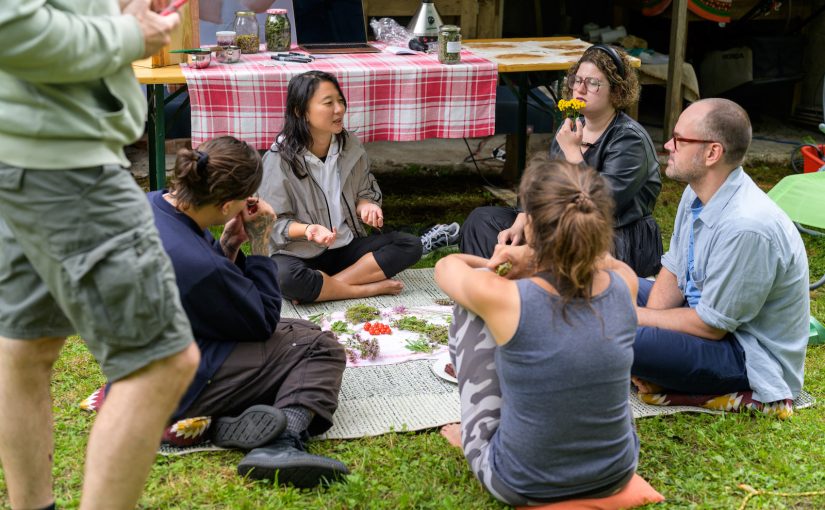
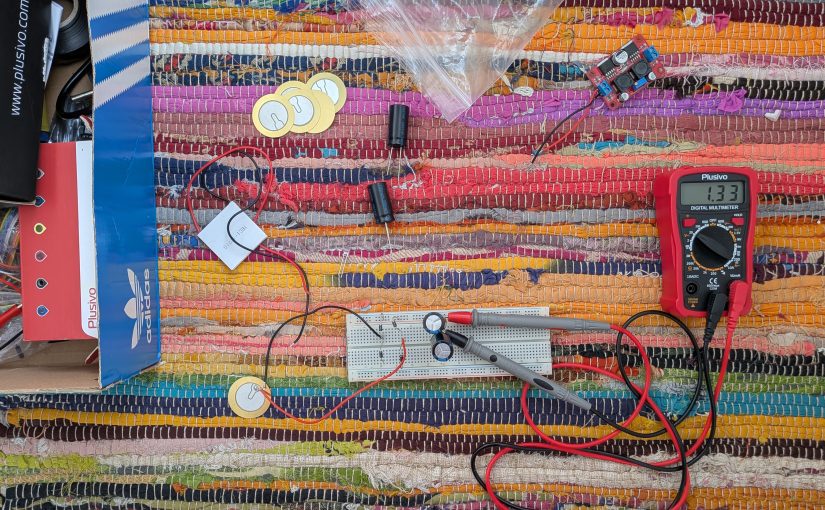
The Energy Scavenger Lab is a hands-on workshop that invites participants to hunt for electricity hidden in everyday environments. Through a series of practical experiments, attendees explore piezoelectric, solar, thermoelectric (Peltier) and radio-frequency energy harvesting techniques, building simple prototypes and testing how much energy can be captured from movement, heat, light and ambient electromagnetic waves.

While the workshop involves some soldering and working with electrical components, no prior experience is required. Participants are encouraged to bring patience, curiosity, and a careful approach to handling hot tools and electronics.

The workshop is led by Lorena Cocora, an artist and programmer with a formal background in computer science and media arts. Alongside her artistic practice, Cocora works as a cultural worker and technical consultant at Marginal, operating at the intersection of art, science, and technology. Her artistic research engages with themes such as permacomputing, eco-feelings, climate and environmental injustice and the impacts of capitalism. The workshop is part of her research conducted within The Urban Green Blueprint, a project financed by AFCN.
Inner Textures — Weaving Sonic Experiences

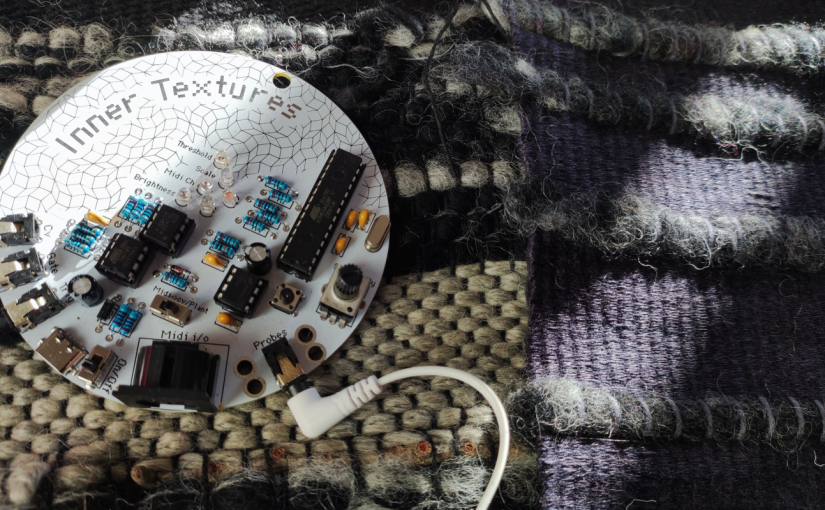
Inspired by the poetics of plants and fungi interacting with electricity, Inner Textures explores the threshold between the tactile and the sonic, the material and the immaterial.

In this workshop, you’ll learn to weave on a laser-cut back-strap loom, combining plant-based and animal yarns with conductive fibers to create textiles that respond to touch. Guided by Zoe Romano‘s research at the intersection of craft and interactive technologies, you’ll weave your own piece and discover how micro-fluctuations in conductance can be translated into sound, using only a digital synth on a mobile phone or an analog synth and a speaker. No computers. No screens. Just hands, fiberss and the emergence of new sounds.

The sonic dimension becomes a powerful medium to engage on a deeper, more visceral level, sound resonates with the inner, often unexplored territories of human experience, evoking emotions and responses that visual stimuli alone cannot reach. Your woven piece becomes an instrument, a conversation between maker, material and sound.

The workshops consists of introduction to OBOT collective’s artistic research, a hands-on weaving session, experimentation with conductive fibers, and the jamming moment when textiles interact with synths.

Inner Textures is a project by Zoe Romano, a craftivist and artist whose practices interweave open design, intersectional technologies and social innovation. She studied philosophy at the University of Milan and balances conceptual thinking with concrete experimentation, exploring the poetic and political aspects of making.

Serial Drama Lab

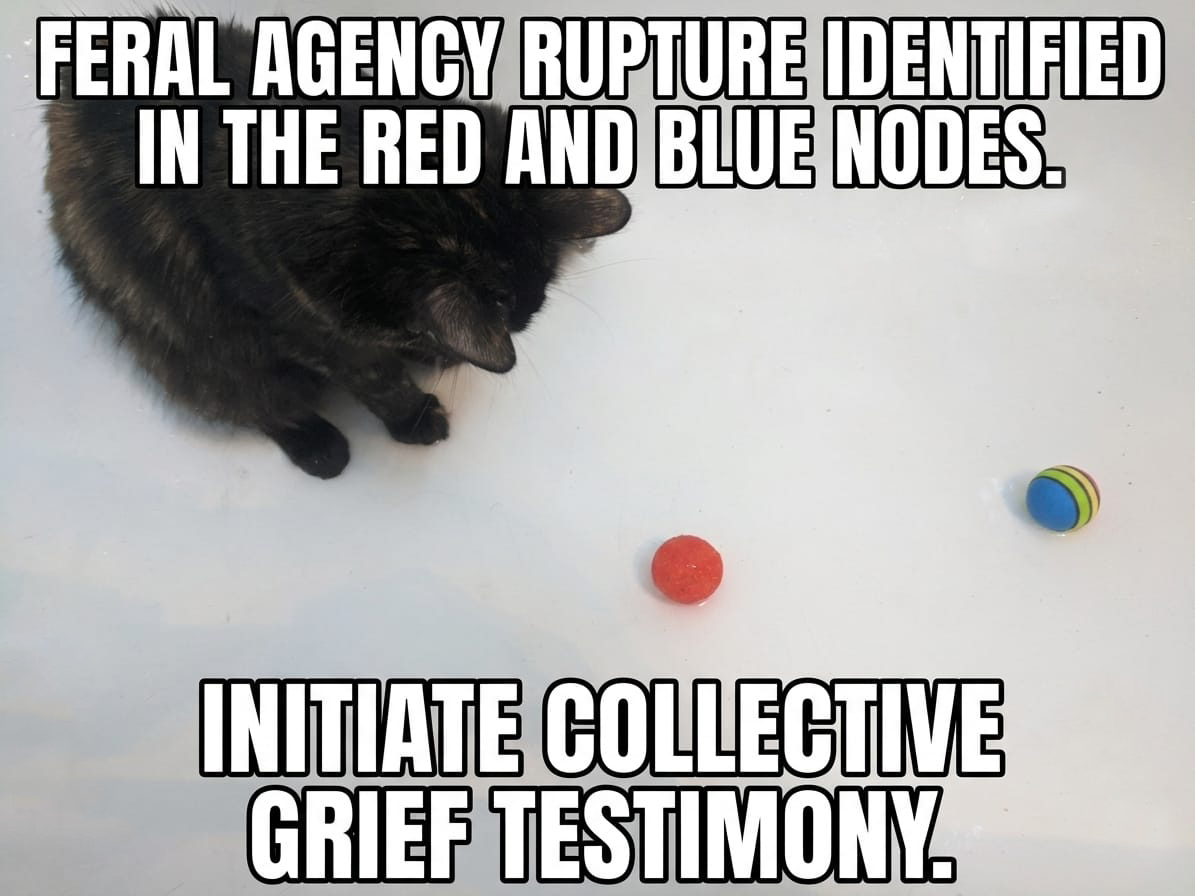
Serial Drama Lab by Sabina Suru operates at a crossover between a collective therapy session and a qualitative research focus group. It is designed to map the psychological and artistic coping mechanisms we deploy when confronted with technological failure. Rather than treating technical breakdowns as mere engineering bugs to be resolved, this lab investigates the feraldynamics of technology—the moments when hardware, code, or chemical mediums slip from our control and exhibit an autonomous, unpredictable agency.

When our systems deviate from their prescribed functions, they expose us to our profound human lack of understanding regarding non-human agency. This rupture transforms the studio or laboratory into a volatile terrain, shifting instantly from a space of deep existential despair to one of radical, albeit accidental most times, innovation. By gathering a group of 12+ practitioners (live coders, synth builders, media artists, all us geeks at PIFcamp), Serial Drama Lab functions as a safe space, if indeed such a thing exists, to externalize the frustration, grief, and obsessive behaviors tied to these broken systems. We will share experiences, thoughts and pain, and analyze how artists negotiate with the untamed, non-human behaviors of their materials, translating moments of technical crisis into a formalized technological failure taxonomical research.

A Freak in the Creek!

A Freak in the Creek by Aleksander Tendjer is a multisensory installation exploring human connection with water through sound and touch. Set around a living river environment, the work invites participants to experience the river physically — through its movements, textures, rhythms, and vibrations.

Using submerged listening devices and wearable tactile elements, the installation transforms underwater river sounds into gentle sensations on the body. As visitors sit or stand beside the water, subtle pulses across the skin create an experience that feels both meditative and uncanny.

By translating environmental sound into touch, A Freak in the Creek creates an immersive space for deep listening and sensory connection with the natural world.

Self Defense by Karolina Żyniewicz

The Self Defense project by Karolina Żyniewicz is inspired by Noah Whiteman’s book Most Delicious Poison: The Story of Nature’s Toxins—From Spices to Vices (as well as other similar publications), which demonstrates how many organisms develop defensive strategies that can be adapted by humans as a broadly understood form of self-defense.
In the face of contemporary global threats, Karolina sees an urgent need to engage in dialogue about defensive practices—both physical and psychological—grounded in knowledge of nature.
Such knowledge, like any other, entails ethical responsibility. As Paracelsus observed: the dose makes the poison.
She is interested in how plants considered poisonous use toxins within their life cycles and interspecies relationships, and how these toxins may be used—or misused—by humans.
Her interests focus on the thresholds and doses that mark the boundary between therapeutic potential and danger, where a plant substance shifts from a protective agent to a deadly tool.

The Self Defense project develops simultaneously on several levels:
1. Work with source materials and consultations with botanists, phytosociologists, and chemists.
2. Workshop-based activities that symbolically refer to the folk tradition of knowledge transmission in rural communities—knowledge once held by our grandmothers and great-grandmothers about the power of plants and other organisms—incorporating embroidery as a craft of quiet resistance (supported by the recollections of women in shelters during wartime).
3. The creation of a performative installation of resistance. This part is inspired by a multisensory experience in a shelter in the town of Kranj, Slovenia, and by a story heard there about how women, through sewing and embroidery, fought fear and tried to maintain a semblance of normality for their children while remaining in the shelter, experiencing air raids and bombings with their entire bodies. Creating the installation requires the use of sounds from the shelter as well as vibrations. An essential element of the installation is also an alarm instrument based on measuring threshold doses of a given plant-derived substance (dose per kilogram of body weight). The first experiments with solutions intended for use in the installation took place during the AreHolland residency in Enschede.

Project is supported by the Polish Ministry of Culture and National Heritage.

PIFresidency: Flavours of transformation

This summer, we’re excited to welcome Austrian artist and food experience designer Fransisca Tan to PIFresidency. During her stay, she will lead a series of workshops exploring the intersections of food, art, and identity. Rooted in both personal and collective experience, the series treats food not only as sustenance but as a medium of artistic expression.

The residency will focus on community-oriented food practices, drawing connections between the rituals of food preparation and the creative process. Activities will unfold through field explorations, intimate research sessions, hands-on workshops, and will culminate in a final presentation, inviting participants to reflect on food not just as sustenance, but as a material for making, a metaphor for change, and a shared cultural language. During her residency several experimental workshops are planned in the degraded landscapes of Krater, a creative laboratory in a construction pit in Ljubljana, and during PIFcamp, in the pristine nature of upper Soča valley.

First in the series of workshops will happen on Friday, 25th July, 5PM @Krater, Ljubljana
So, If you’re a PIFcamper arriving on Friday in Ljubljana or passing through that day, join us for a session with Francisca! You can let us know by writing at: delavnice@projekt-atol.si

Link to the event: Food & Childhood: How to explore the spring of life through food?

Second Session – Monday, 28th July @PIFcamp, Soča
The series of workshops will continue at PIFcamp with a sensory introduction session: Sensory meditation with breakfast items – a gentle start of the day and a deep dive into taste, memory, and presence.

Later in August, the series returns to Ljubljana for more workshops open to all – stay tuned and folow the website here: Event series: Flavours of transformation

Sinfonía biótica: Inter-species creative ecosystems by Fernando Fernández

Sinfonía Biótica is an inter-species creative ecosystem. An investigation into the physical and electromagnetic bodies of other organisms, plants and fungi. A network of sensors connected to a database that monitors environmental data and its relationship with the vital signs of organisms.

An open community of people interested in learning more about other forms of life and in developing artistic projects with this information with the aim of raising awareness about the complexity and importance of respecting and caring for these organisms.
 
All this information feeds into Sinfonía biótica VR, a virtual reality experience in which human beings and non-animal organisms -such as plants and fungi- collaborate in the creation of an interactive audiovisual piece.

Each of these organisms within the symphony, based on the data generated by their electrical impulses, movements and sounds, will interpret a part of the bio data sound composition. The movements and interactions of the performer will be added to the unique and unrepeatable collaborative piece as another instrument.

Sinfonía biótica is a project based on multiple types of information collected from different living beings. On the one hand, we record the physical bodies of the tree and its environment using photogrammetry 
techniques and radiance fields. On the other hand, we collect data from the electrical impulses of the plants and soon also from their environment (temperature, humidity, electroconductivity). We treat this data in a way that allows us to represent both the physical appearance and part of their inner workings to create the digital personality of each one of them.

PHYSICAL BODIES
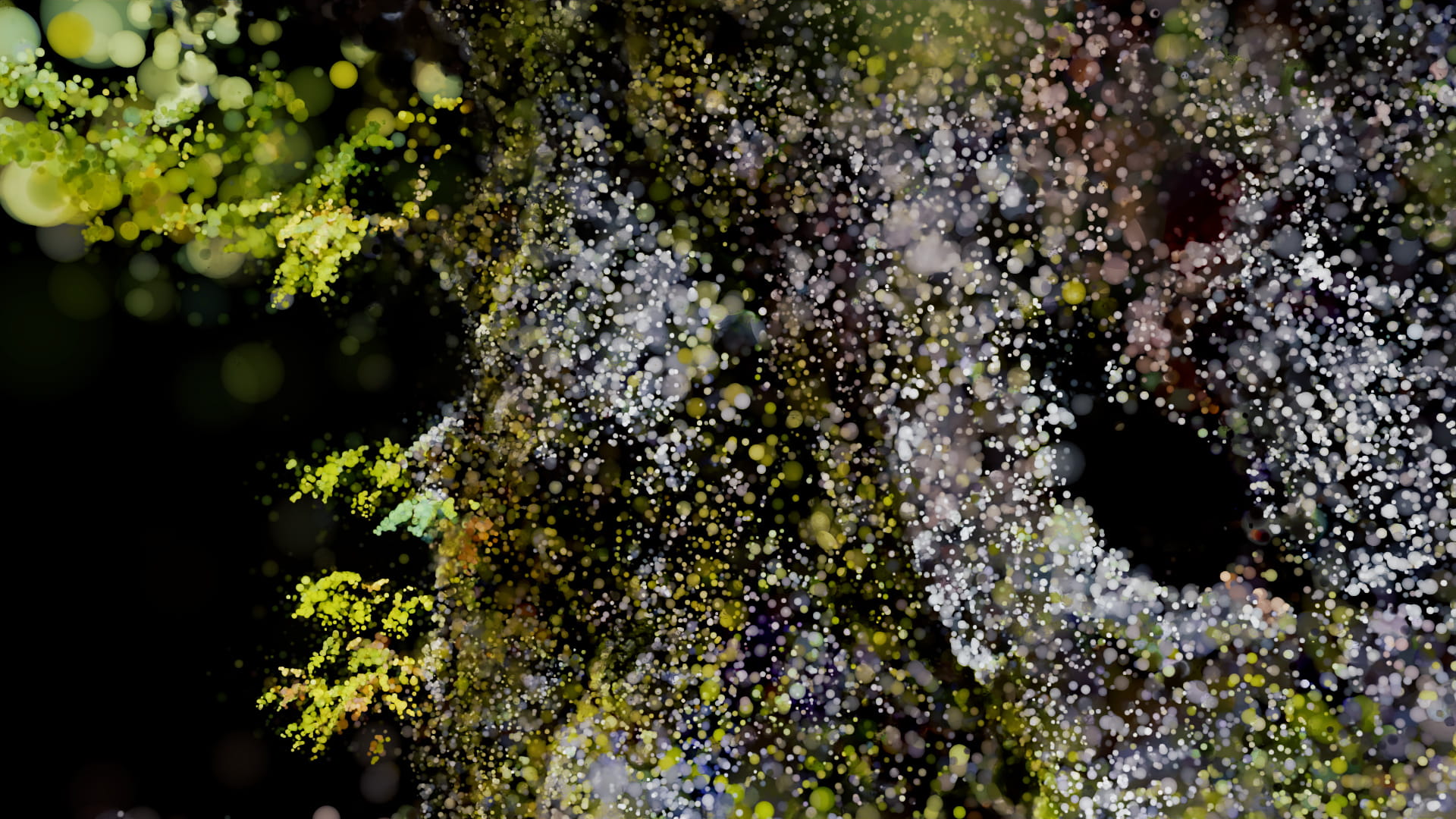
On one hand, we digitise the physical body of organisms using photogrammetry and Gaussian splatting techniques. After processing and cleaning, we can use these point clouds in Blender, Unreal Engine with the LumaAI plugin or TouchDesigner.

ELECTRICAL DATA FROM PLANTS
Biodata – Symbioware
It is an open-source hardware technological device, designed by Sam Cusumano, from Electricity for Progress, based on Arduino ESP-32 that allows us to amplify the electrical signals of living beings.
By connecting its electrodes to plants or fungi, we can receive fluctuations in their electrical impulses and convert them into sounds, projections, changes in lights, etc.

How does it work?
– Small changes in electrical conductivity are measured between electrodes and fed into a programmable microcontroller.
– The changes are detected by calculations of means and standard deviations that light up LEDs and produce MIDI notes and control changes.
– The circuit used to detect biological galvanic conductance is based on a 555 timer configured as an astable multivibrator, similar to a simple lie detector.

The exploration and practice of Biodata Sonification can allow a student, musician, scientist or florist to listen to the secret life of plants, and understand how their tools work!

More information:
https://sinfoniabiotica.xyz
https://molinolab.org
https:/b1tdreamer.xyz

FIREFLY

Matjaž Pogačnik and Jakob Lavrič are developing a project that explores the organization of autonomous, self-sustaining systems. The work is inspired by firefly synchronization, a natural phenomenon in which fireflies coordinate their light pulses, and aims to recreate this behavior using simple electronic units.

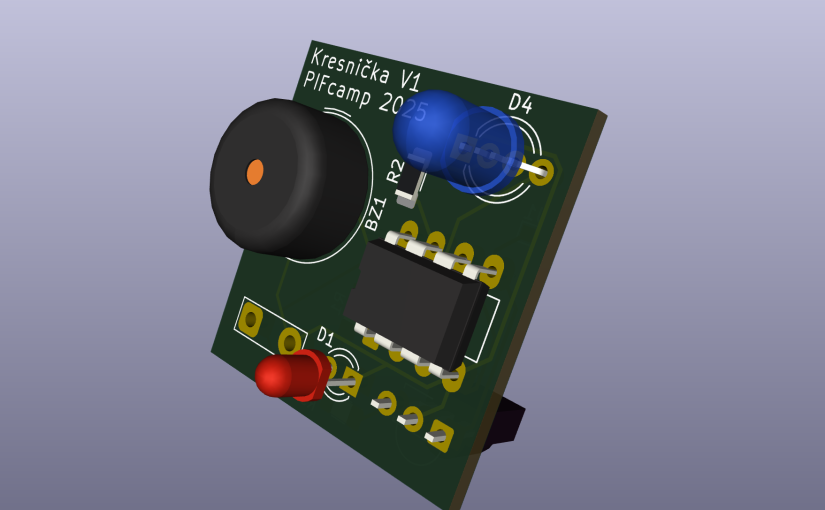
The project involves the design of artificial “fireflies”, a small electronic devices equipped with a light source, internal timer, speaker, and an infrared (IR) communication interface. Each unit can detect signals from nearby fireflies and respond by adjusting its own behavior.

The fireflies interact with one another and are capable of complete synchronization. At the same time, they perform mutual data transmission, which can be observed, heard, and configured. This allows real-time insight into how the system self-organizes: how signals propagate, how synchronization emerges, and how information flows through the network.

References:
Mirollo, R. E., & Strogatz, S. H. (1990). Synchronization of Pulse-Coupled Biological Oscillators. SIAM Journal on Applied Mathematics, 50(6), 1645-1662. Synchronization of Pulse-Coupled Biological Oscillators Renato E. Mirollo; Steven H. Strogatz SIAM Journal on Applied Mathematic

Lewis, S. M., & Cratsley, C. K. (2008). Flash Signal Evolution, Mate Choice, and Predation in Fireflies. Annual Review of Entomology, 53, 293-321. Access PDF via Sci-Hub

Glitching images through pixel sorting

During PIFcamp, Simon Goričar will continue experimenting in the field of pixel sorting, a set of techniques for creating glitchy images (more generally known as glitch art). His early explorations have shown intriguing seeds of promise. He wishes to build improved tools and explore pixel sorting methods, both as a way of obtaining even more interesting results, as well as a way of removing dependence on proprietary tools.

The project has several goals:
– to discover and document various ways of pixel sorting that more commonly give pleasant and good results,
– to build a Rust library for creative image effects using pixel sorting, which will be eventually open-sourced,
– to capture a wide array of source material, focused mostly on nature and structures around PIFcamp, and
– to put to the test alternative ways of post-processing and combining pixel sorting outputs using open-source image editors.

Simon Goričar is primarily a software engineer, but also an aspiring musician and, more recently, a music live-coder who has appeared a few times at local from-scratch sessions in Ljubljana this year. With a passion for open source, open data, and “software-for-good” as a means of disentangling oneself from tech giants, he hopes to build software as a means of improving quality of life.

When not actively engaged in his project or hiking around with a camera, he will undoubtedly be inquisitively wandering around PIFcamp and trying to learn as much as possible. Hopefully some evening live coding jams will calm his spirit!

Embodied Synthesisers by Diana Alina Serbanescu

I often think with the body—sometimes alone, sometimes with others—trying to sense where movement begins and where it becomes something else. A gesture, a sound, a signal. Sometimes I wonder: what does it mean to feel a sound before you hear it?

At this year’s PIFcamp, Diana will be continuing a thread from last year’s workshop Negotiation of Agency, Points of Contact, where she explored how bodies negotiate control and connection. This year, that exploration will shift into sound.

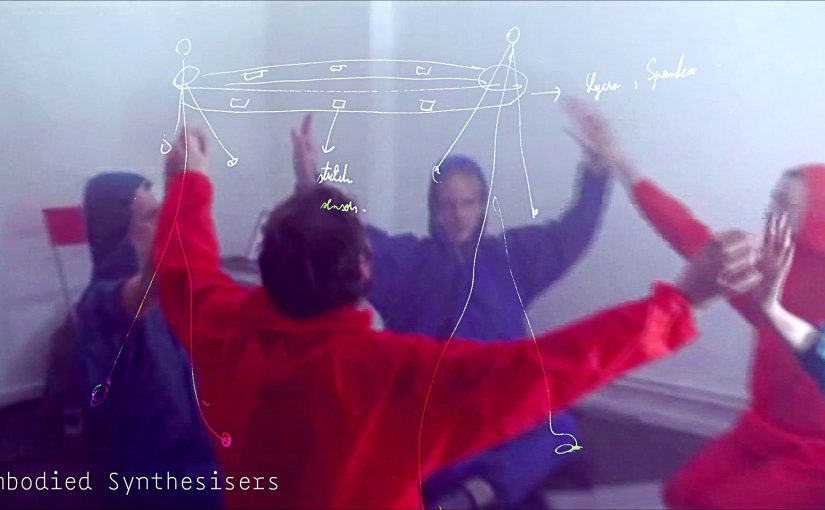
Her focus will be on what she calls embodied synthesizers: simple, wearable sound-making devices designed for the body or for two performers to share. Her goal isn’t to create precise instruments, but to open up new ways of listening to movement – and new ways of moving through sound.

She will be experimenting with different ways bodies might generate sound. What happens when a stretch of fabric triggers a frequency shift? Or when a brush of skin closes a conductive loop, and a tone responds to touch? Can sound arise from the space between people, from the tension or timing of a gesture, rather than from a knob on the machine?

Some of the configurations are very simple: an accelerometer worn on the wrist, a soft sensor stitched into a stretch of fabric, imagined as a connective tissue between two bodies, a tiny speaker buzzing against the ribs. The idea isn’t to build perfect instruments, but to create fragile, relational systems – ones that only make sense when moved through, together.

Previous experimentation in this direction available here: https://vimeo.com/manage/videos/303774830