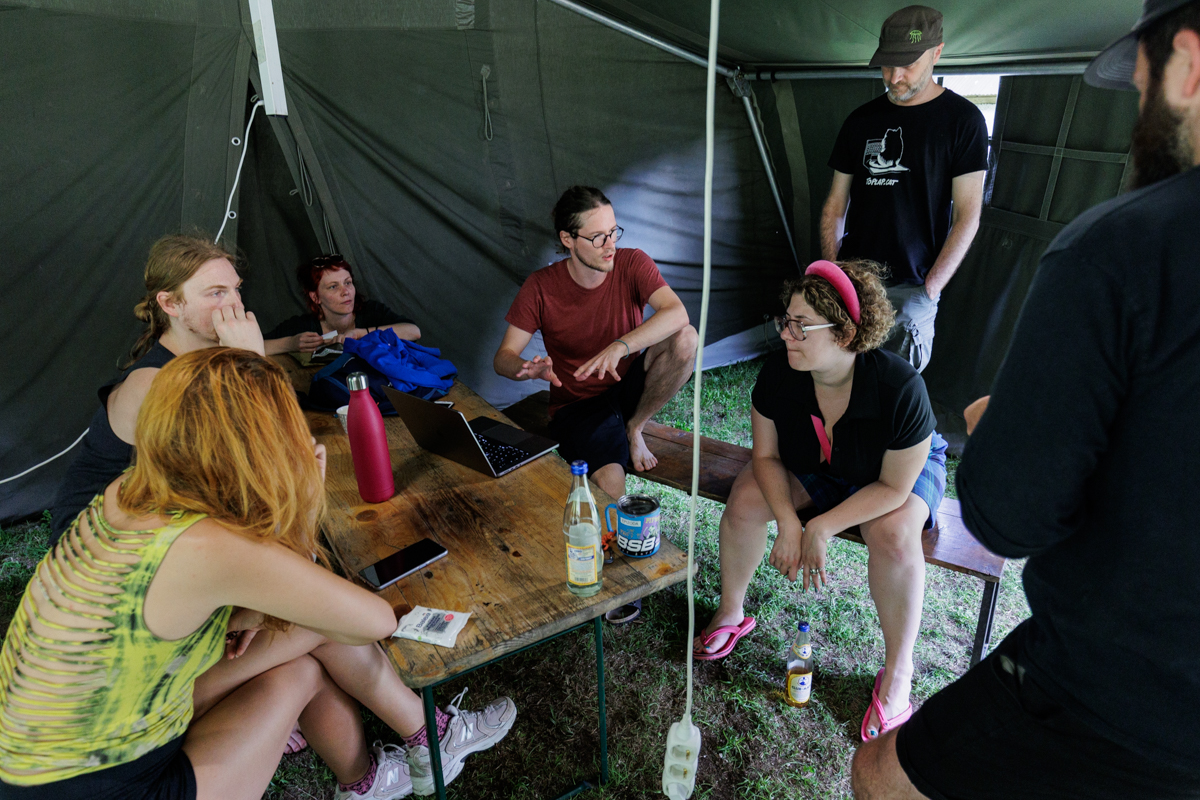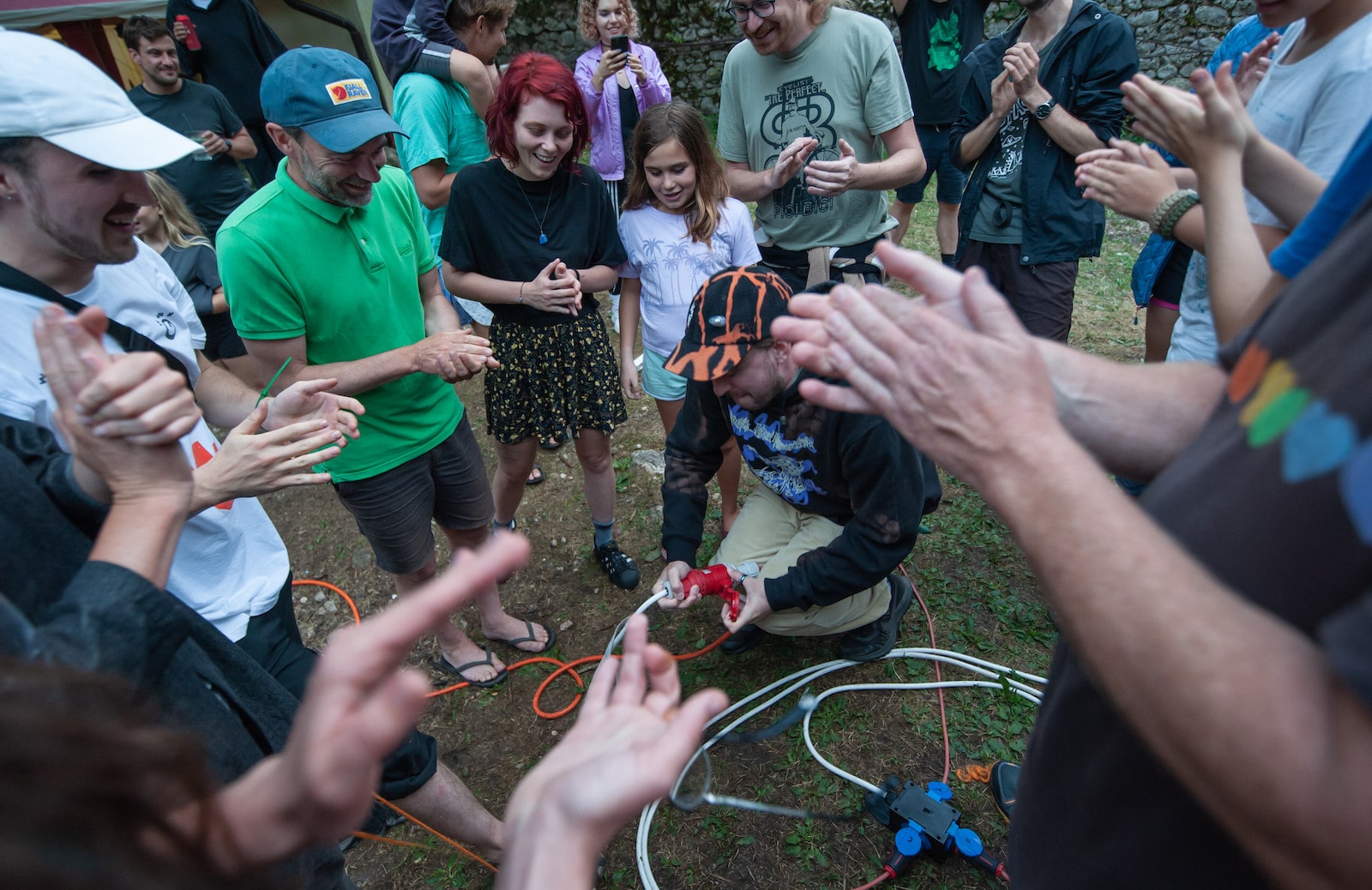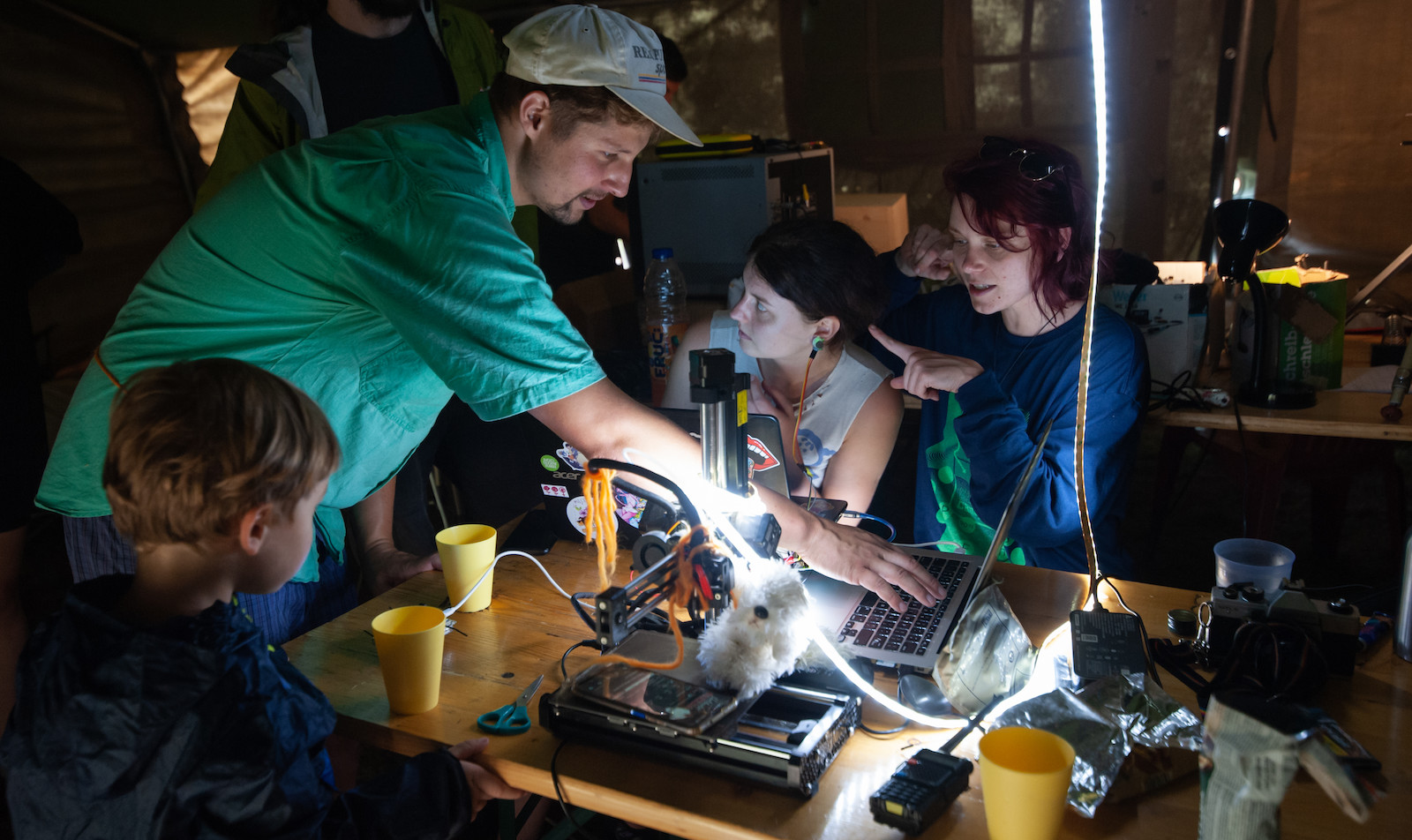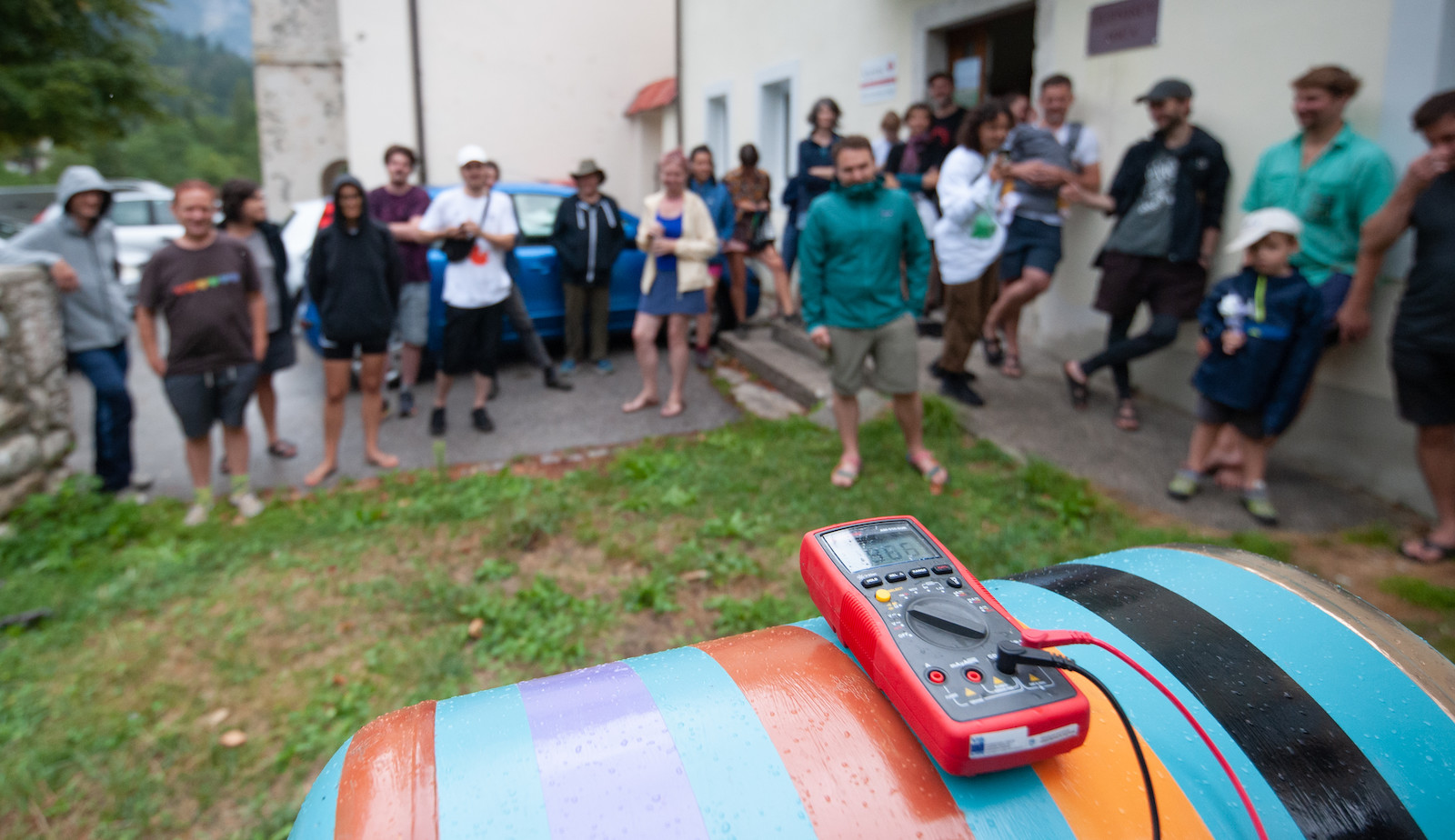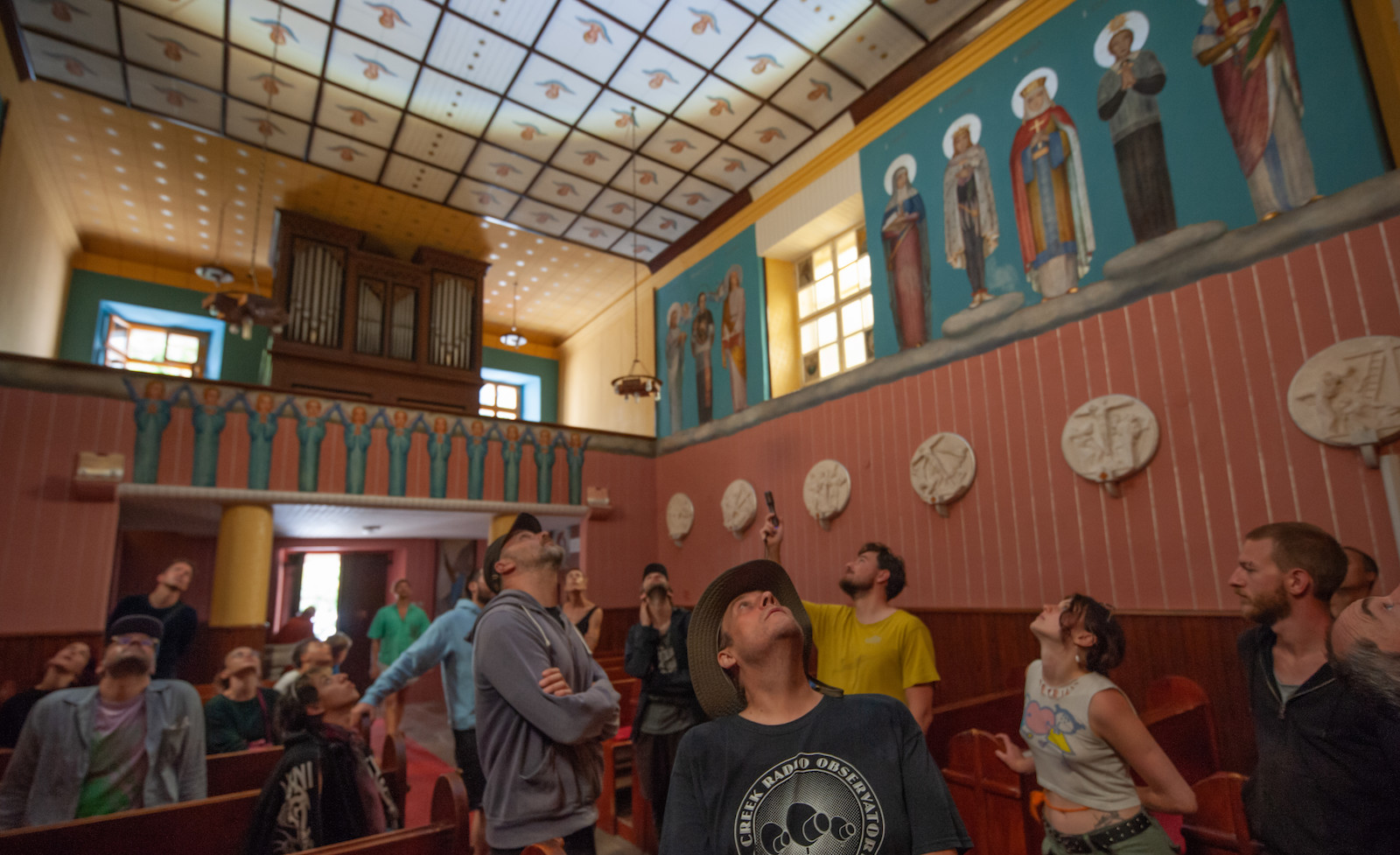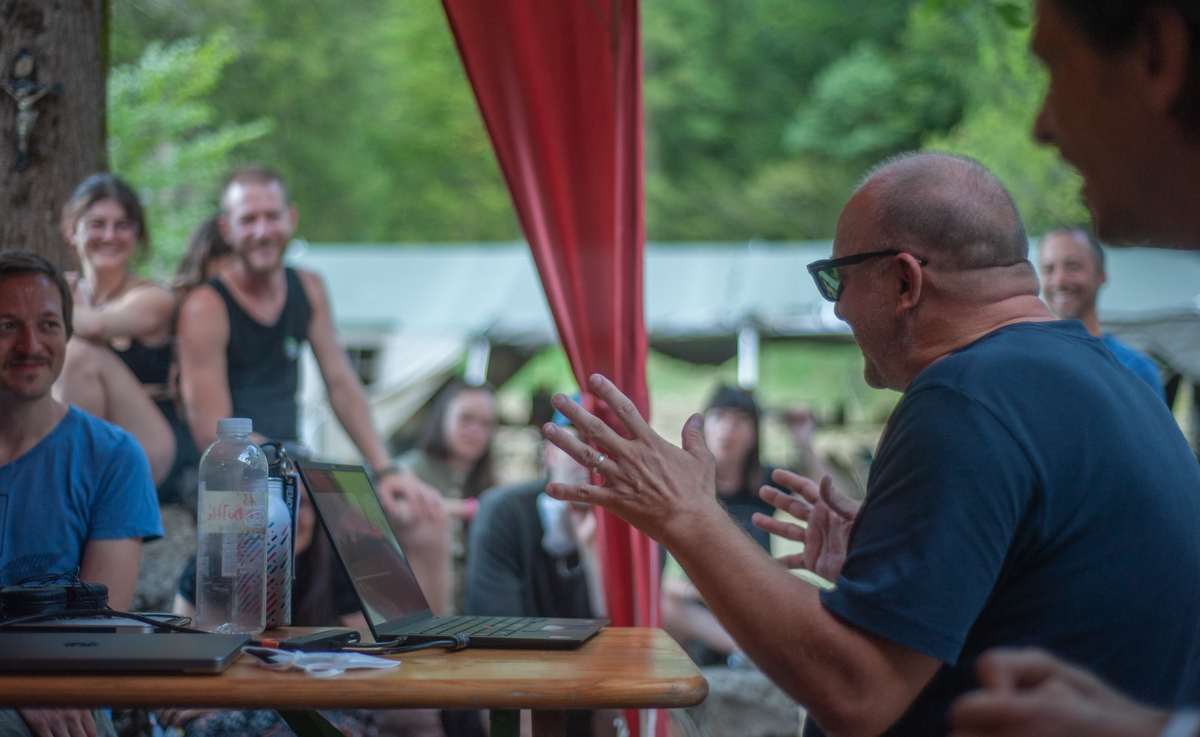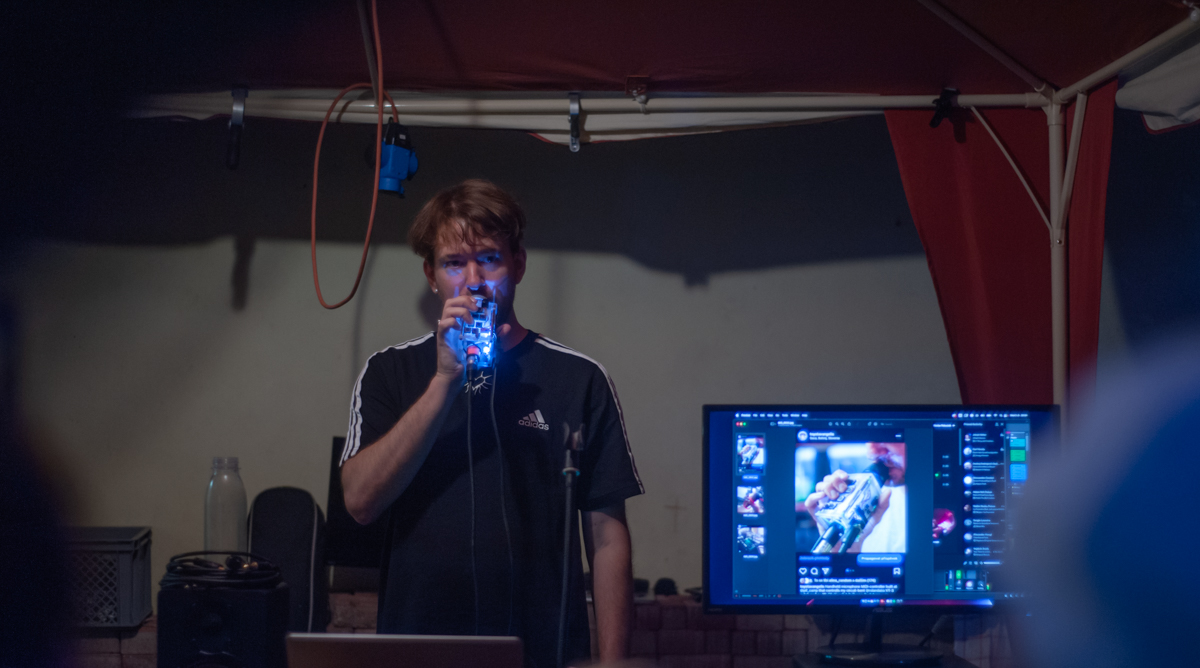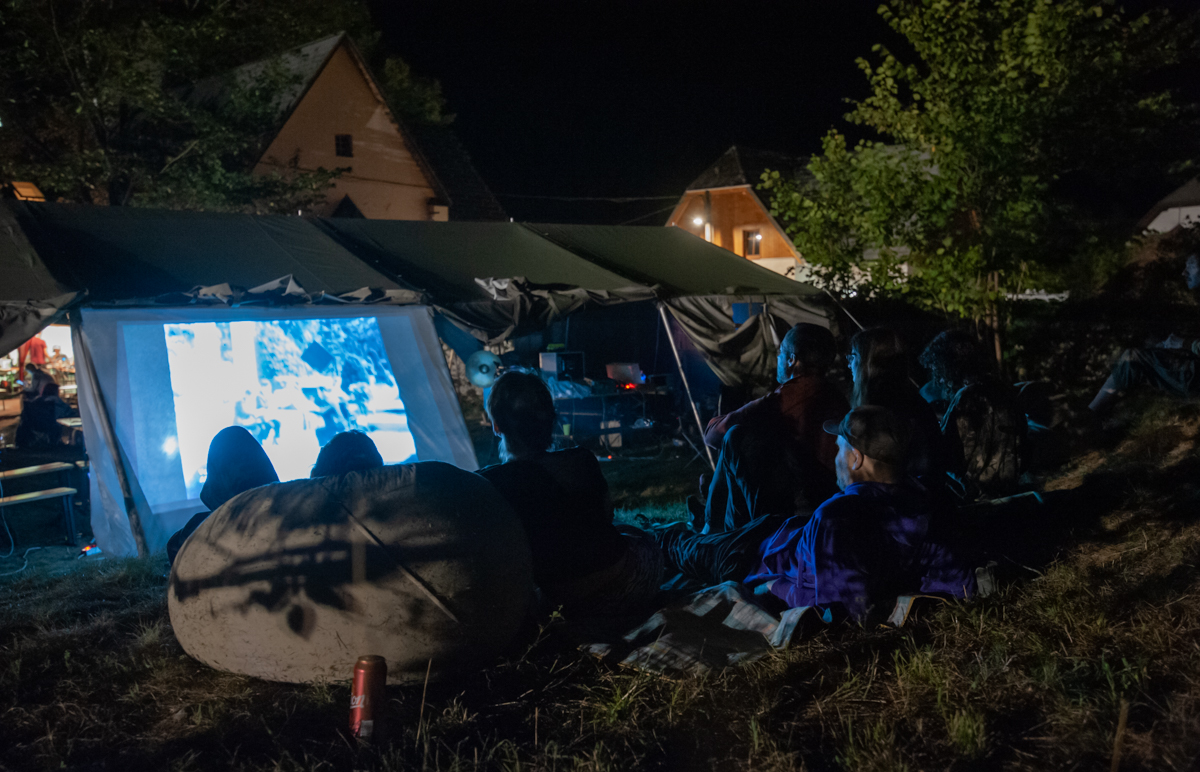
First we take the Krn Lake, then the Kluže Fort //PIFwednesday

Since one-woman-blog-team hasn’t found the words yet to describe yesterday’s epic PIFday, here comes a photo dump (and two captions). More words tomorrow!

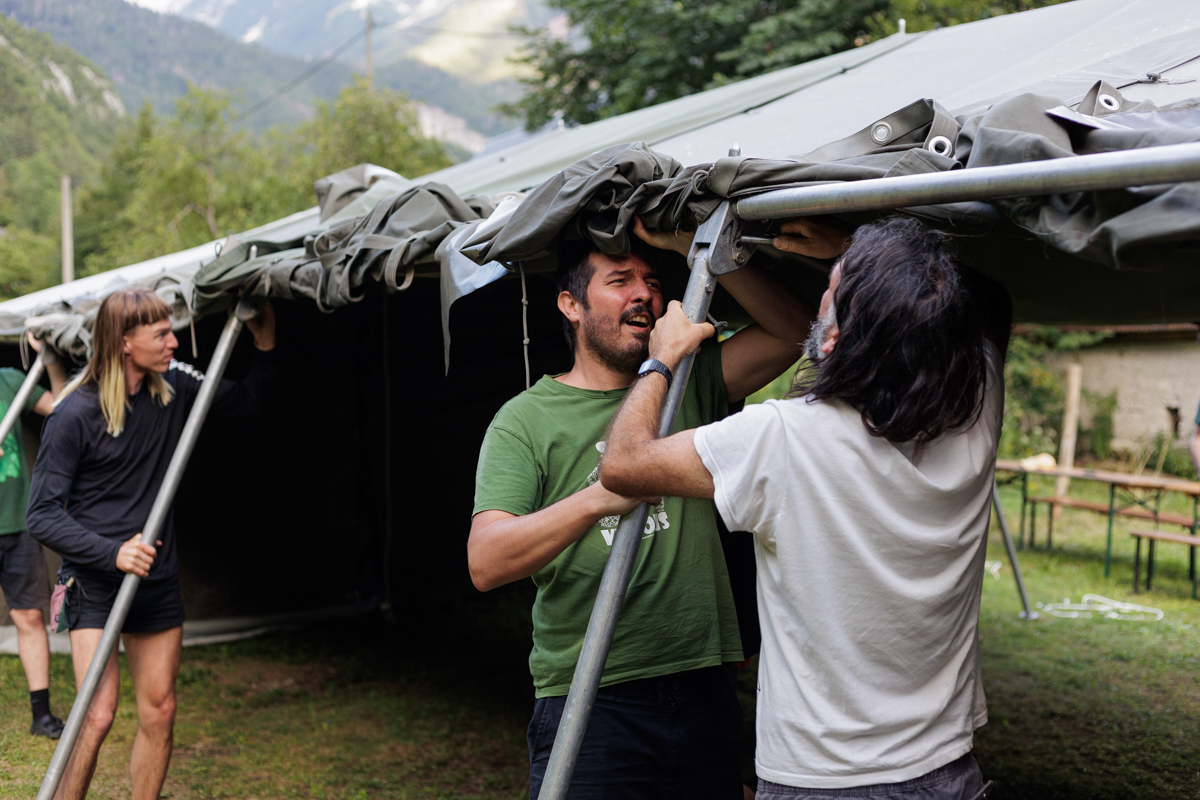
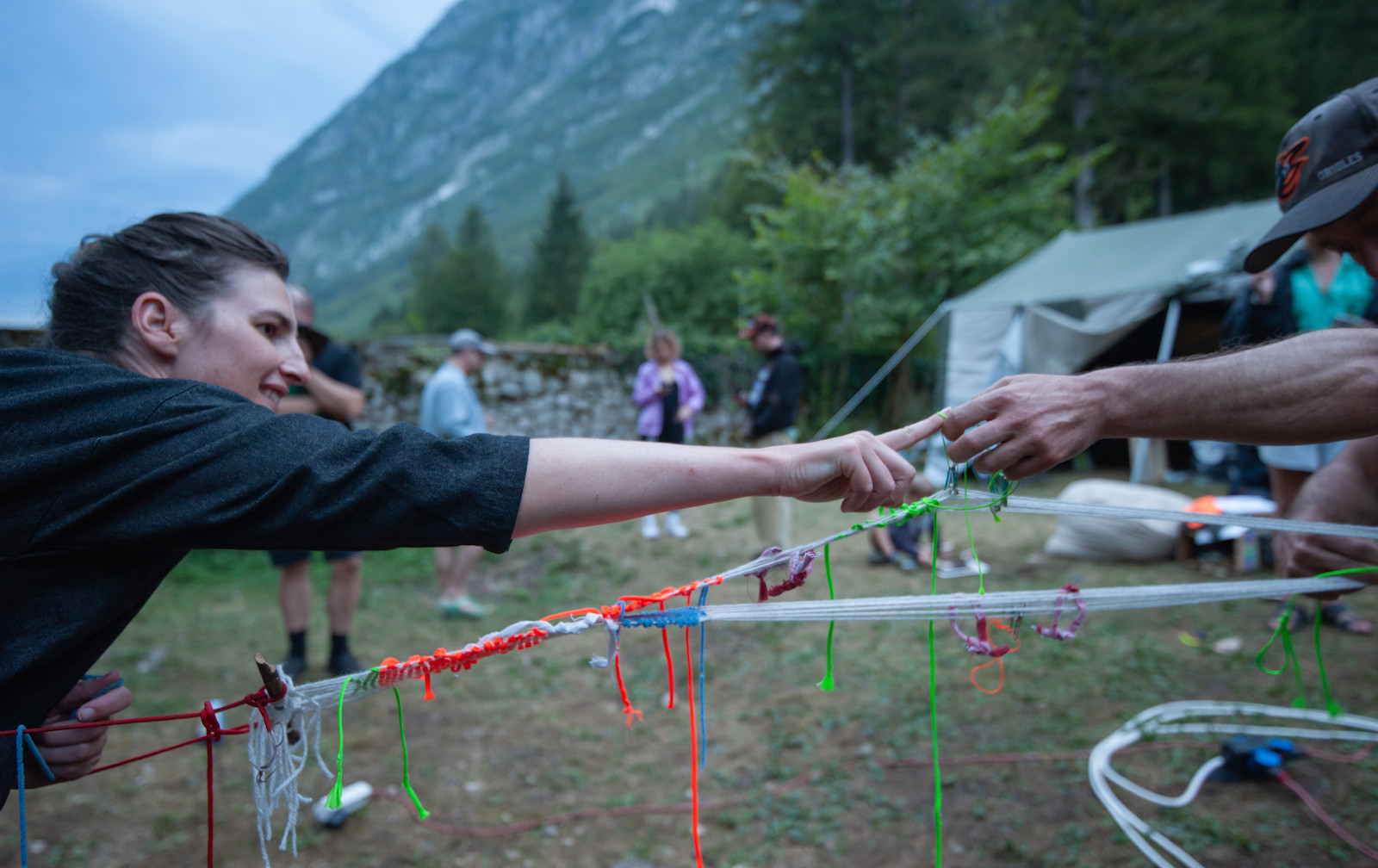
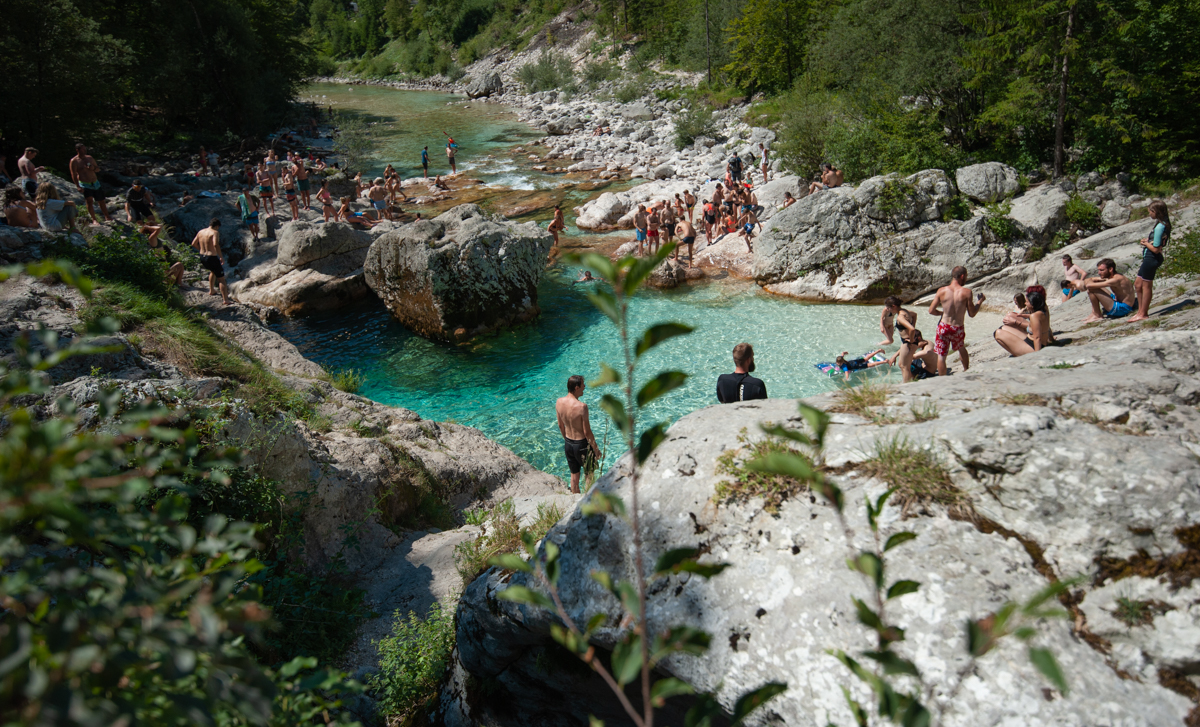
Traditionally, the first part of Wednesday at the PIFcamp is reserved for the hike to Krn Lake. Getting up at 6:00 is not the most popular activity, but every year, a fair number of PIFlars choose to participate – our favourite breakfast team, who open their sandwich shop on Tuesday evening for the occasion, reported 12 orders. Hikers were led by Jaka from Ekologi brez meja (Ecologists Without Borders), who is also in charge of the waste management at this year’s PIFcamp, keeping a watchful eye on (and weighing) the amount of different types of waste. Based on the data collected, he will propose guidelines for future improvements.
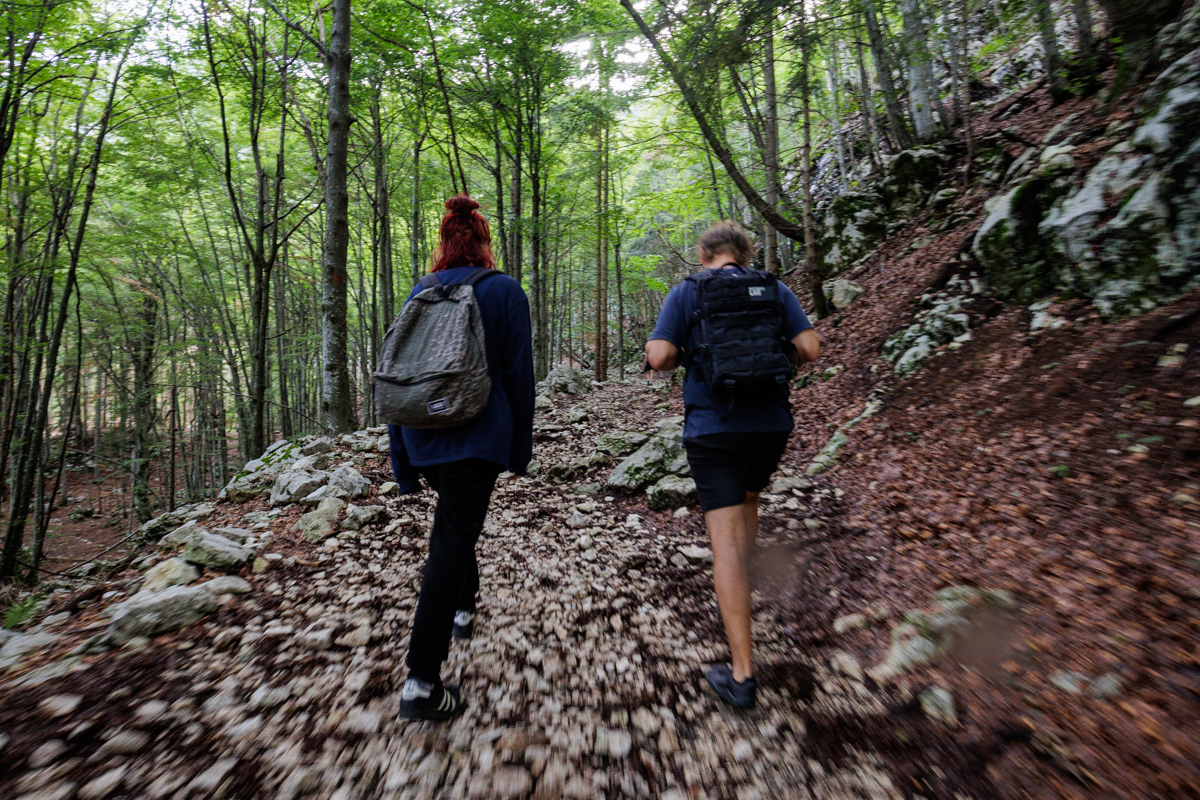
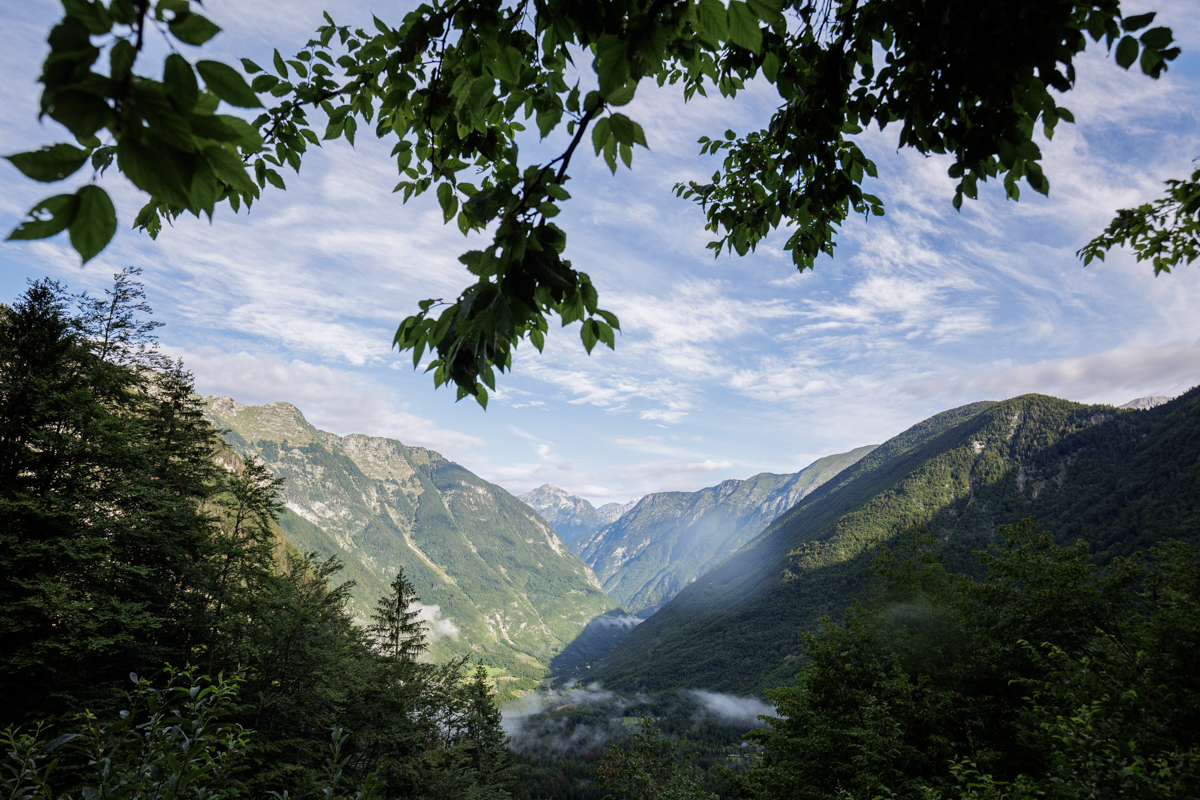
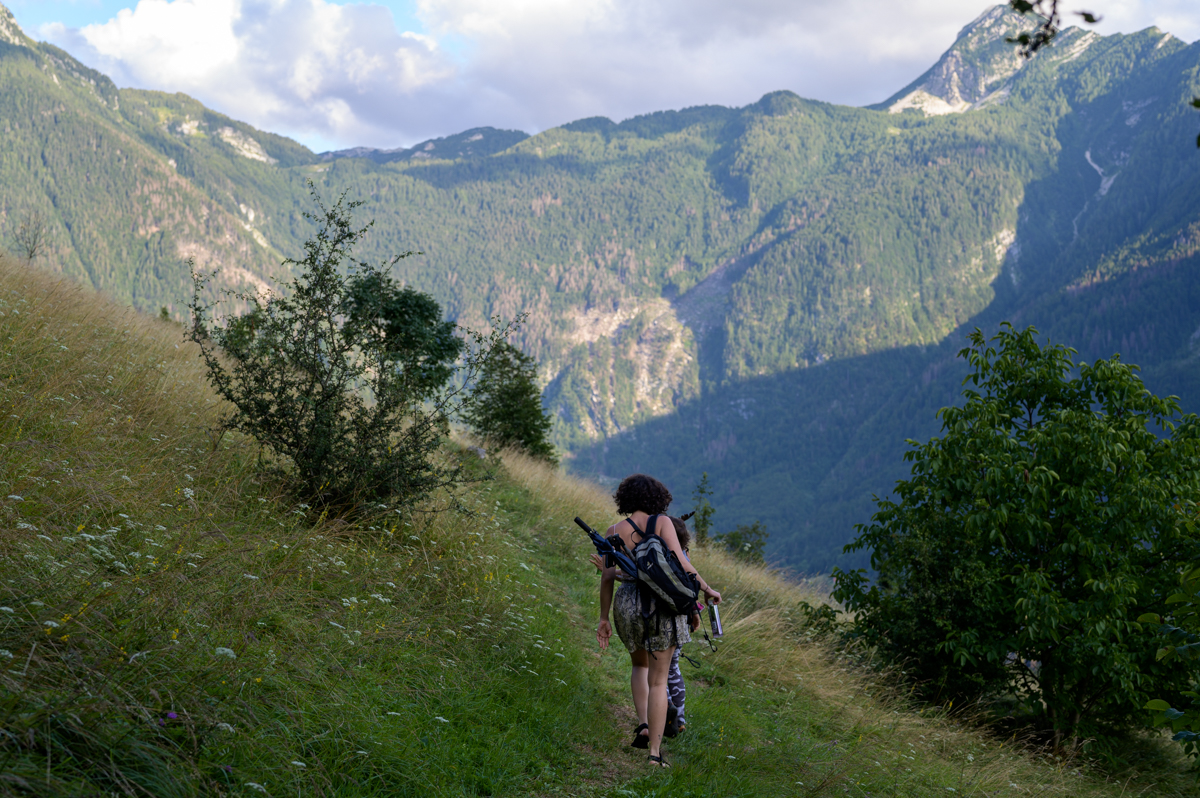
Morning hike to the Krn Lake. Photo: Katja Goljat, Matjaž Rušt

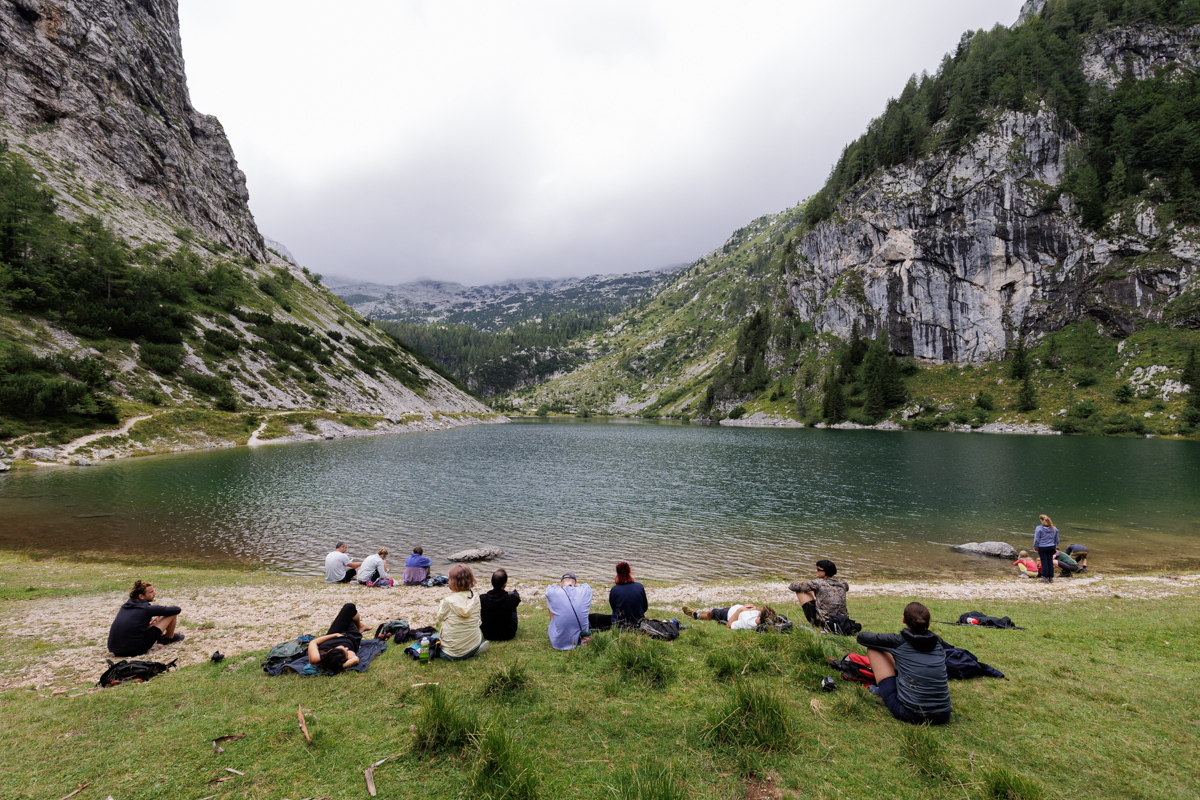
Your reporter was helping with preparations for the PIFconcert at the Fort Kluže on Wednesday, so she was unable to attend the hike. Luckily, PIFlars are just one step away at all times. We talked to Oriol, who enjoys going to the mountains, and he was very pleased with the trip. The group walked the not-too-difficult route from the Klement Jug mountain lodge in Lepena to the lake in just over two hours, before taking in the view of the beautiful Krn Lake, stopping for a coffee in the mountain lodge and signing the visitors’ book. The return journey took a little longer, but our mountaineers still managed to reach the base PIFcamp in time for lunch.
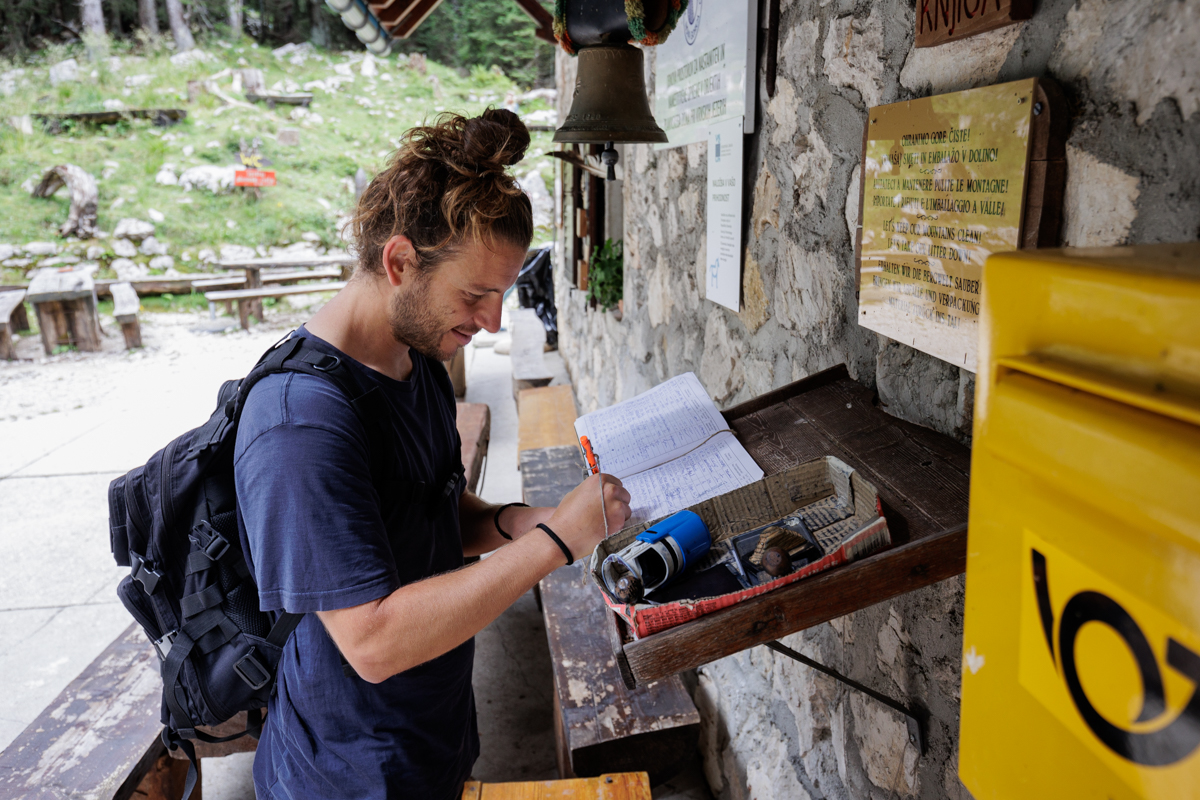
Oriol signing the visitorsbook. Photo: Katja Goljat, Matjaž Rušt
PIFcamp at Krn Lake. Photo: Katja Goljat, Matjaž Rušt

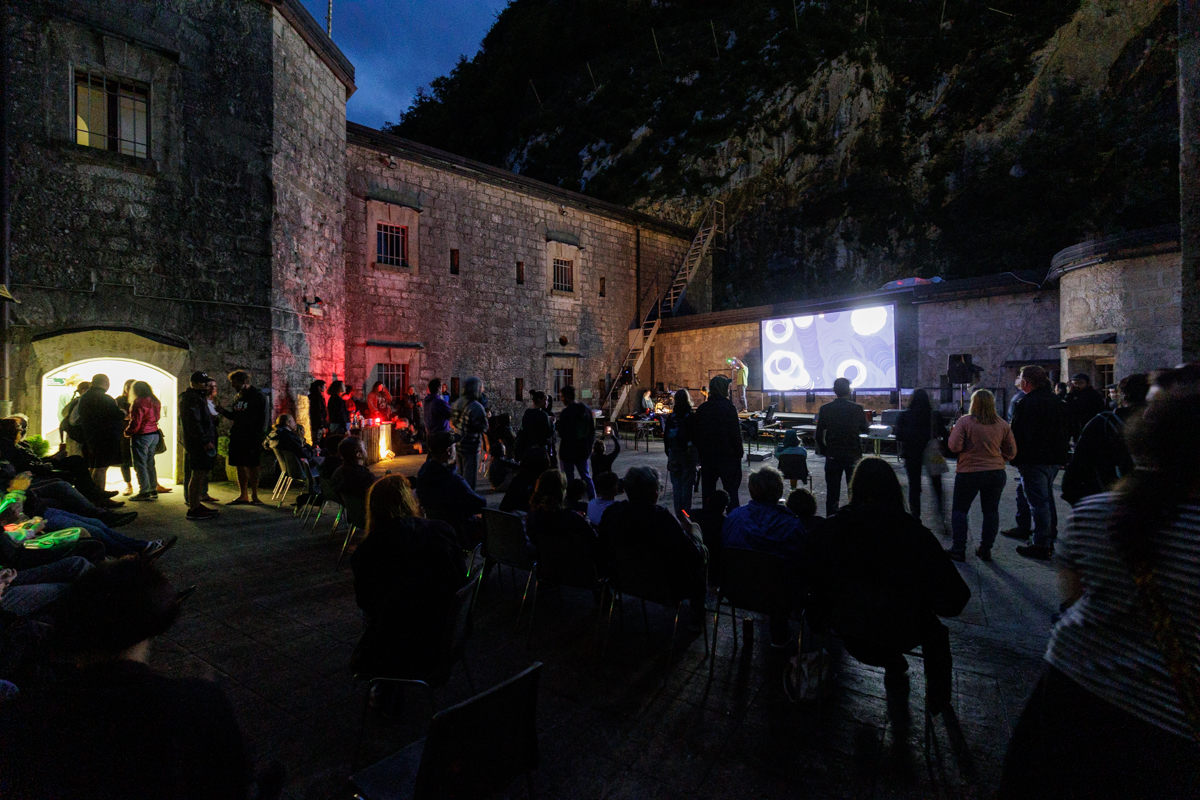
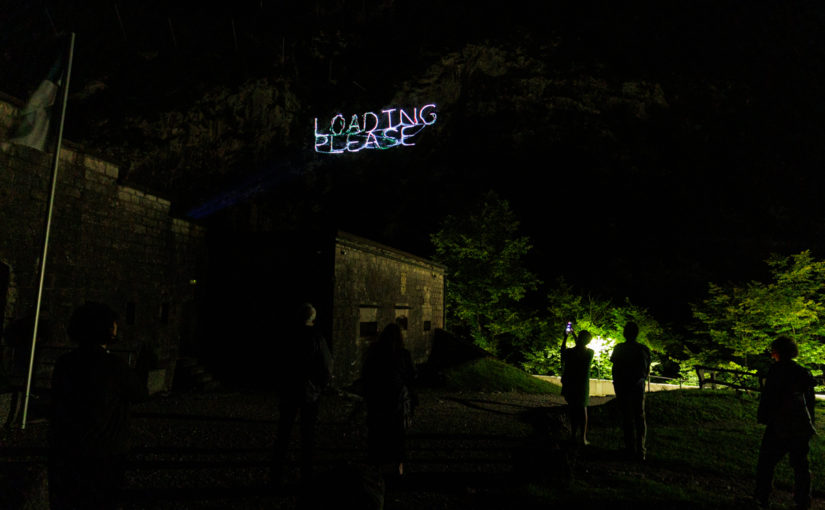
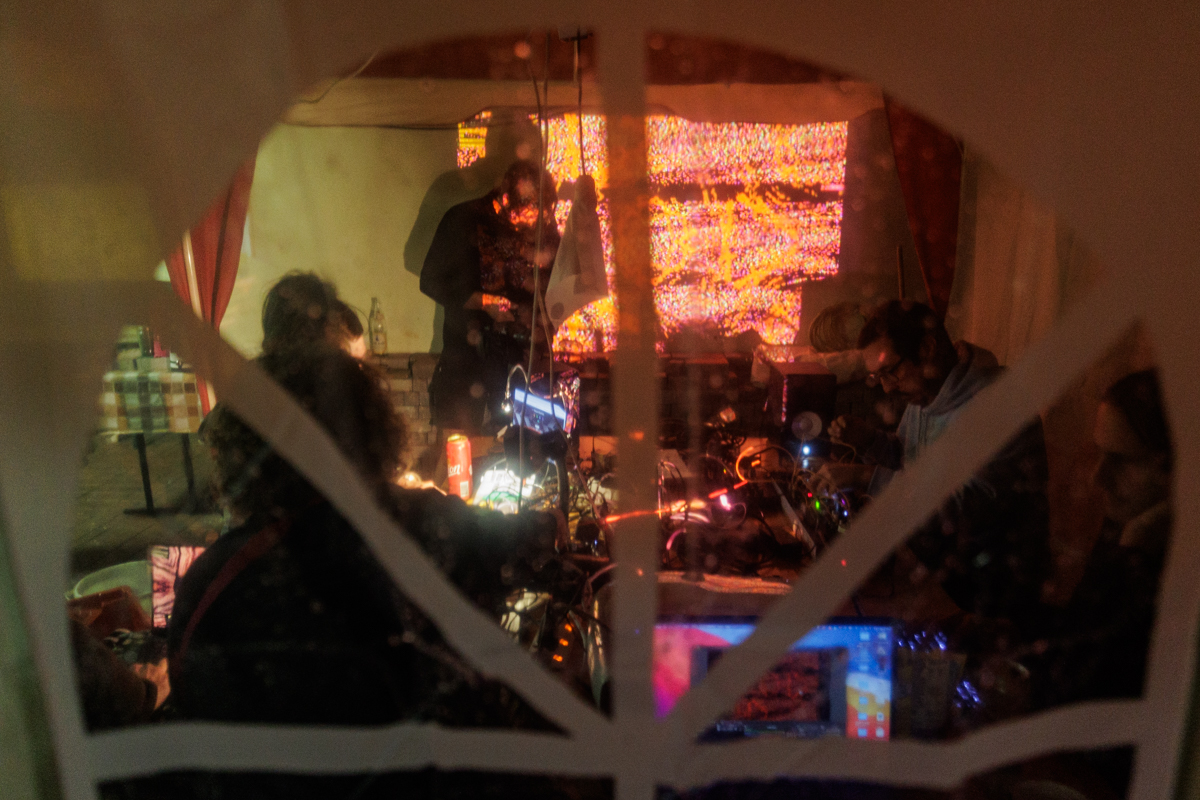
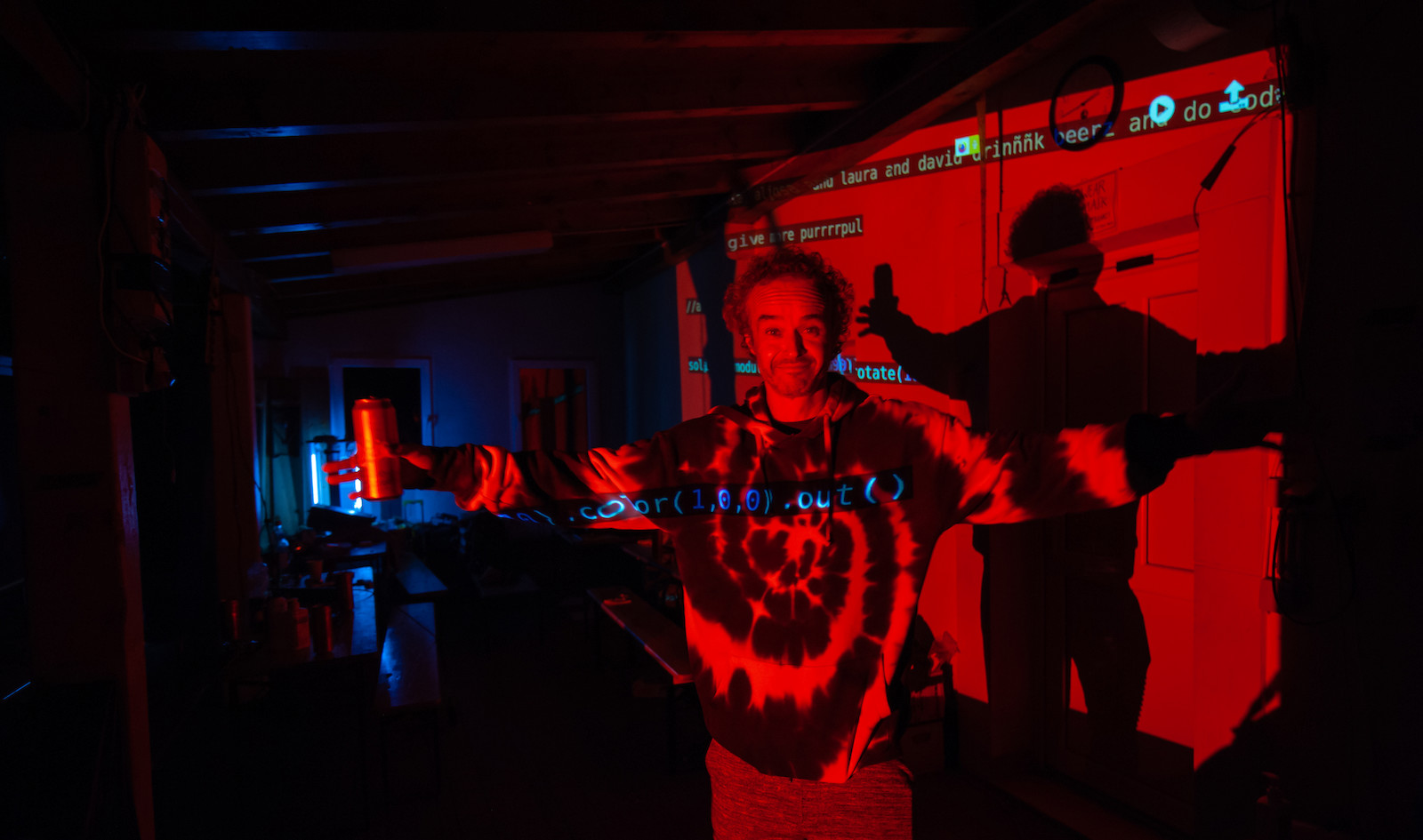
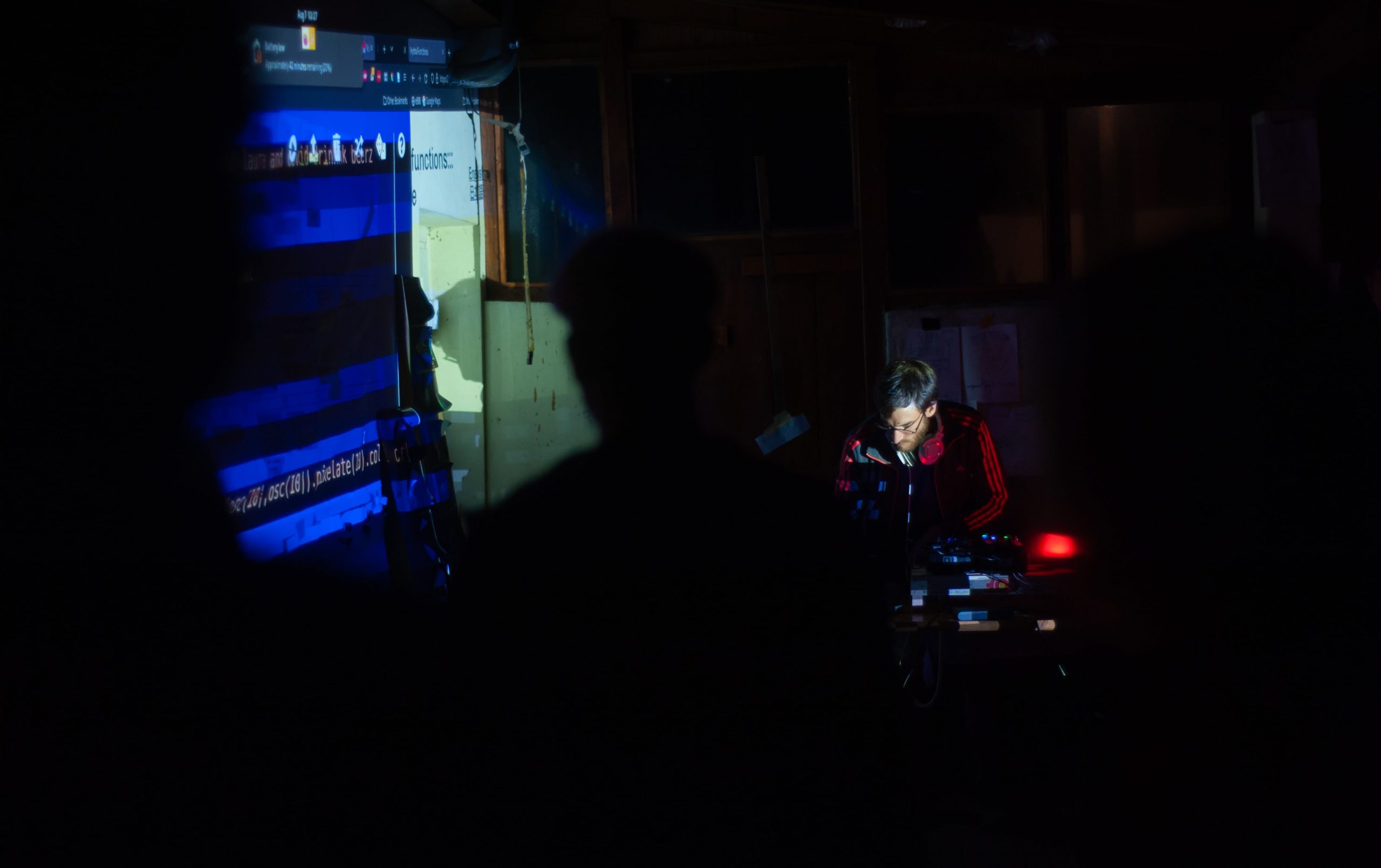
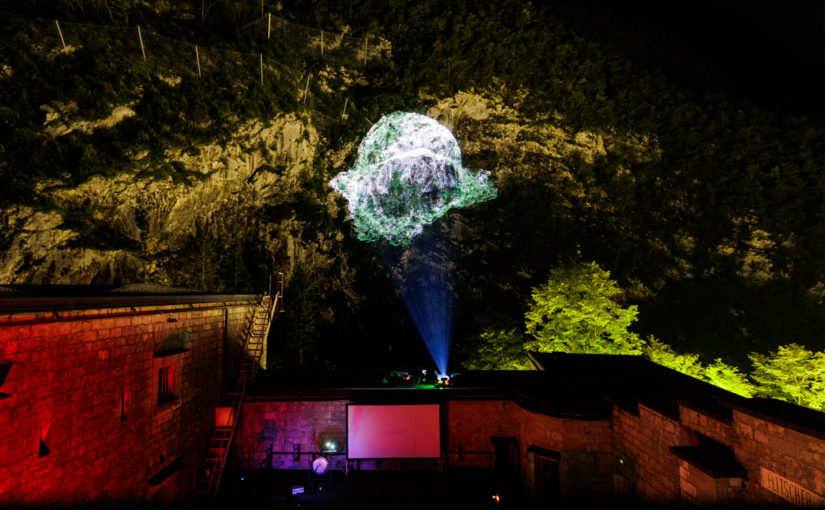
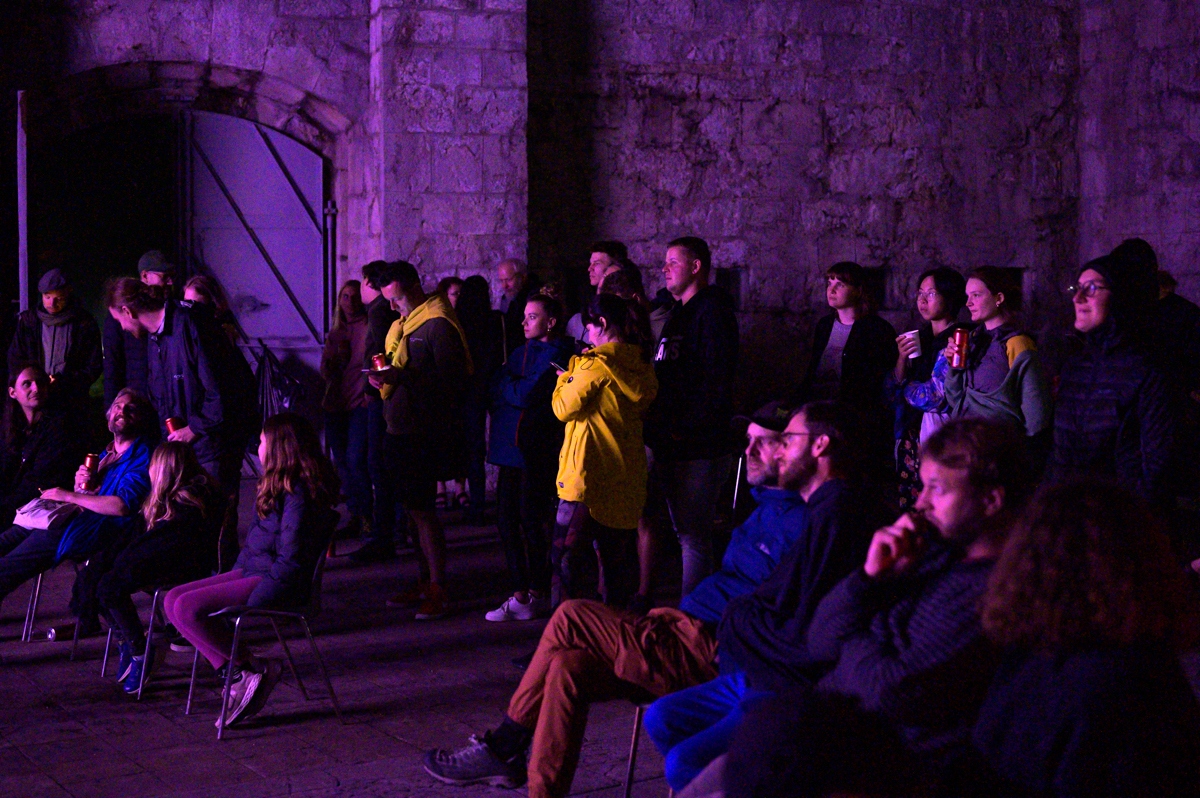
On the initiative of Jani Pirnat, another PIFcamp familiar, part of the organizing team decided to move one of the numerous jam sessions, which take place on the PIFterrace, to the walls of the walled courtyard of the Fort Kluže. The event, held under the title PIFconcert and Algorave: Lasers, beeping and lightning, featured no less than 14 performers. The majority of the audience was made up of PIFcamp participants, but we also noticed a few dozen external visitors. The courtyard of the Fortress is a beautiful venue, but this was not the reason why the event was a success. We should thank the wonderful performers right at the beginning of this report, for their music and visuals that transported us to different dimensions.
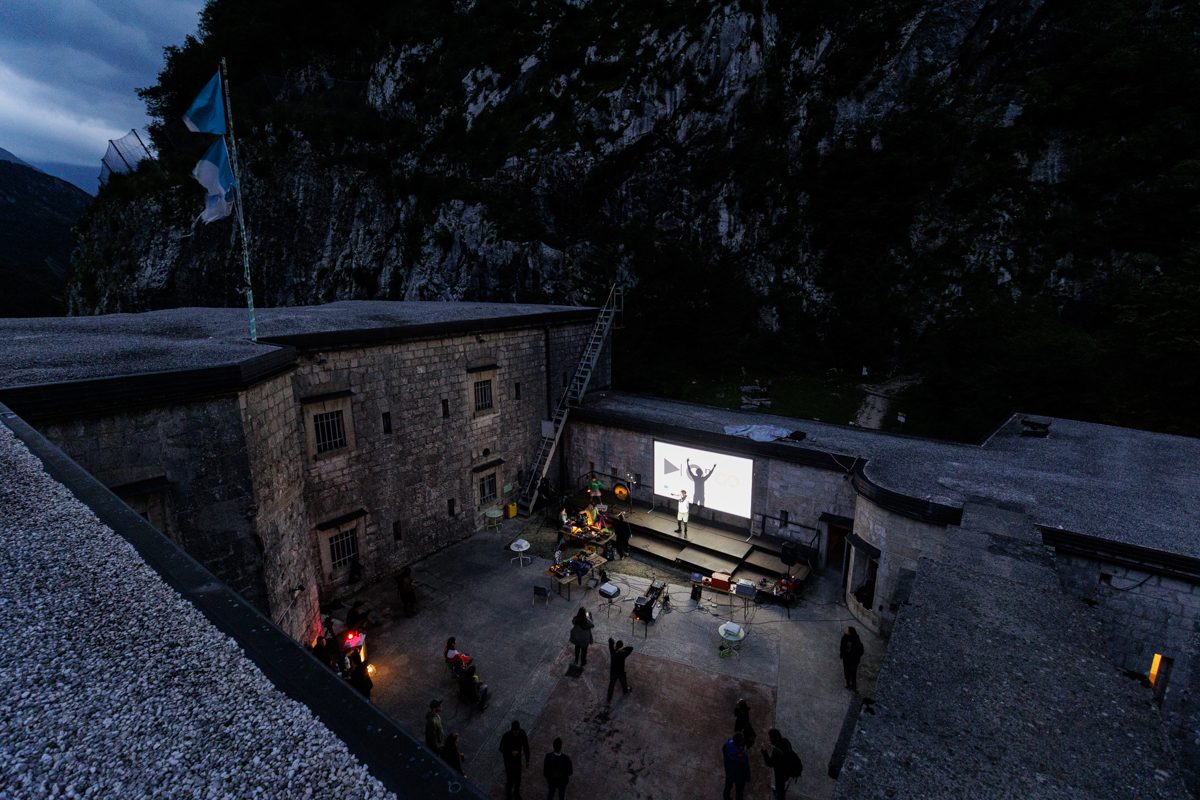
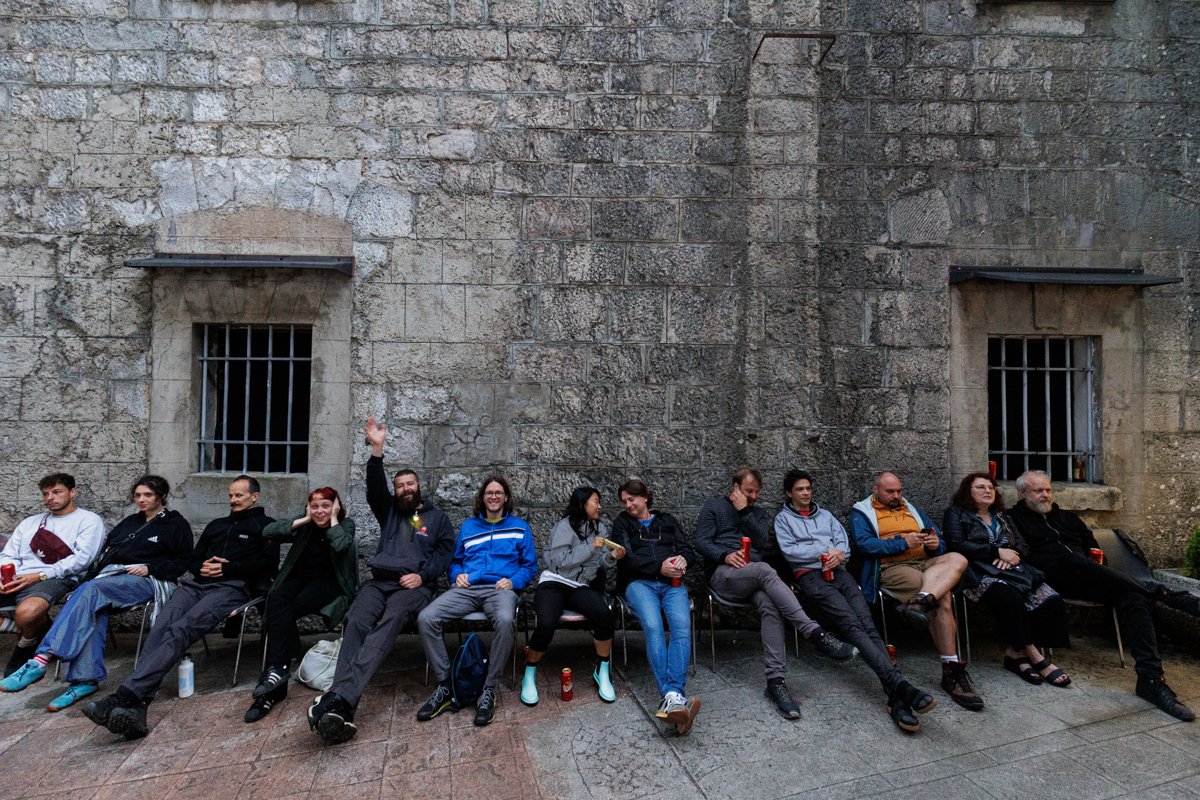
PIFlars are looking forward to the concert and have no idea what’s in store for them yet. Photo: Katja Goljat, Matjaž Rušt

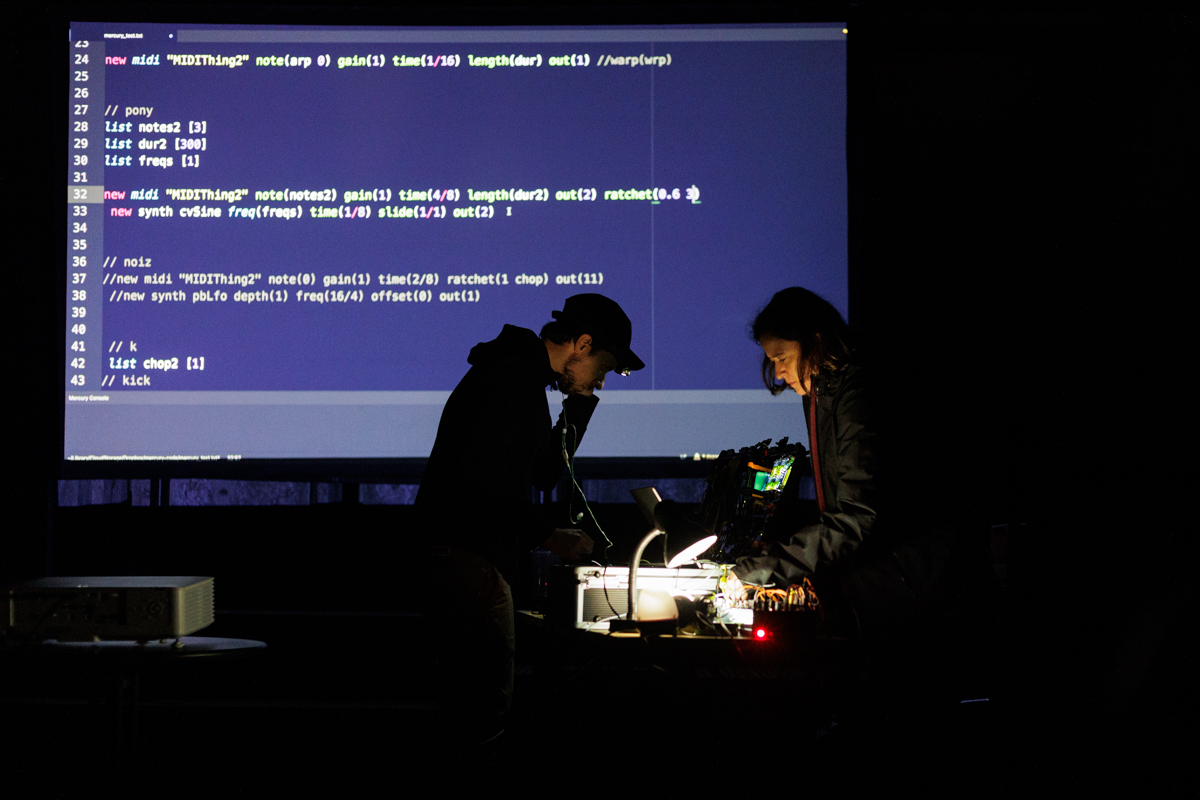
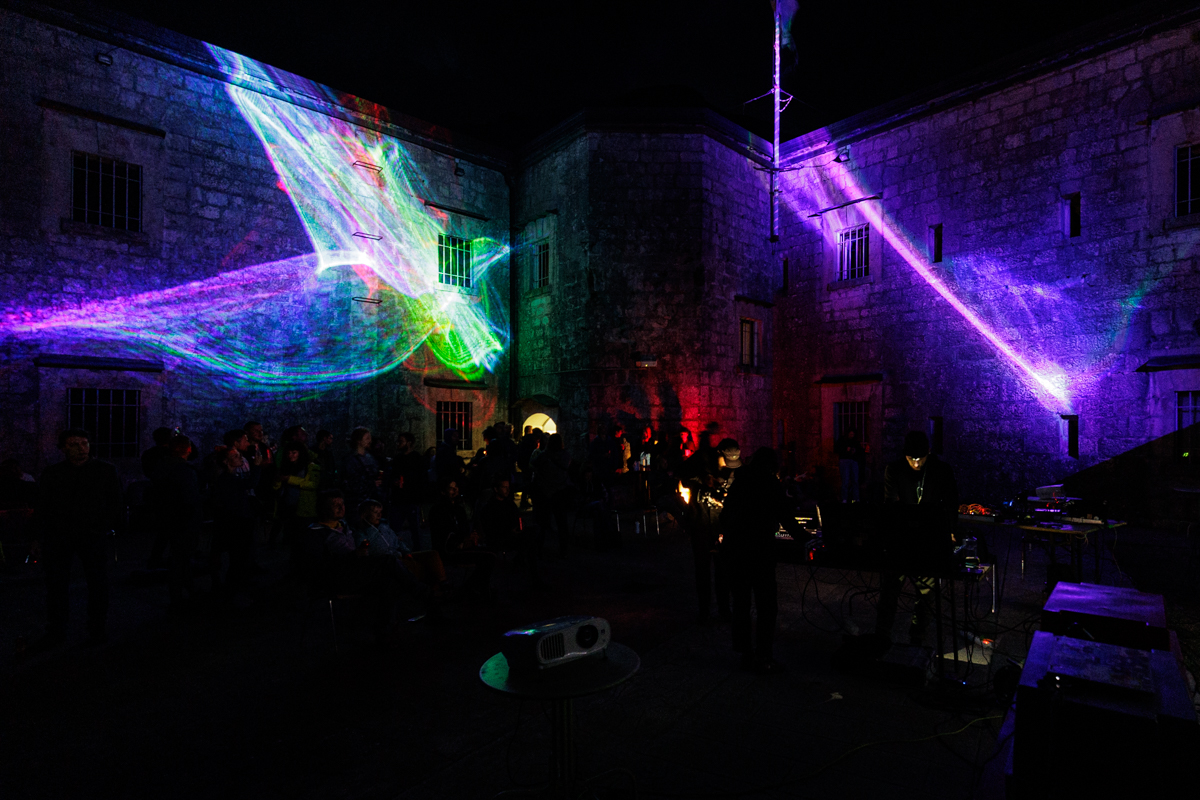
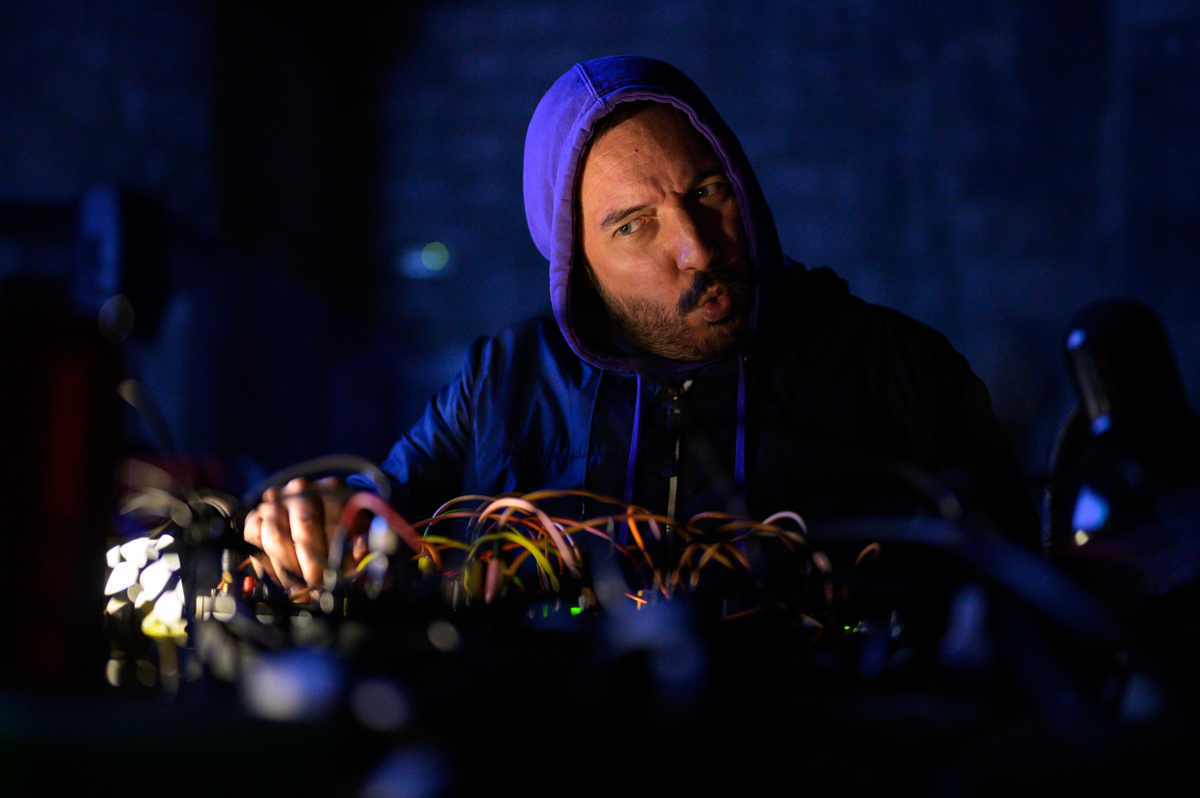
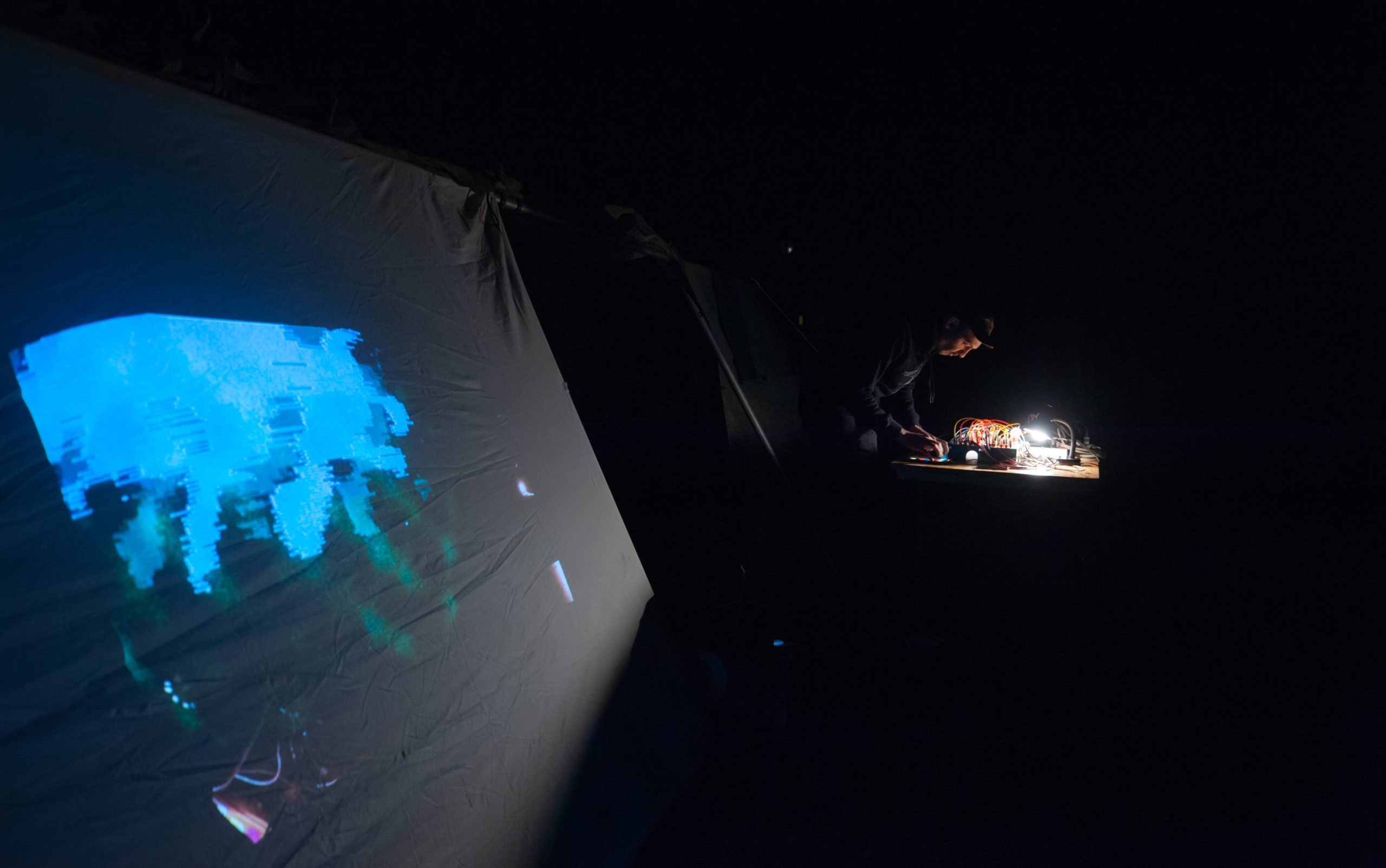
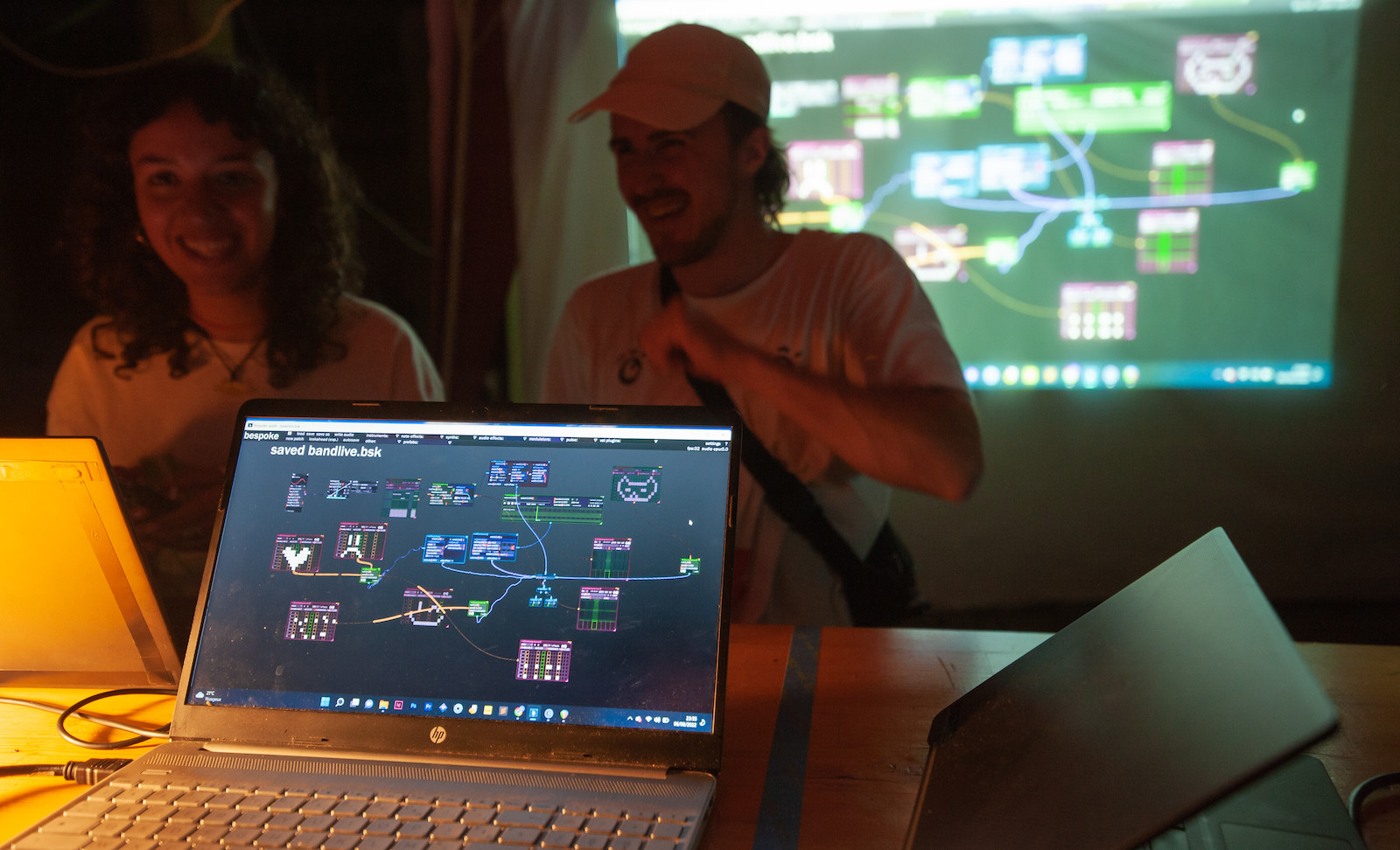
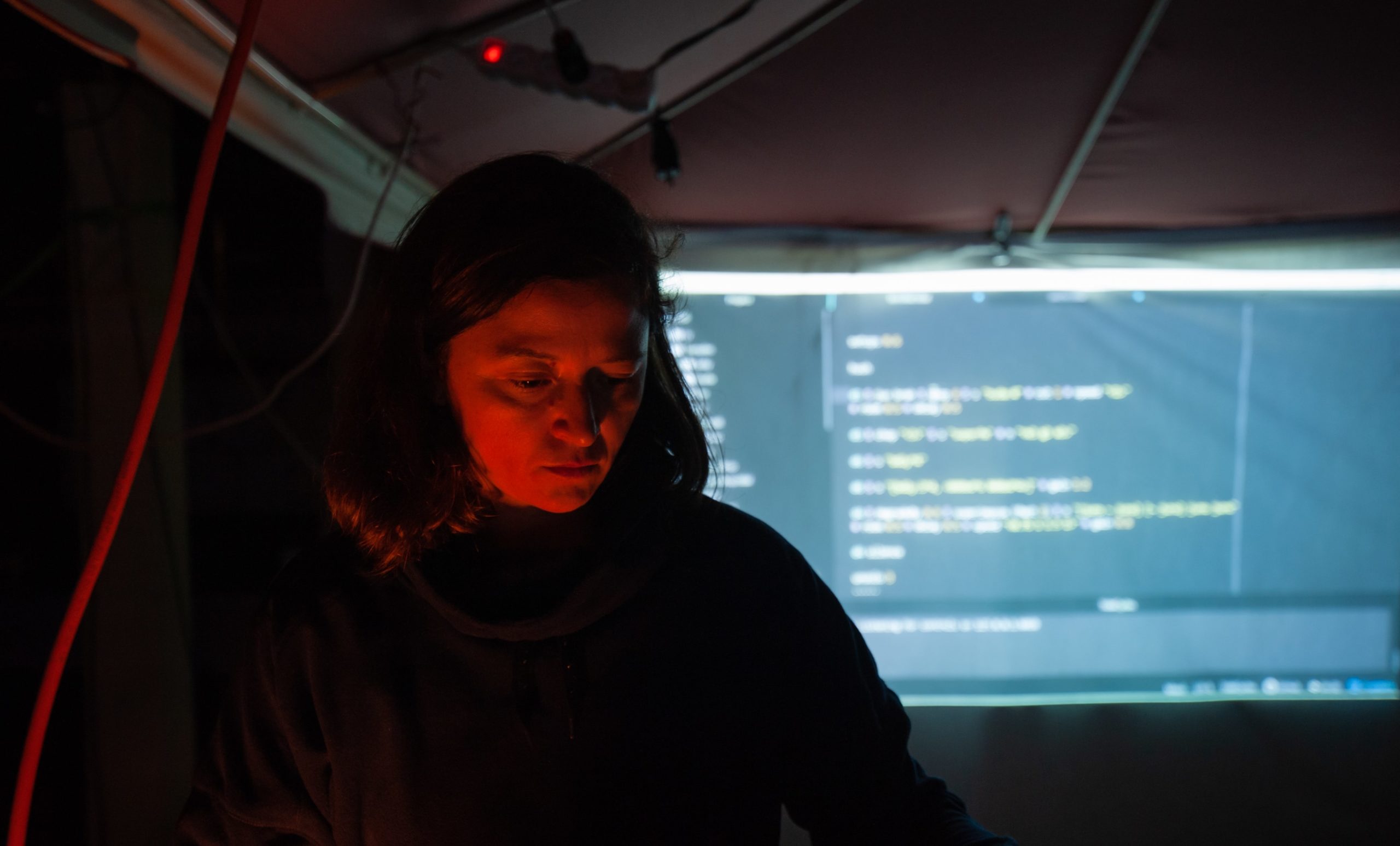
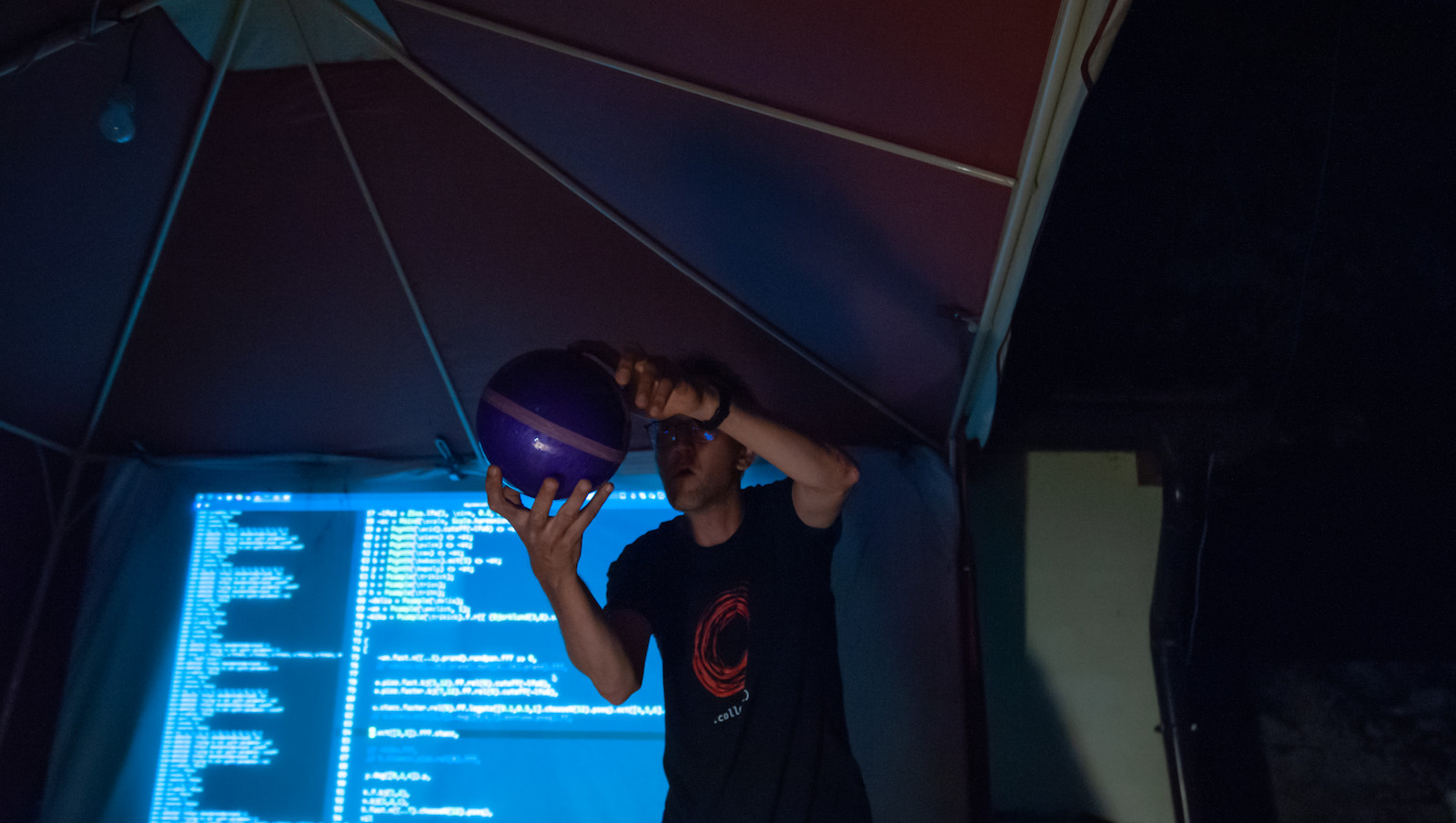
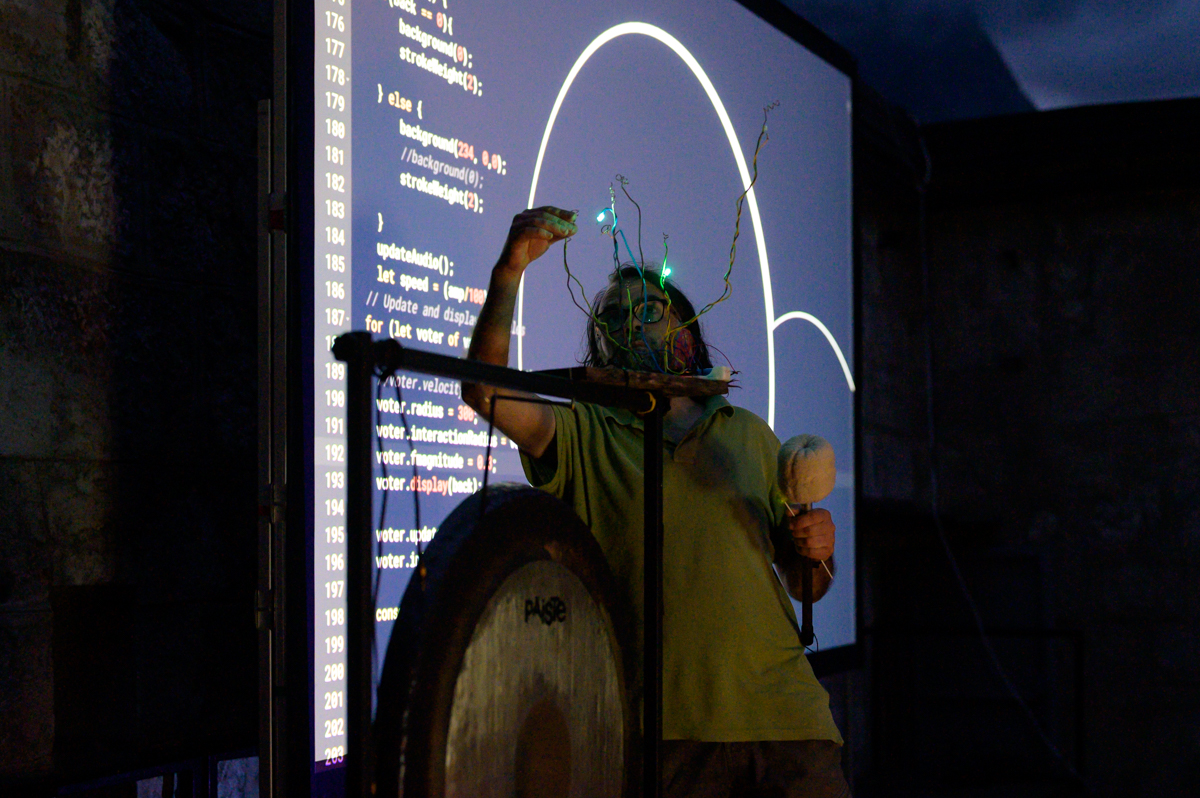
At 9 pm sharp, the stage was taken over by the first first-time trio of performers: multi-instrumentalists Rob Canning and Robbie Hopper were accompanied on live coded visuals in P5LIVE by Julia Múgica (aka Dr. Ju). Another premiere duo featuring Tilen Sepič and Linalab (Lina Bautista) followed with a modular synths-live coding combo. Lina used the Mercury environment for the first time in a public performance, and we must say it didn’t show. Halfway through their performance Hansi3D and Jerobeam Fenderson climbed one of the walls of the fortress and covered the interior walls with multi-colored laser nebulae.
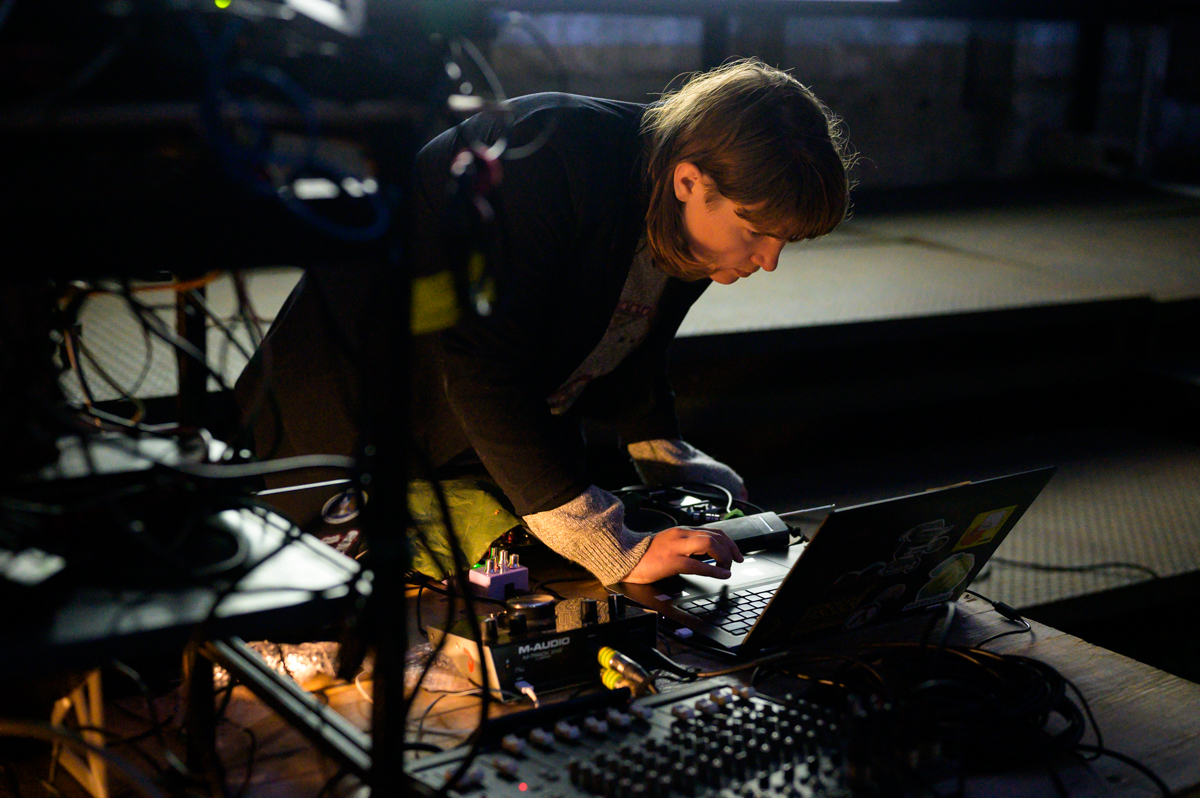
Rob & Robbie with Julia on the visuals. Photo: Katja Goljat, Matjaž Rušt
Lina, Tilen and laser visuals. Photo: Katja Goljat, Matjaž Rušt

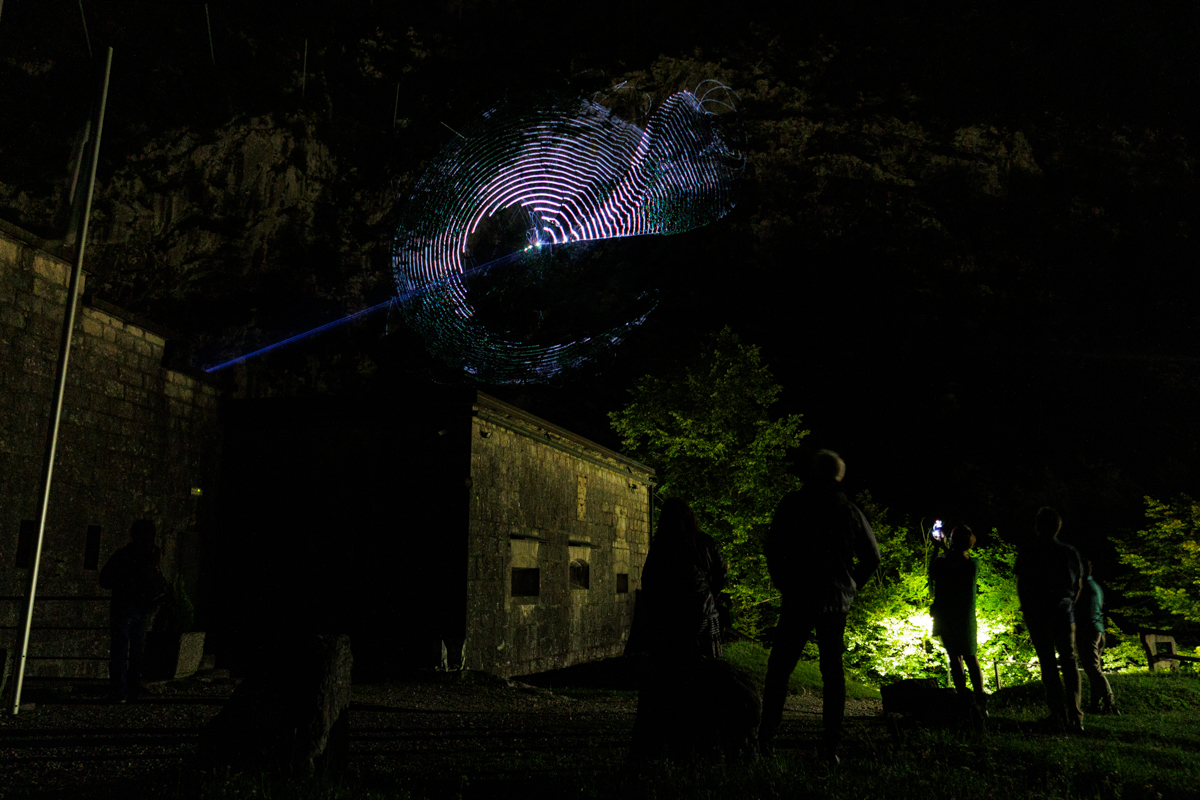
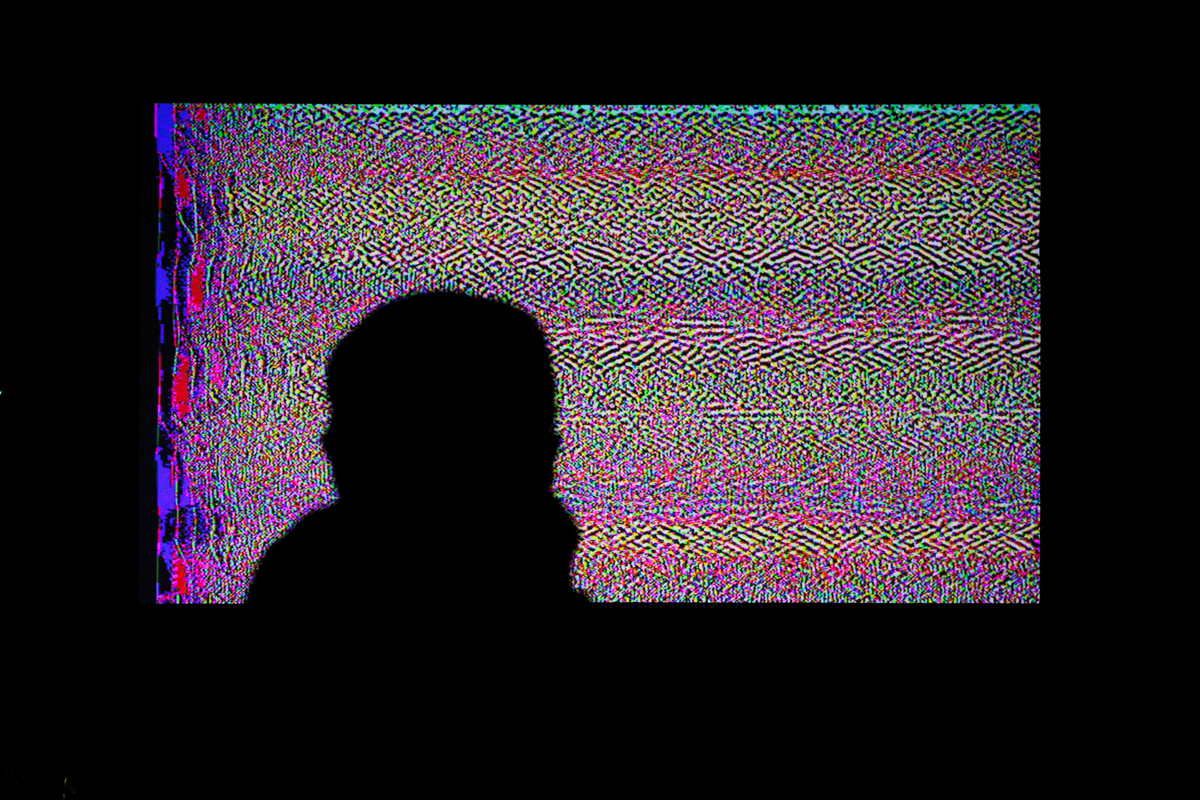
The audience was already well warmed up when Oscilloscope Music turned their lasers in the opposite direction, facing the hill below Fort Hermann. Judging by the gasps, cheers and applause during their AV set, the audience was nevertheless caught off-guard by their dazzling show. One of the participants posted a story on her instagram profile during which we managed to overhear the following priceless comment: “What’s thaaaat?!! I just found myself in 16 dimensions at the same time!”
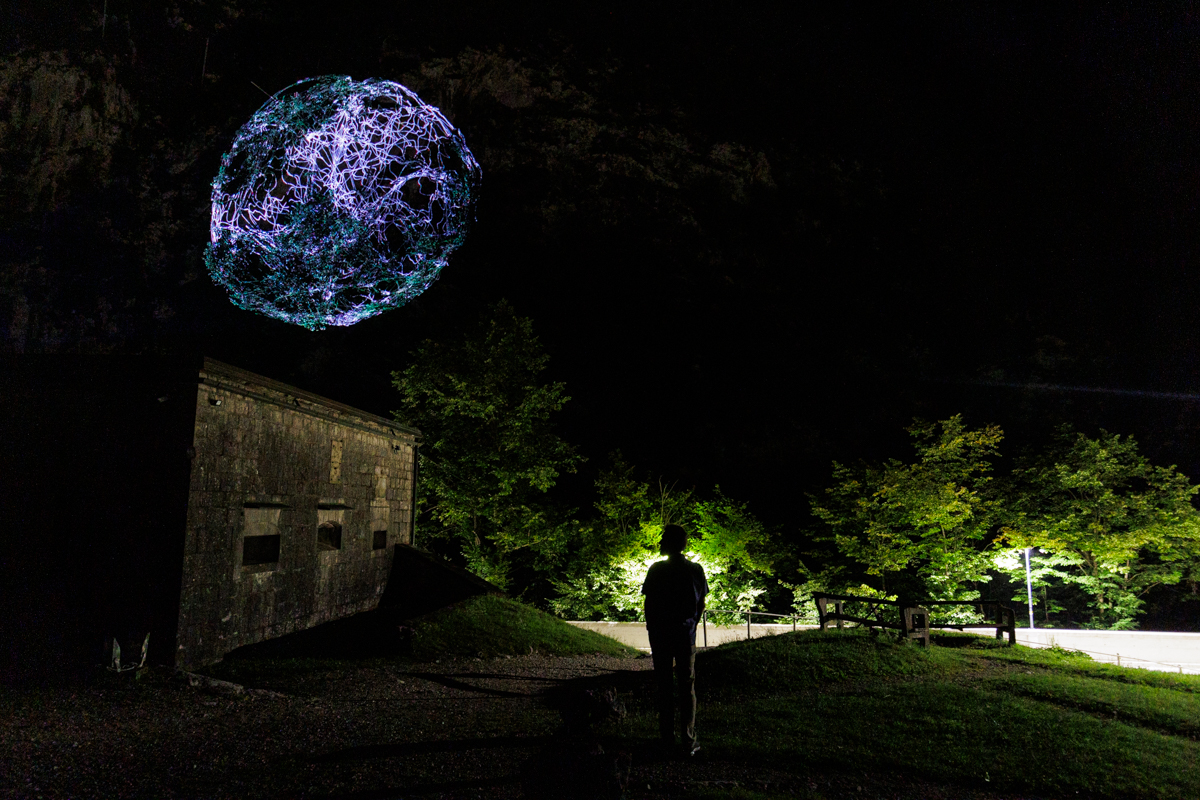
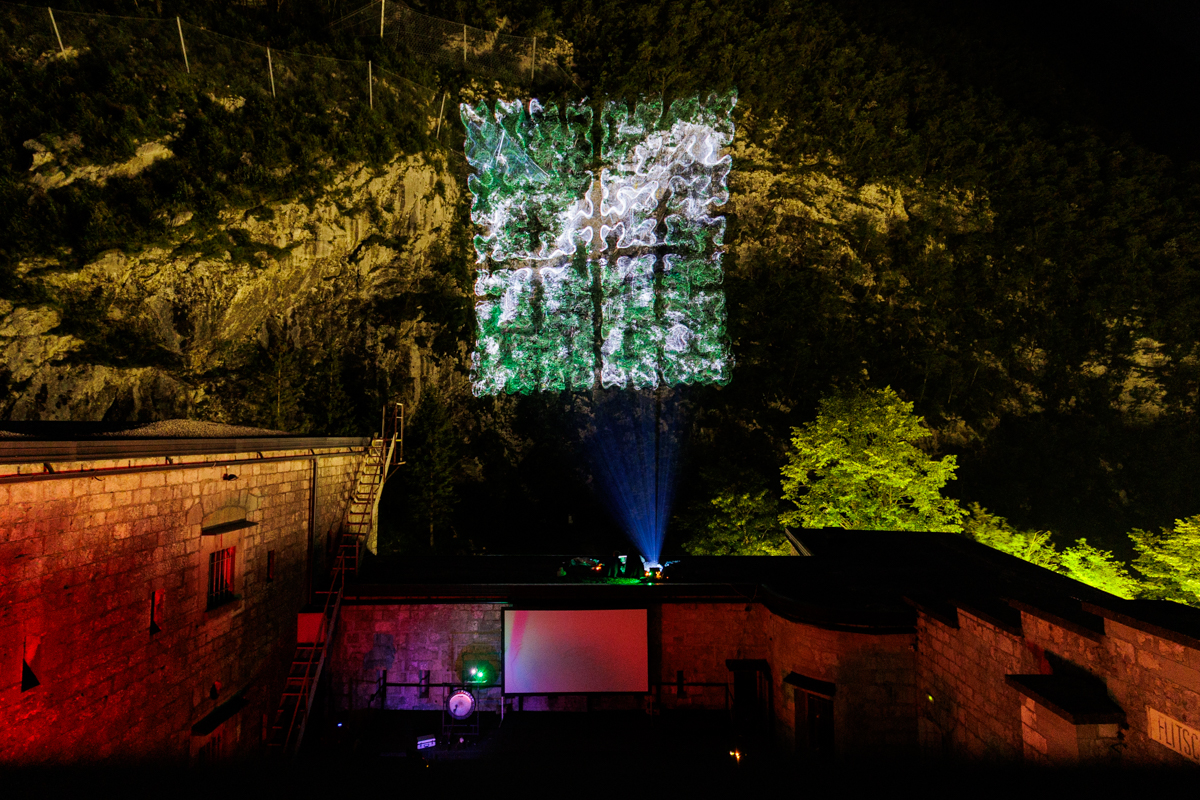
Breathtaking. AV set by Oscilloscope Music. Photo: Katja Goljat, Matjaž Rušt

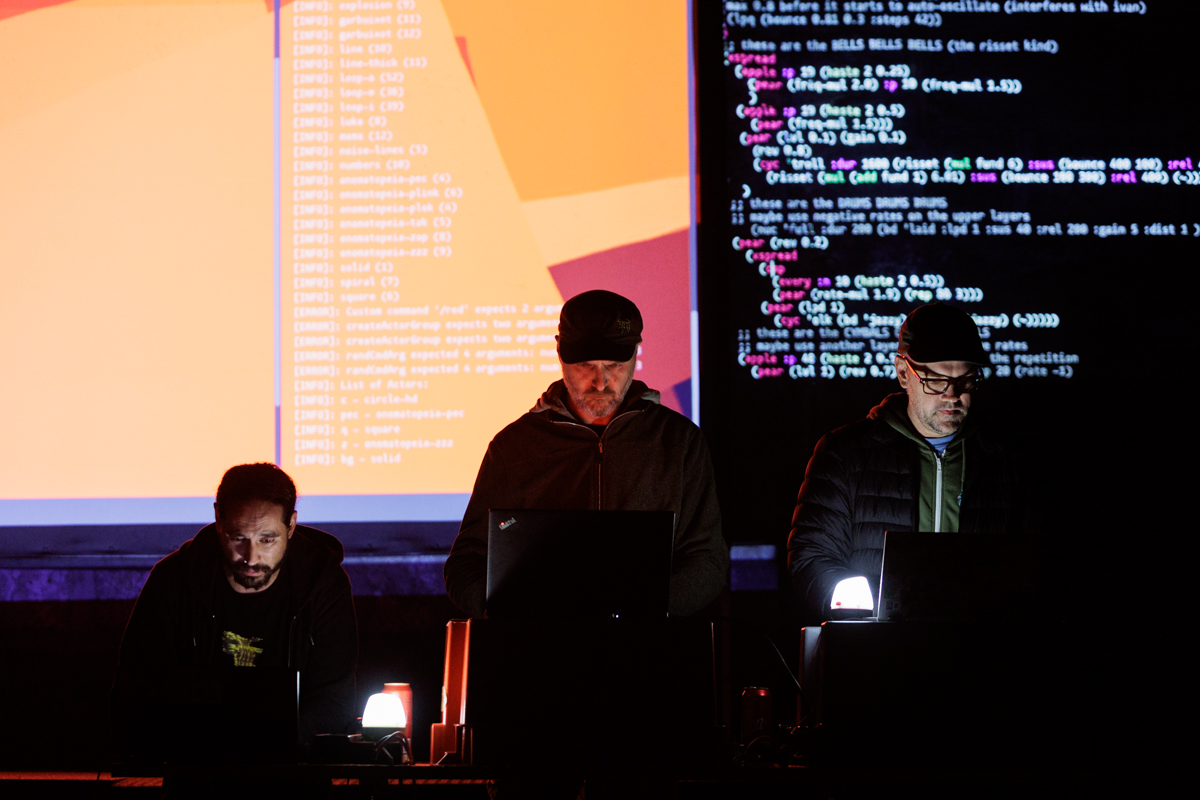
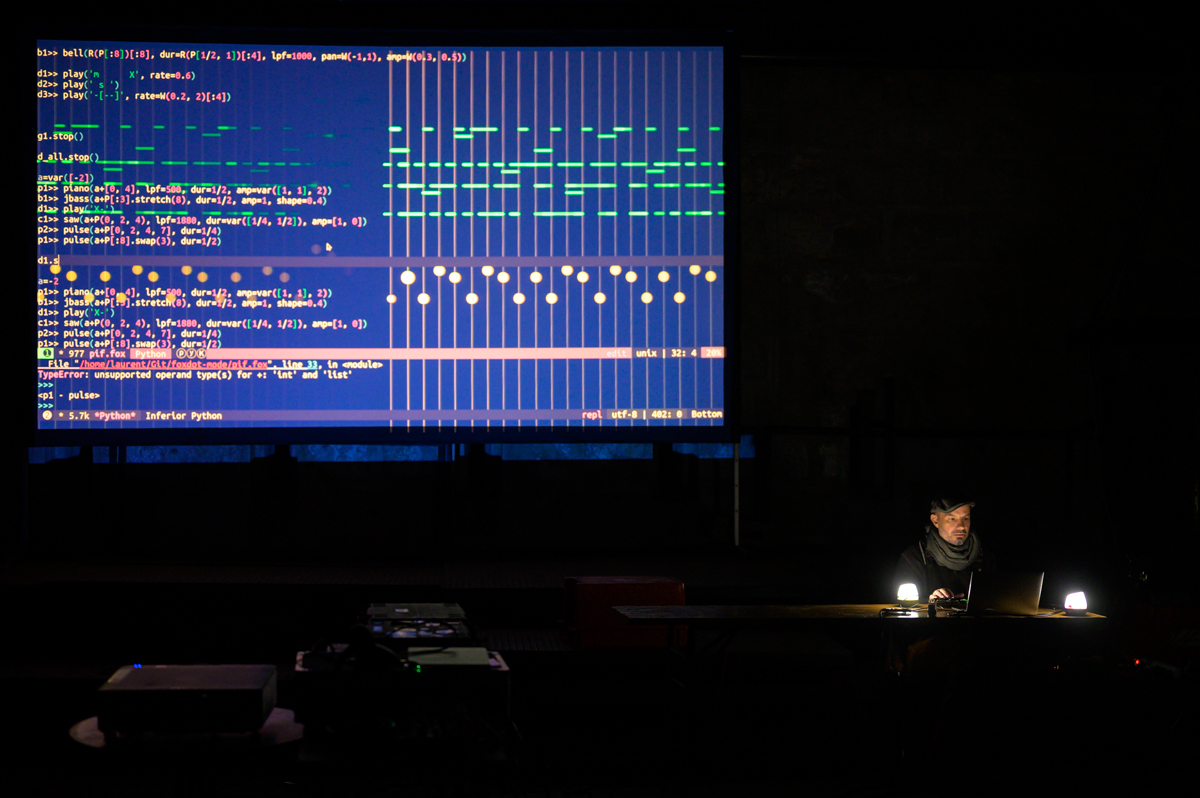
After the dynamic lasers duo, another PIFsupergroup took the stage, this time consisting of Manu Retamero aka ëgg and Tina Tonagel, accompanied by Sophia Bulgakova‘s digital-analogue visual delights. The last two performances were yet another treat for live coding fans: the supertrio of the Toplap Barcelona collective – Iván, Roger and Niklas – showed off their programming and performance skills and, of course, their screens. Iván codes his music in SuperCollider with the assistance of AI, Niklas performs in his own Mégra language, while Roger used Animatron, a 2D animation live coding environment he co-created with Glen Fraser, for the visuals. Laurent, who prepared his AV set in FoxDot, provided the perfect finale with exactly the right amount of rhythms, repetition and melody. Wednesday didn’t exactly provide a traditional end to the day, but a glance at the timetable announced a much more traditional Thursday – workshop on workshop on workshop. A true classic, which of course we will also report on.
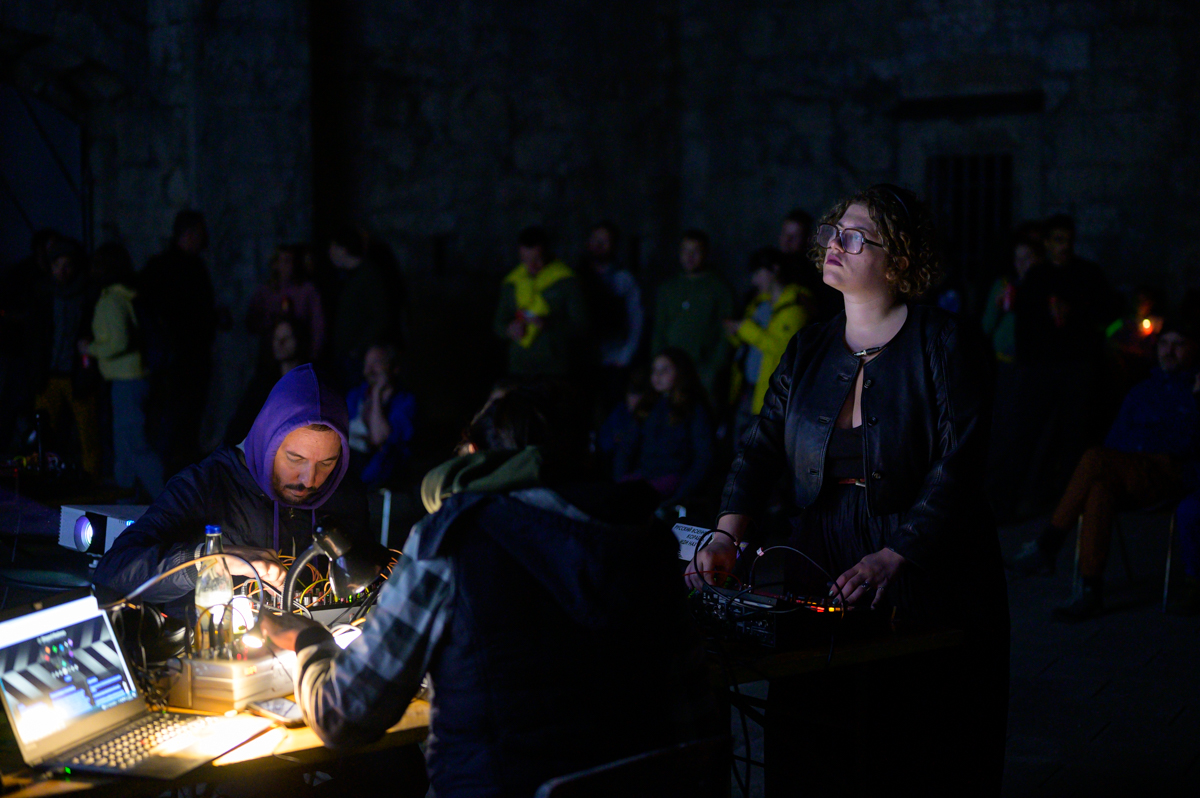
Tina and Manu, accompanied by Sophia’s visuals. Photo: Katja Goljat, Matjaž Rušt
Barcelona’s supertrio – Iván, Roger and Niklas. Photo: Katja Goljat, Matjaž Rušt
Laurent’s perfect finale. Photo: Katja Goljat, Matjaž Rušt

Clouds over PIFcamp //PIFtuesday

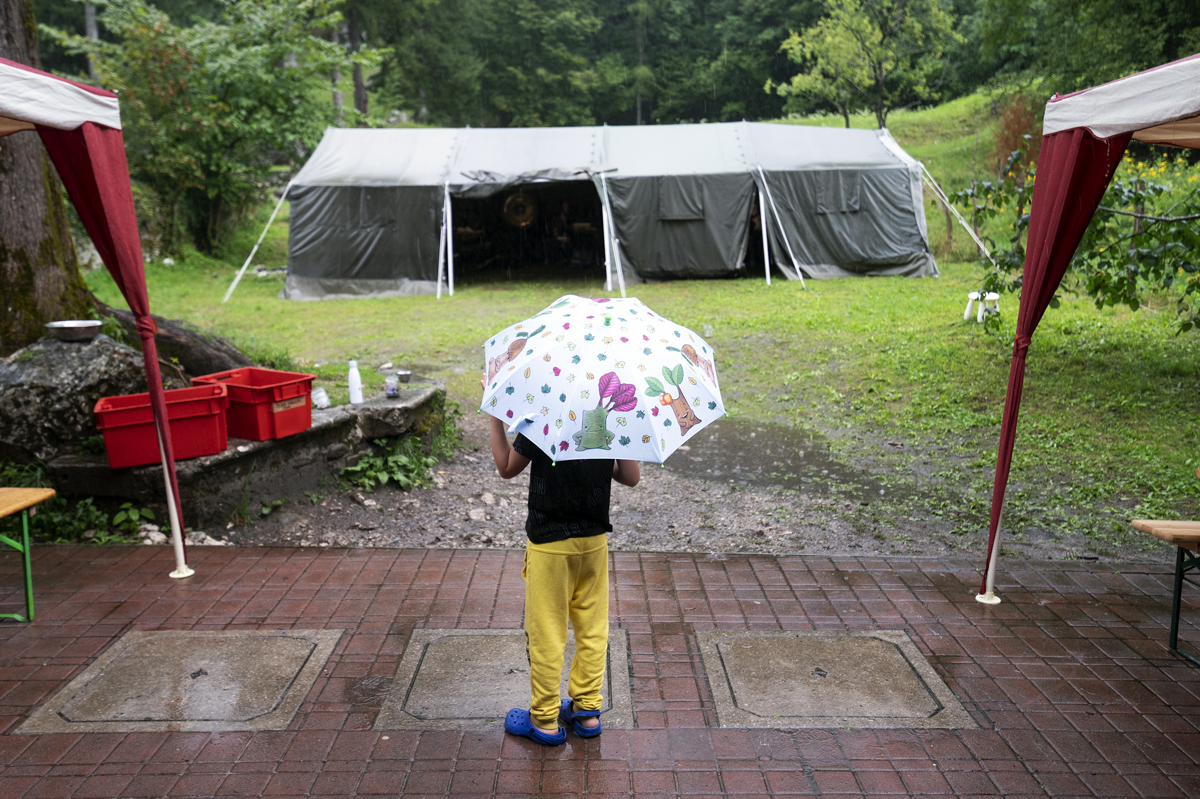
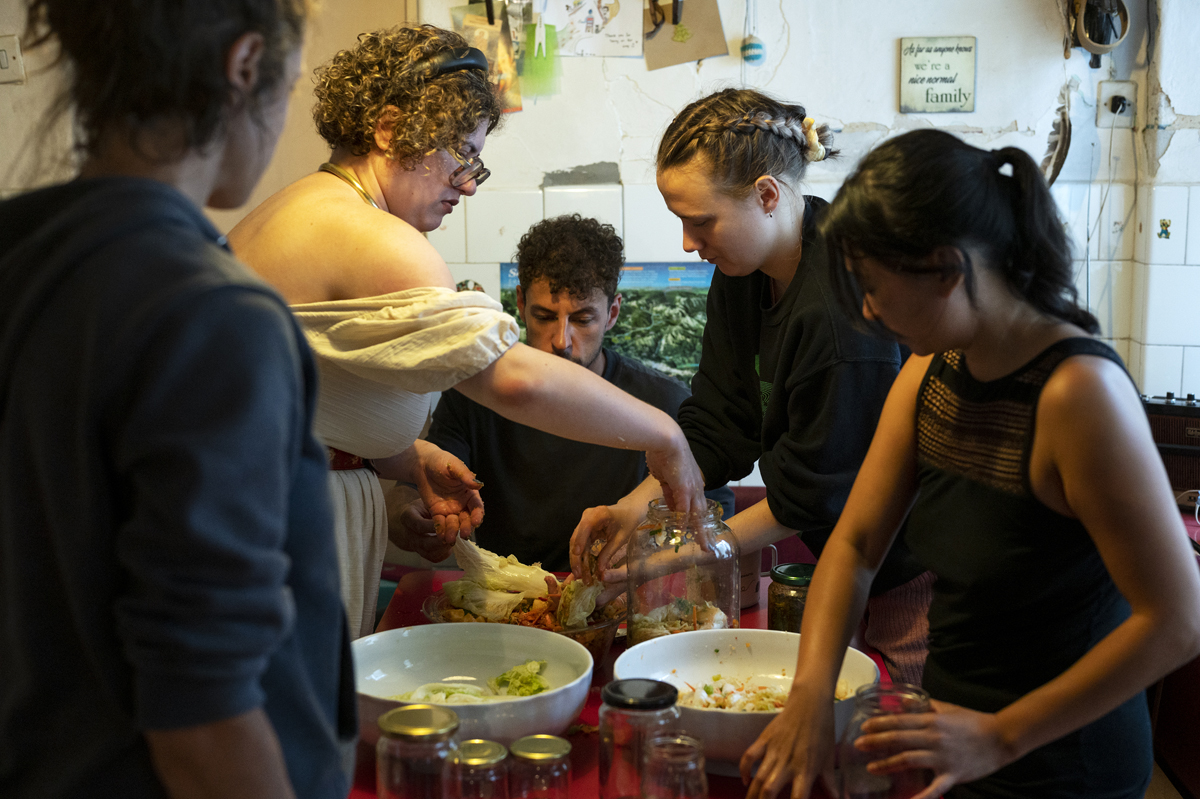
Participants woke up to a slow, rainy Tuesday. Grey clouds were hovering over PIFcamp for most of the day, but few raindrops won’t stop PIFlars, maybe just slow them down a bit. In the morning, the kimchi-making workshop, led by Maya Minder, retreated to Neža’s kitchen. We will report on the results on Saturday, when the fermented delicacy will be ready for tasting.

Kimchi-making workshop. Photo: Katja Goljat, Matjaž Rušt

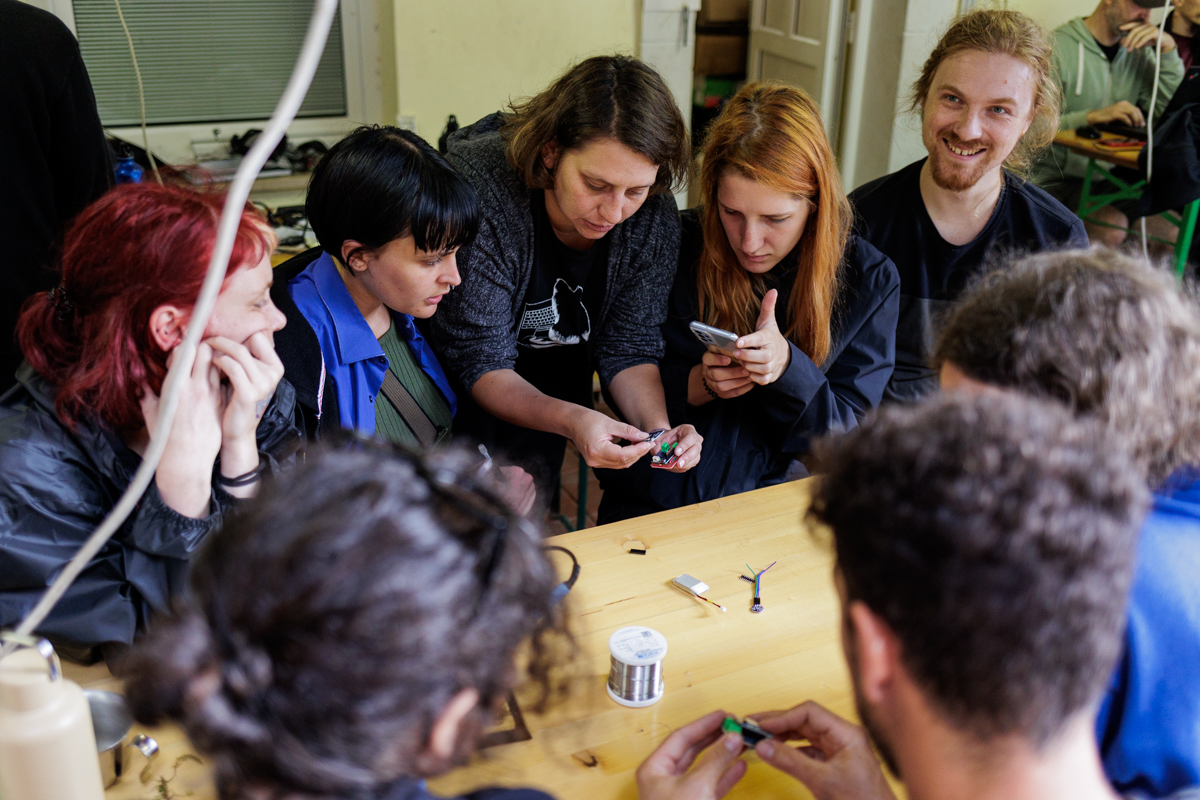
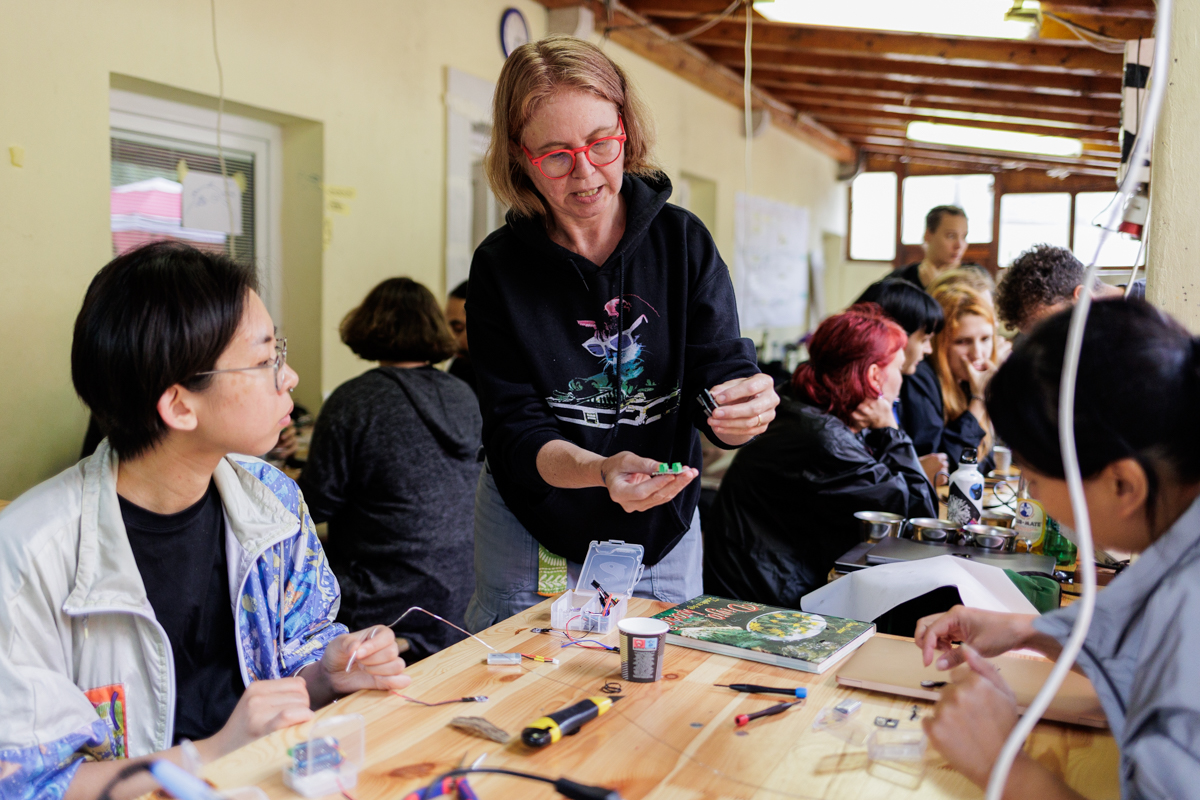
After lunch, Alicia Champlin and Julia Múgica invited the participants for a heart rate monitor building workshop. Their wearable device uses an EPS32 microcontroller that sends the data of the heart rate sensor over WiFi. Alicia and Julia will then sonify the data and make a sound piece for a multi-channel setup. Their initial plan was to present it in the dome, but we’re sorry to say the weather conditions don’t seem to be ideal for that.

Building the heart rate monitors with Julia and Alicia. Photo: Katja Goljat, Matjaž Rušt

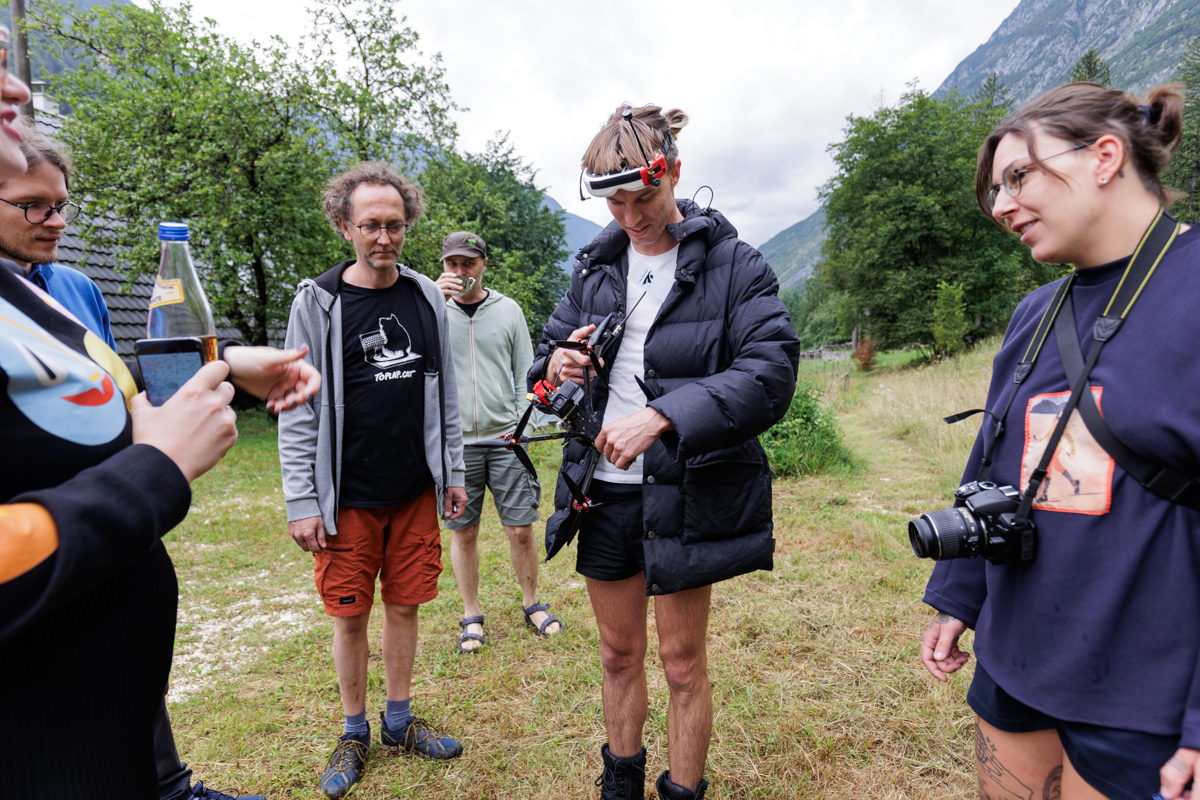
This year’s PIFresident, Michael Candy, who enjoys making nonsensical devices, presented his drone, on which he sometimes mounts a mobile phone with videos he has taken in other locations. Because he can. Michael is also an avid robot builder, so stay tuned for more info on his PIFprojects.

Michael’s drone presentation. Photo: Katja Goljat, Matjaž Rušt
Magical views after the rain. Photo: Katja Goljat, Matjaž Rušt
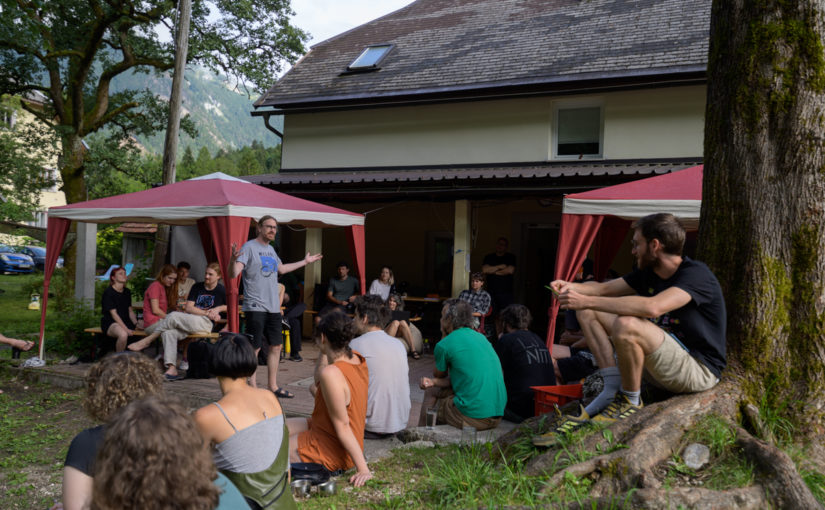
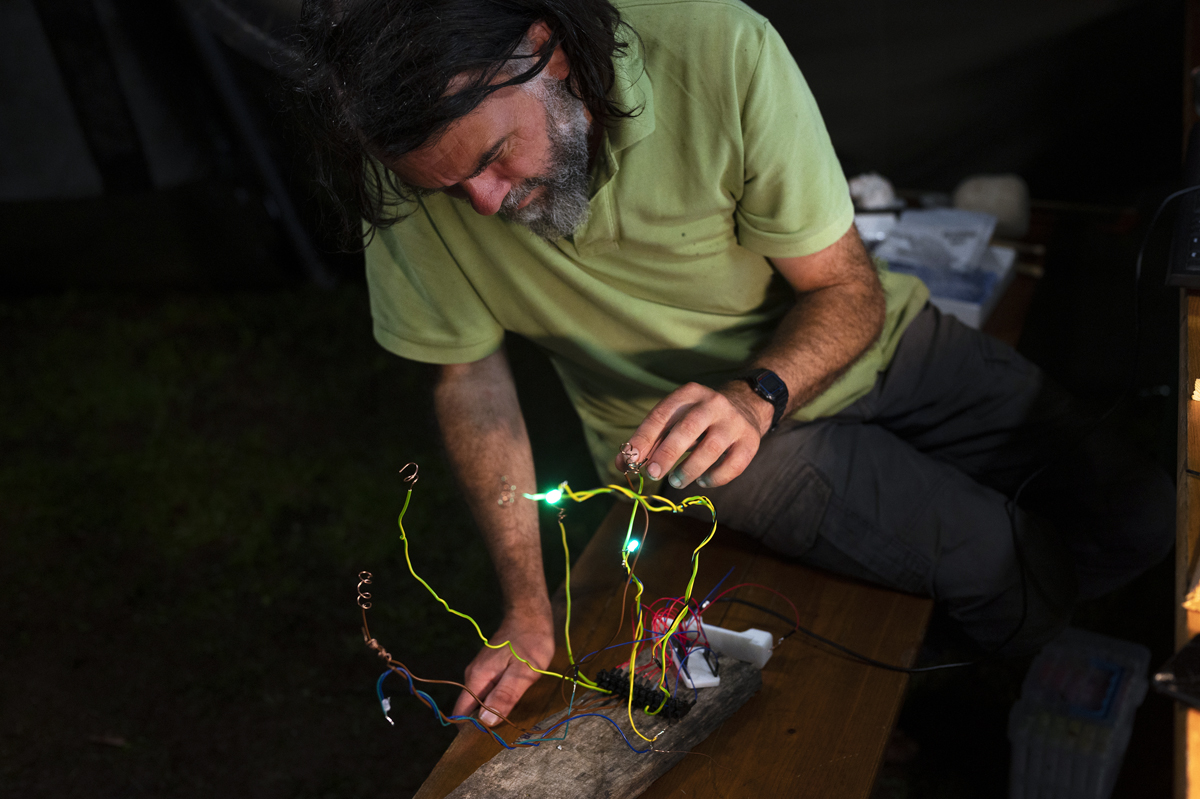
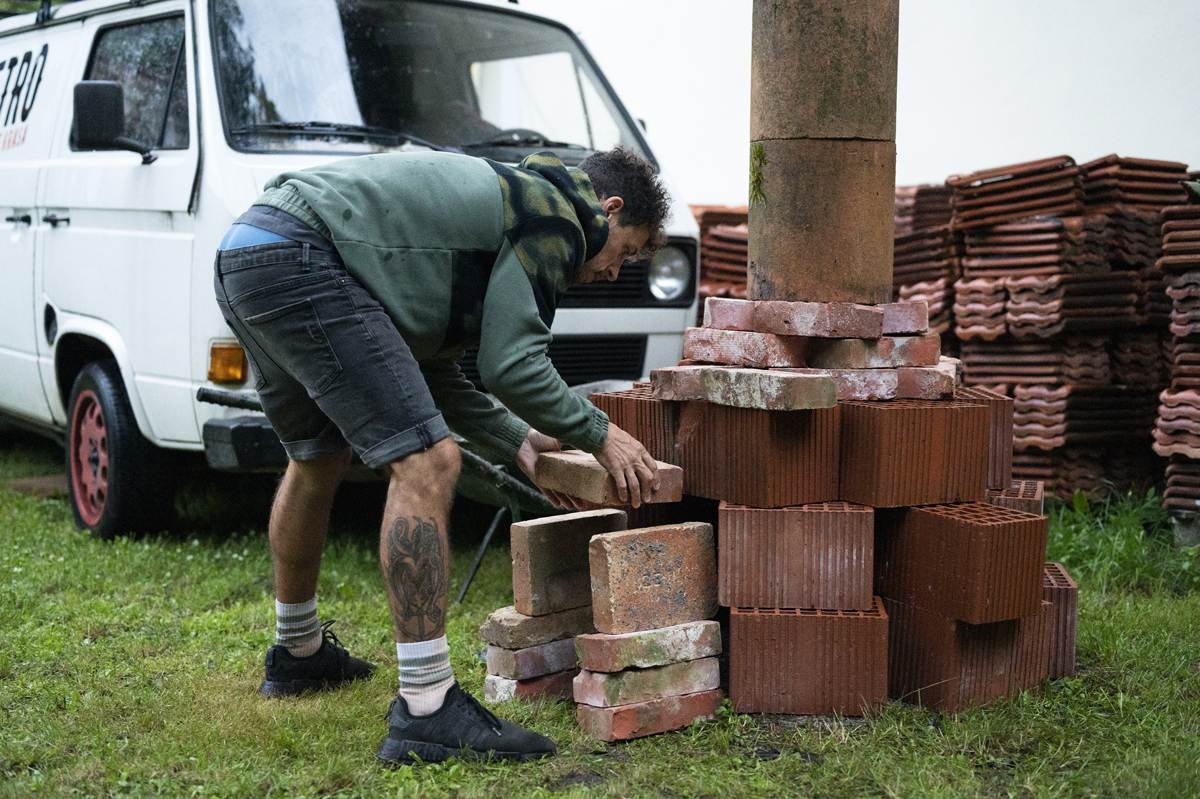
Rob Canning and his daughter Meta have been preparing for Thursday’s Networked Touch workshops, which will provide participants with a choice of three levels of complexity – from an LED brooch to a musical instrument that can be played by touching wires. Apart from building various devices, some PIFparticipants were also hard at work laying bricks. Meet Martin Mušič (on the photo below Rob) who works with clay and porcelain. He already invited fellow participants to get their hands dirty and try different types of clay for modelling objects. One of his PIFprojects also includes building a DIY clay burning oven to be used by the end of the week.
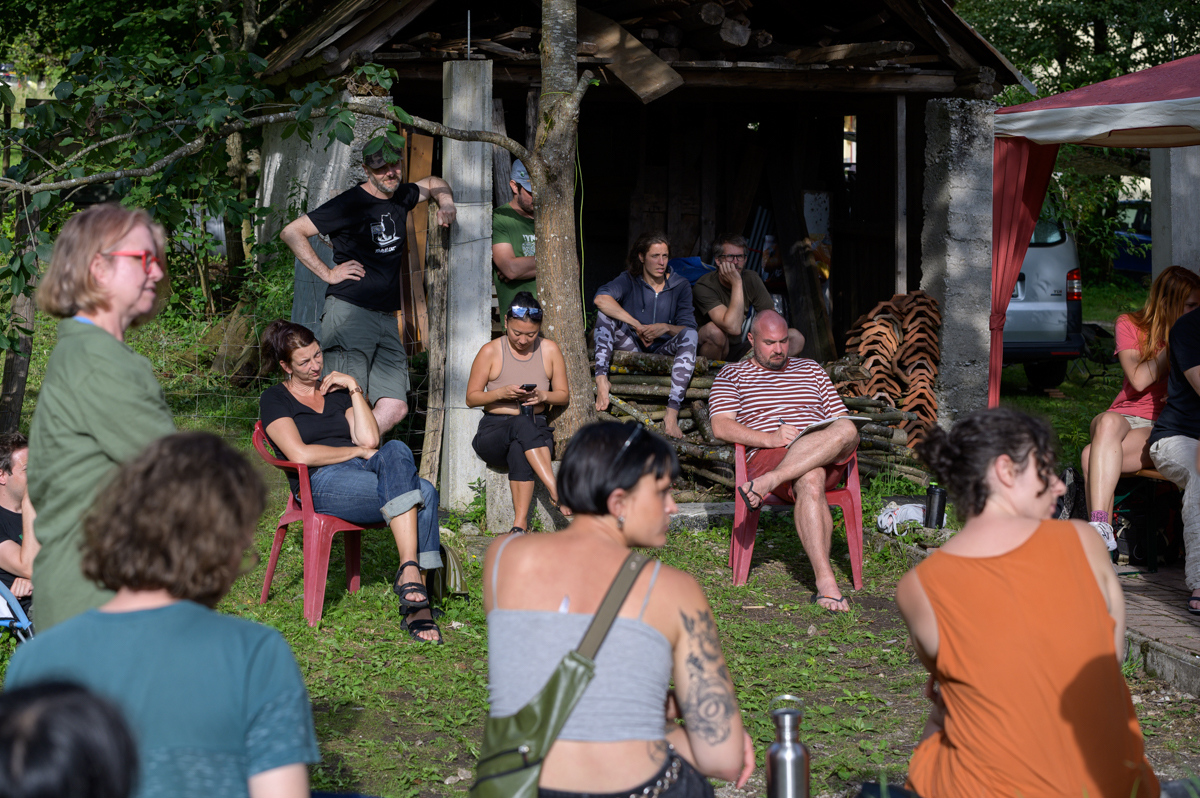
Rob is preparing for the workshop. Photo: Katja Goljat, Matjaž Rušt
Almost there… Martin is laying the last brick of his DIY clay burning oven. Photo: Katja Goljat, Matjaž Rušt

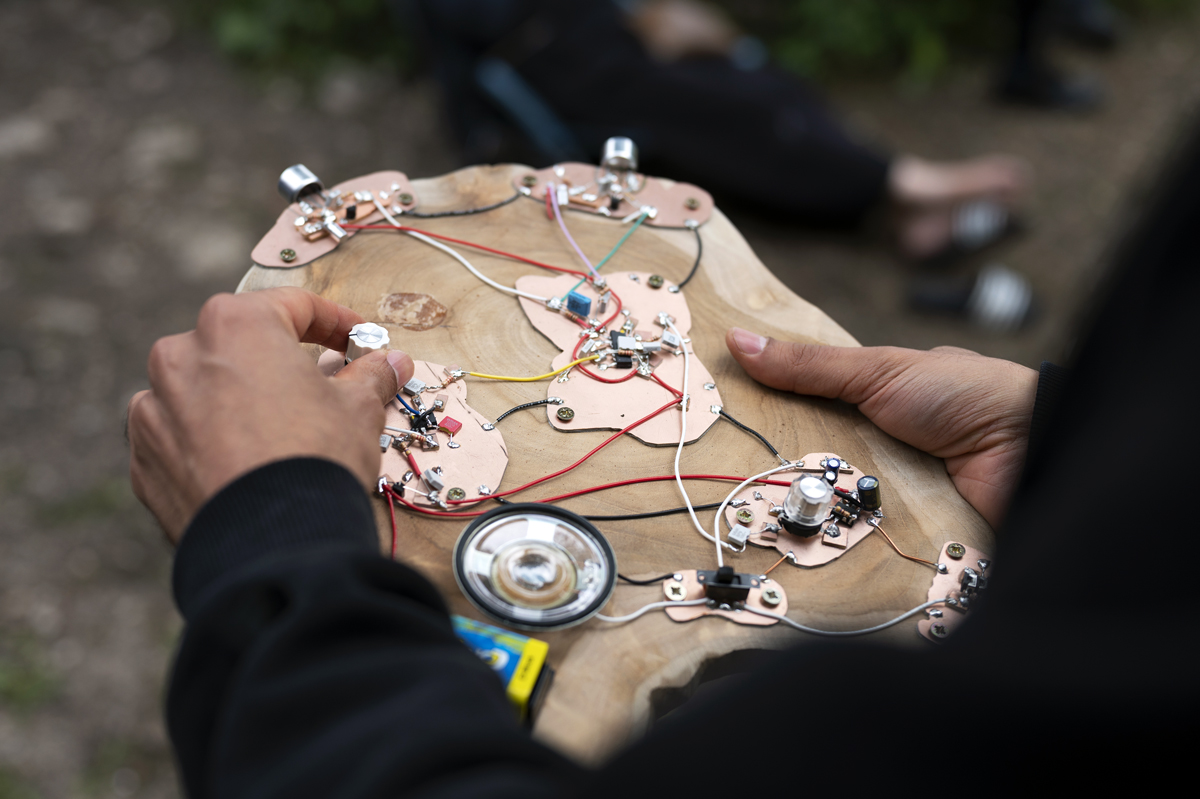
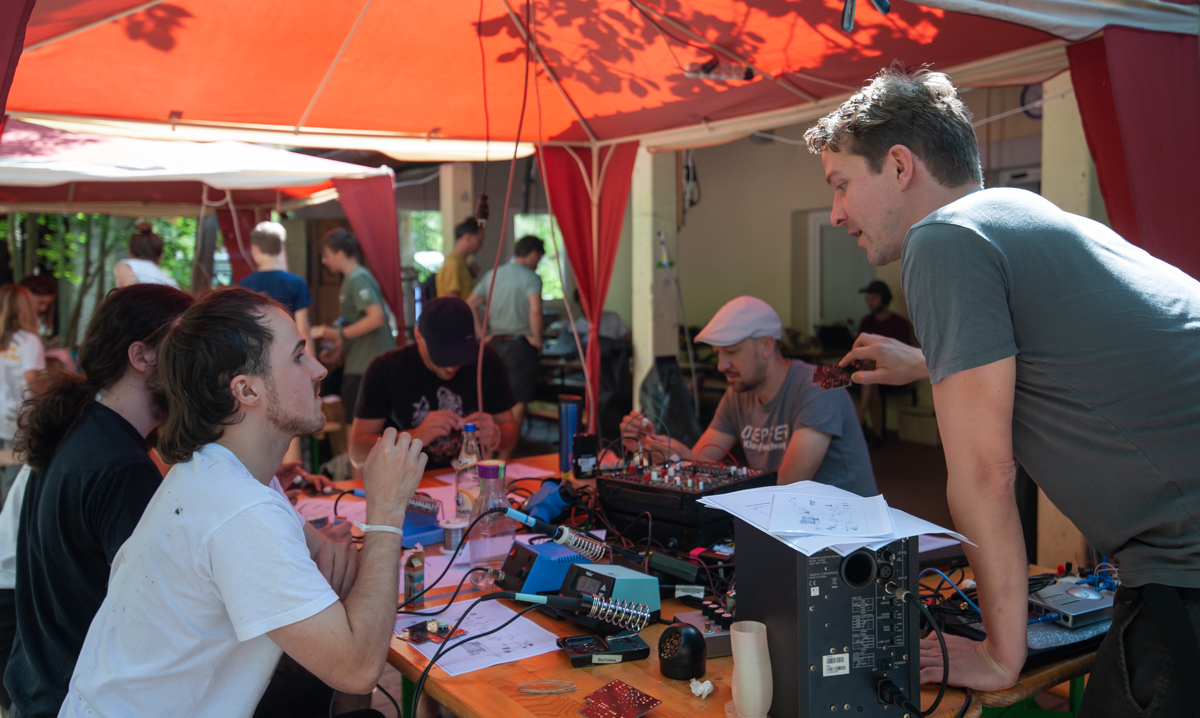
The last Tuesday workshop was delivered by Rodolfo Acosta Castro, who enthused the participants with bat calls, echolocation, and bat detection devices. His own design, a bat detection device which translates the ultrasound frequencies to lower frequencies, audible to humans, really impressed the audience. Rodolfo prepared the materials for the participants, so they can build the devices themselves – apart from the receiver, he also designed a synth for reproducing bat calls. The most enthusiastic PIFlars started soldering right away, while the majority of the workshop participants just assembled the kits and made plans to start building in the following days. Of course, you’ll be the first to know when they succeed.

Rodolfo’s bat detection device. Photo: Katja Goljat, Matjaž Rušt

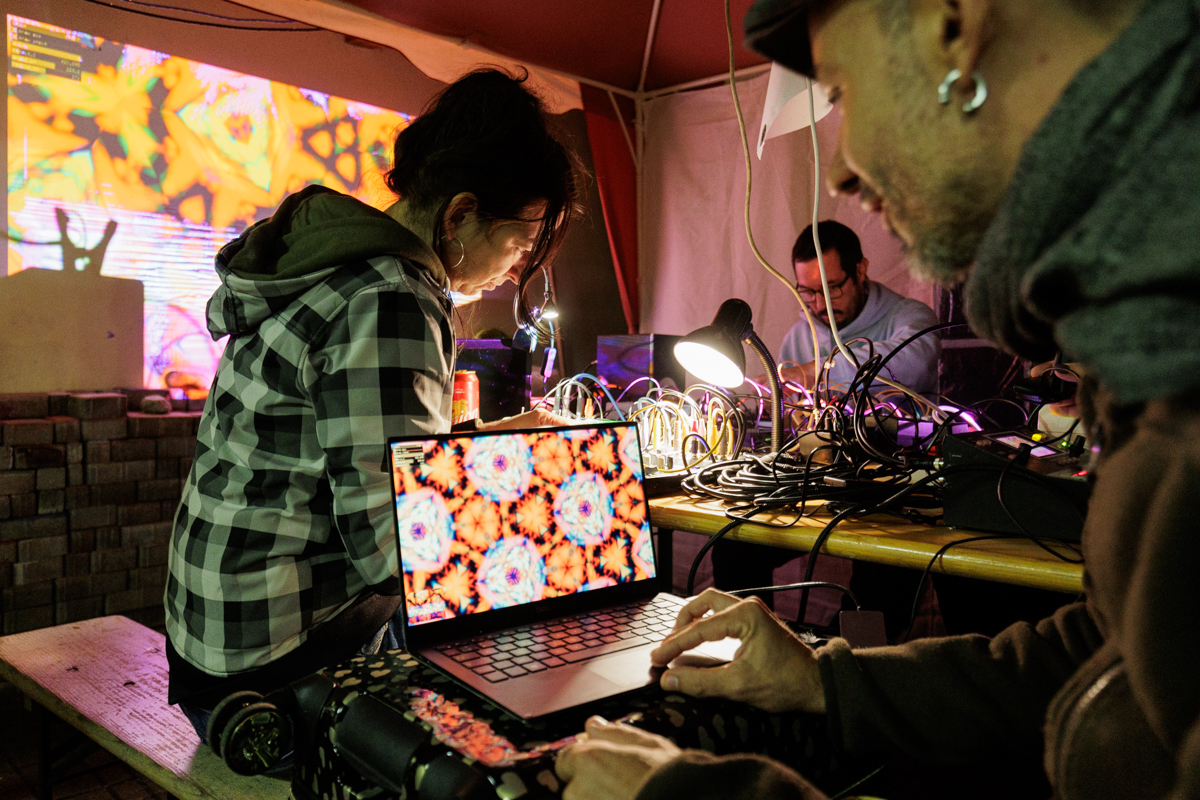
Monday’s jam under the canopy was taken over by the live coders, while Tuesday saw the return of the synth (and apparently feedback loops) enthusiasts. Sophia and Laurent did the visuals with a digital-analogue setup, while Manu and Tina played with synths and no input mixers. Their rich textures swayed participants into the night…

Synths under the canopy. Photo: Katja Goljat, Matjaž Rušt

Planning, attuning, exploring and learning //PIFmonday

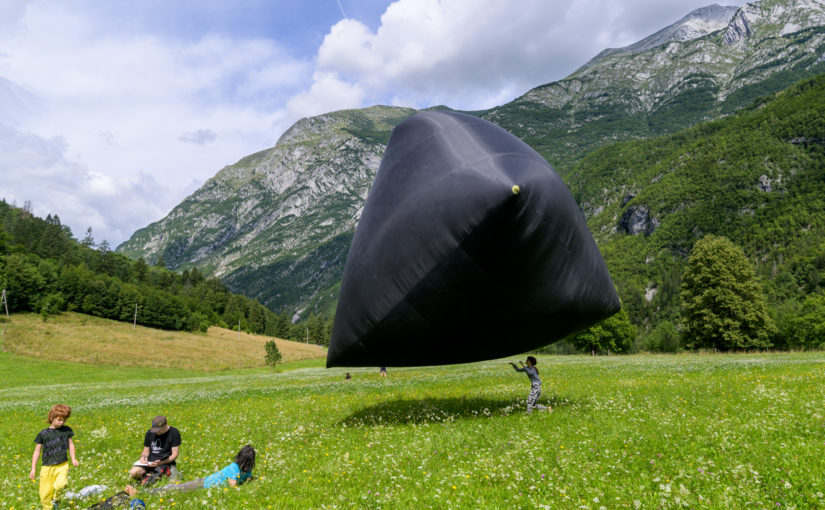
In PIFtopia, the work week doesn’t really start until Monday (not unlike other parts of the world). Participants mostly spent it planning, exploring and getting to know their surroundings. After breakfast, a group of PIFparticipants joined Ewen for a walk and the launch (or rather: lifting) of his solar balloon. Other PIFlars spent the morning getting attuned and exploring the PIFcamp’s surroundings, but after lunch (and coffee!), the grounds slowly started to resemble a real work site.

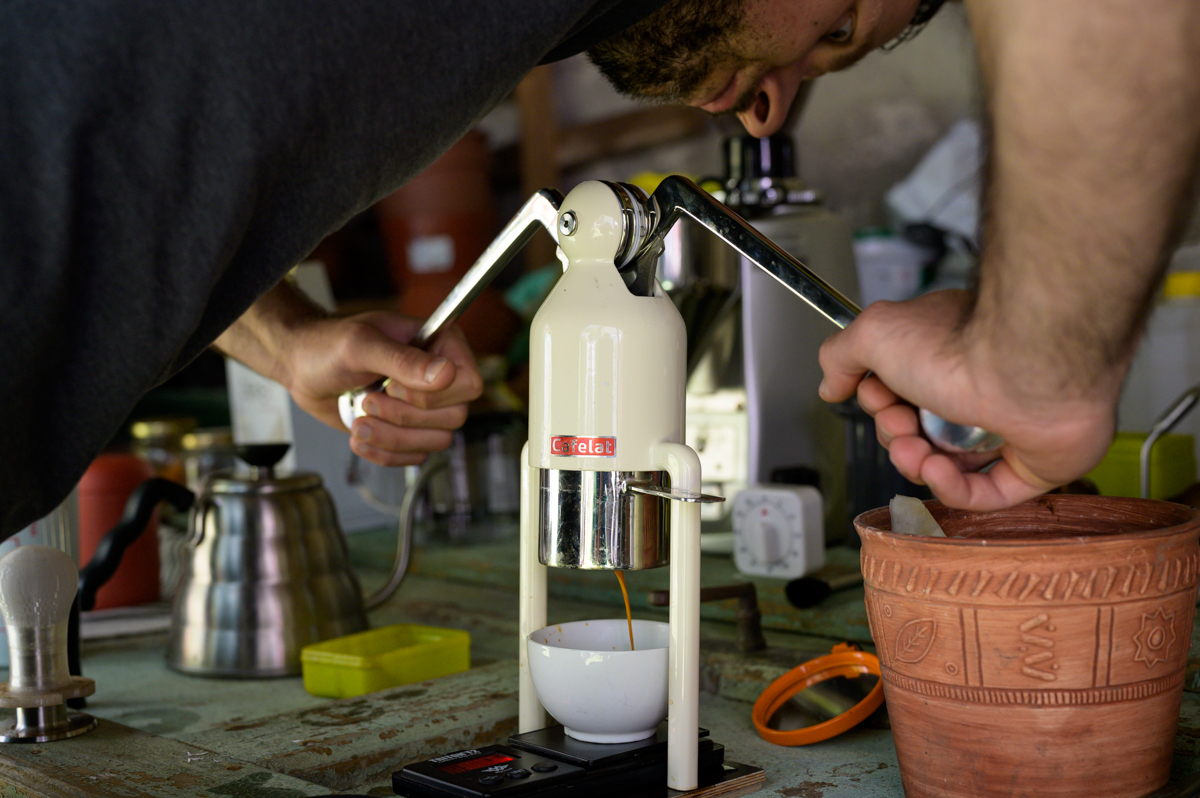
Tilen pressing the espresso in the Coffee Nerds corner. Photo: Katja Goljat, Matjaž Rušt

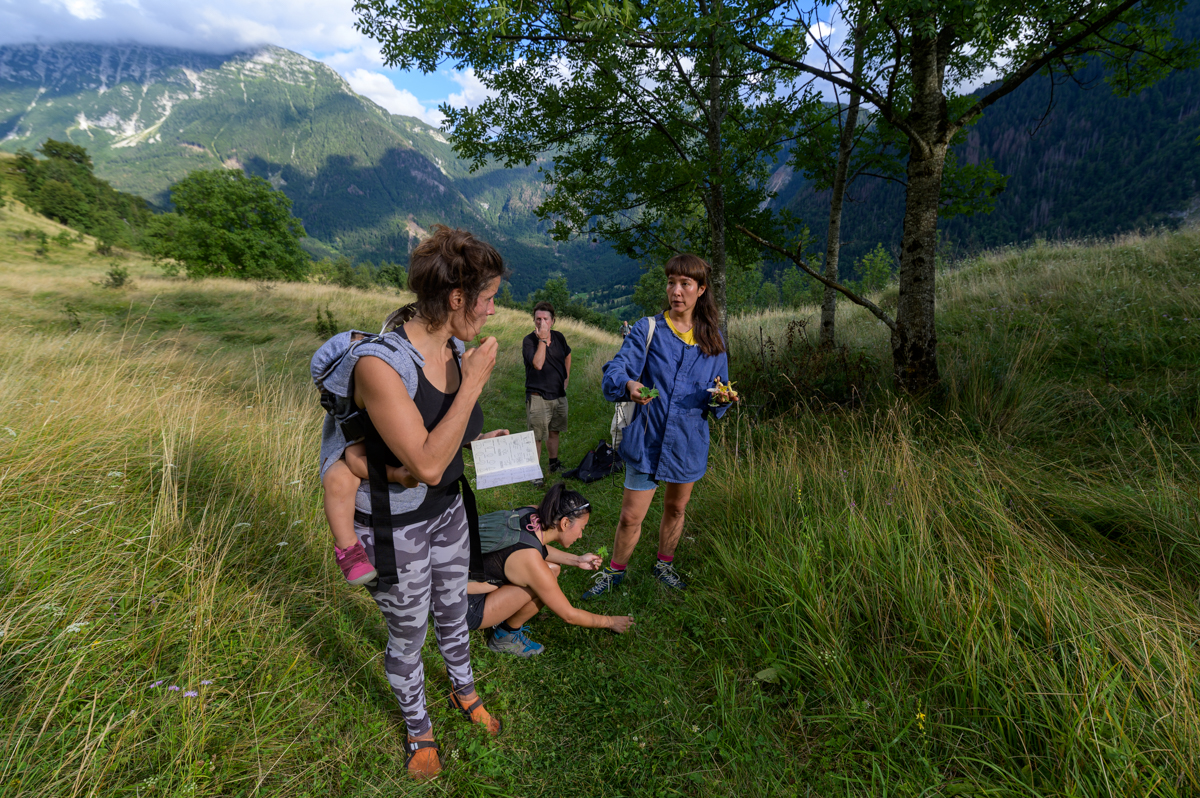
In the afternoon, a group of performers and organizers of the PIFconcert and Algorave at the Fort Kluže set off for a visit to the venue, while wild food enthusiasts went for a walk with our neighbour Neža to Lamovje, where they explored the edible plants and mushrooms growing in the area. We will report on the foraging expedition and other food-related activities in a special PIFood feature. In the meantime, the base camp hosted some workshops. At 4:20, Maggie Kane organized a PIFjournaling workshop under the canopy, and Nejc Trampuž gathered a group of curious PIFparticipants under the tent for an intro presentation on creating animations with AI.

Foraging expedition. Photo: Katja Goljat, Matjaž Rušt
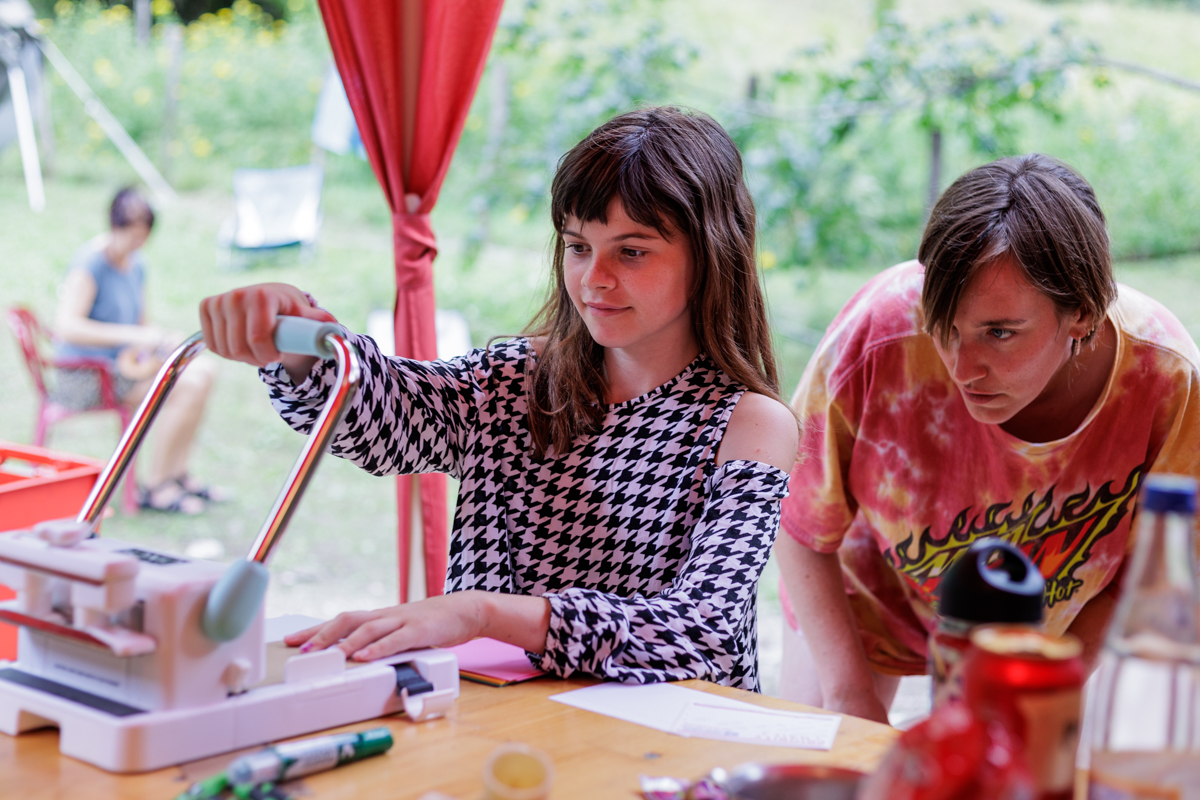
Meta is learning bookbinding techniques, while Maggie observes. Photo: Katja Goljat, Matjaž Rušt
Nejc is presenting his process of making animations with AI. Photo: Katja Goljat, Matjaž Rušt

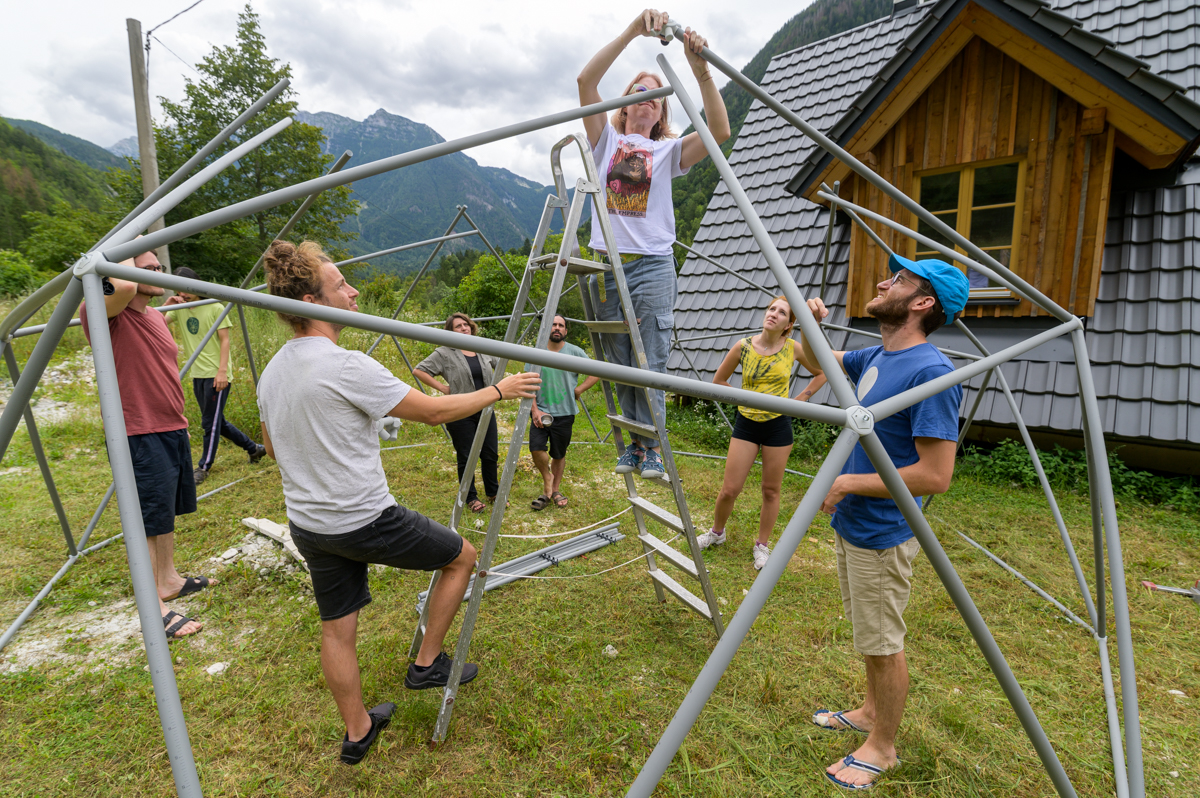
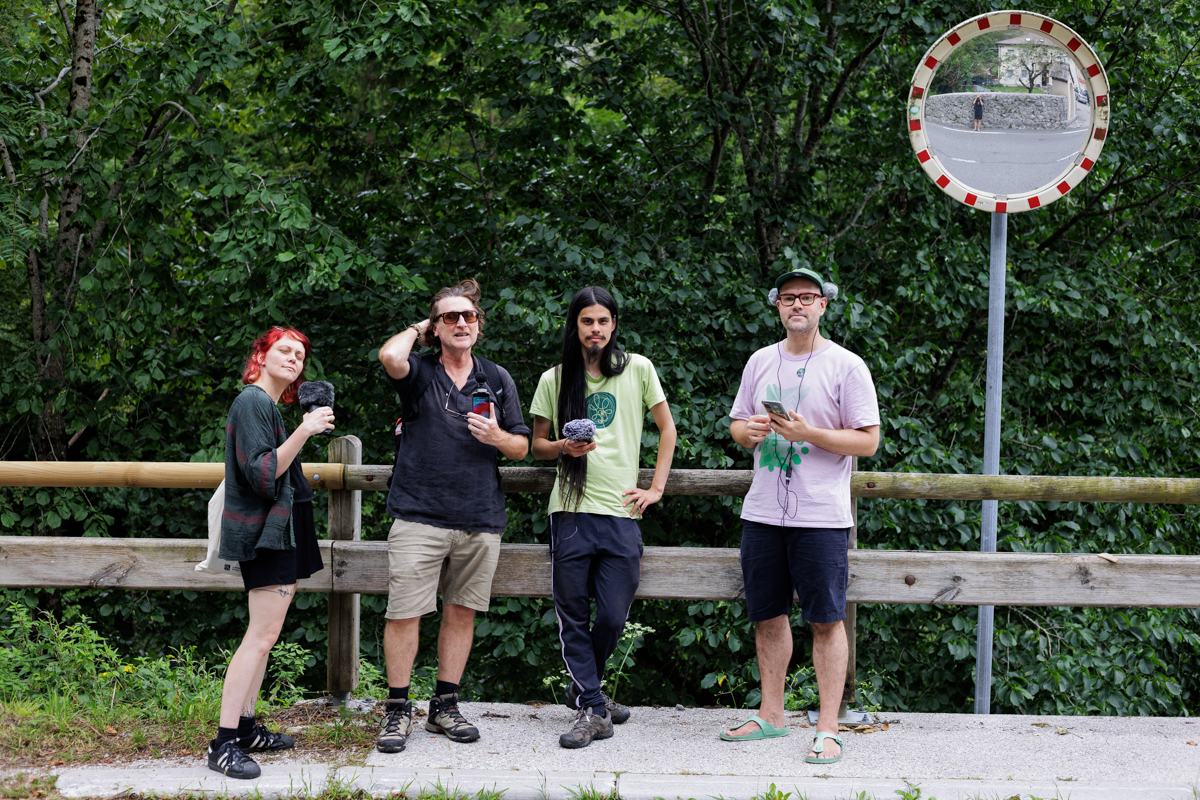
Preparations are also well underway for the projects in the Immersive Sound Dome. Lan Wu is one of the participants who will be presenting his work in the dome, a sound piece featuring field recordings. In the afternoon, he invited the field recording enthusiasts for a test walk and preliminary recordings of the sounds around Soča river.

Assembling the dome structure. Photo: Katja Goljat, Matjaž Rušt
The field recording team is ready. Photo: Katja Goljat, Matjaž Rušt

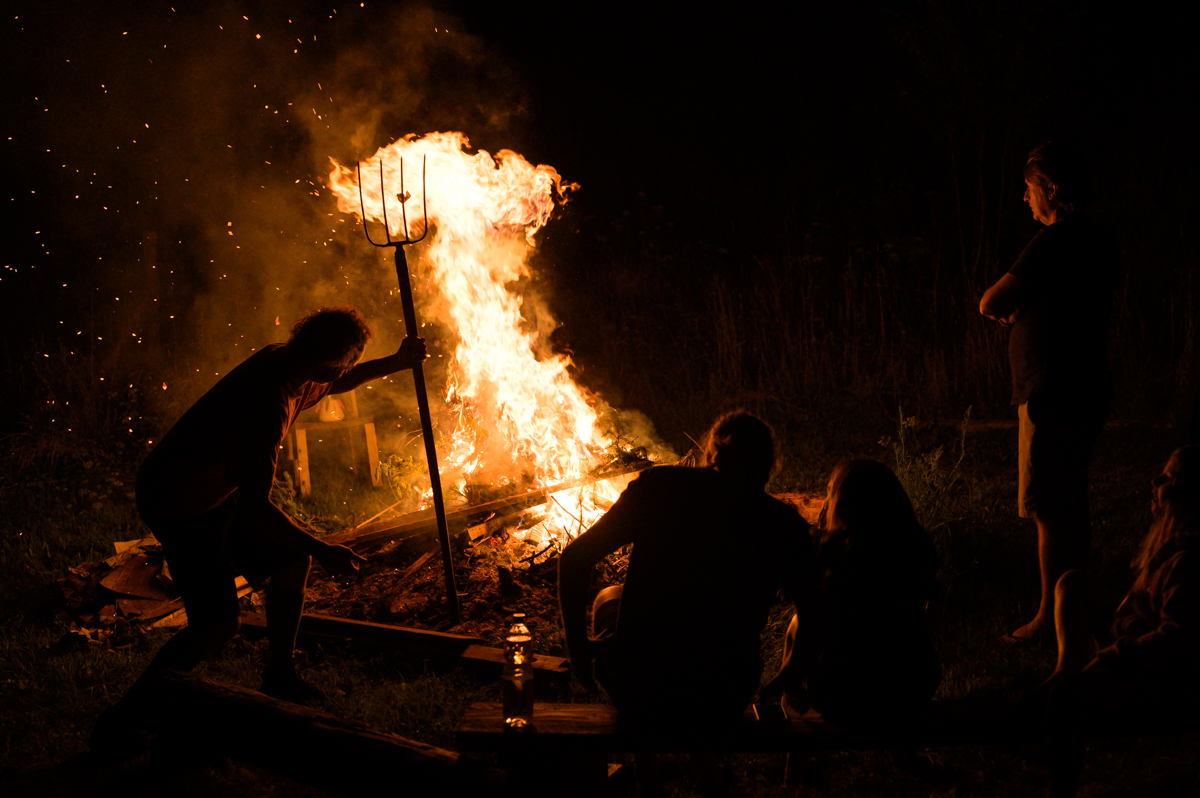
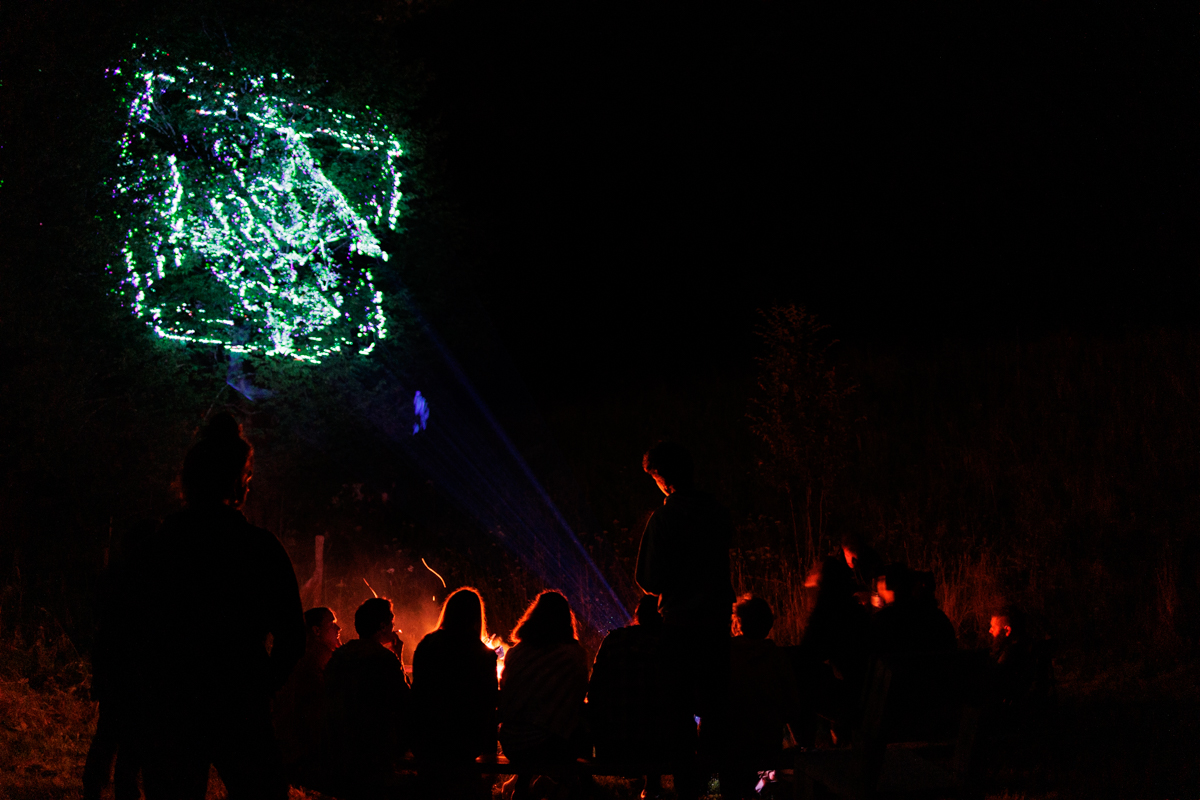
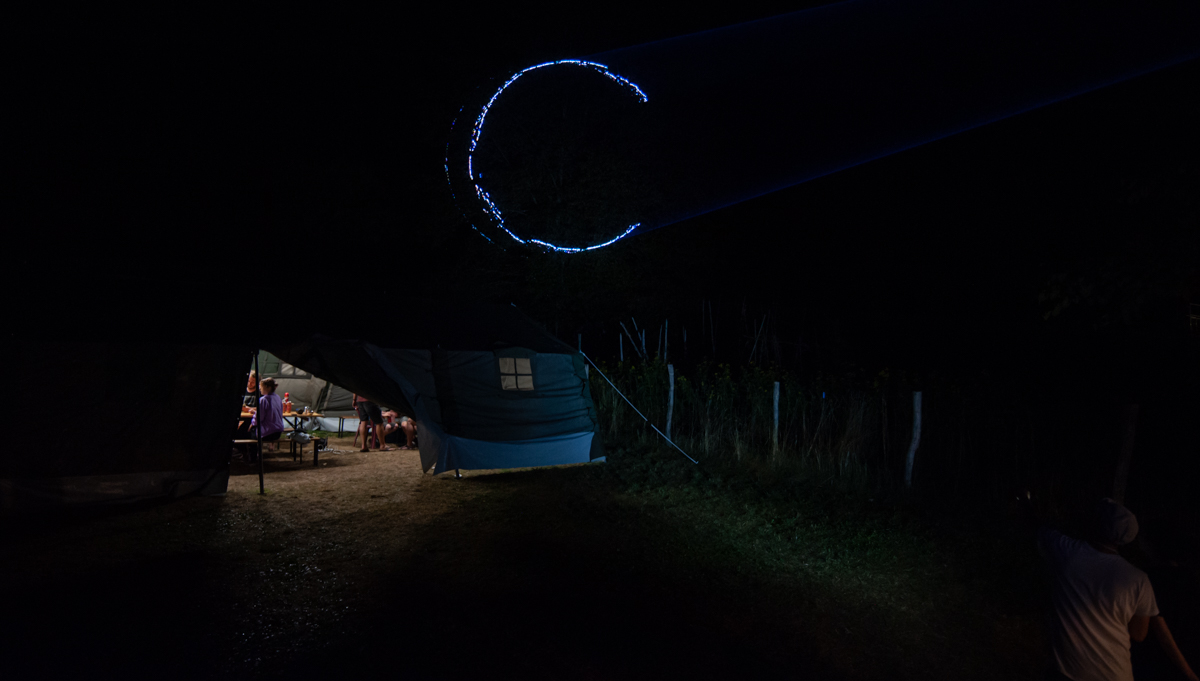
Monday ended with a bonfire, live coding and lasers projected onto a nearby tree by Hansi and Jerobeam (aka Oscilloscope Music). Despite copious amounts of coffee and clubbing beverages, your reporter is a bit slowed down due to low air pressure, but you can expect a more comprehensive report on the PIFprojects tomorrow.

Photo: Katja Goljat, Matjaž Rušt

Lasers, beeping and lightning

If you are wandering around Bovec and its surroundings on Wednesday 2 August, make sure to visit Fort Kluže in the evening. PIFparticipants will pull out their synthesizers, oscilloscopes, projectors and laptops for an evening of lasers, beeping and lightning between 9pm and 11pm.

Lineup:

(づ ◕‿◕ )づ Rob Canning & Robbie Hopper (+ Julia Múgica)

(づ ◕‿◕ )づ Linalab & Tilen Sepič (+ Oscilloscope Music)

(づ ◕‿◕ )づ Oscilloscope Music AV

(づ ◕‿◕ )づ ëgg & Tina Tonagel (+ Sophia Bulgakova)

(づ ◕‿◕ )づ Niklas Reppel & Iván Paz (+ Roger Pibernat)

(づ ◕‿◕ )づ Laurent Malys AV

Free entry.

In case of thunderstorms the event will be cancelled.

PIFprojects on our radar

What will you read about on this year’s PIFlog? After the introductory presentations, we can predict that you will once again enhance your knowledge about live coding, witness the return of fermentation and foraging enthusiasts and immerse yourself in the surroundings of the village of Soča with all your senses. Once again, synths, lasers and all sorts of robots will abound. The worksite is ready, let’s get to work!

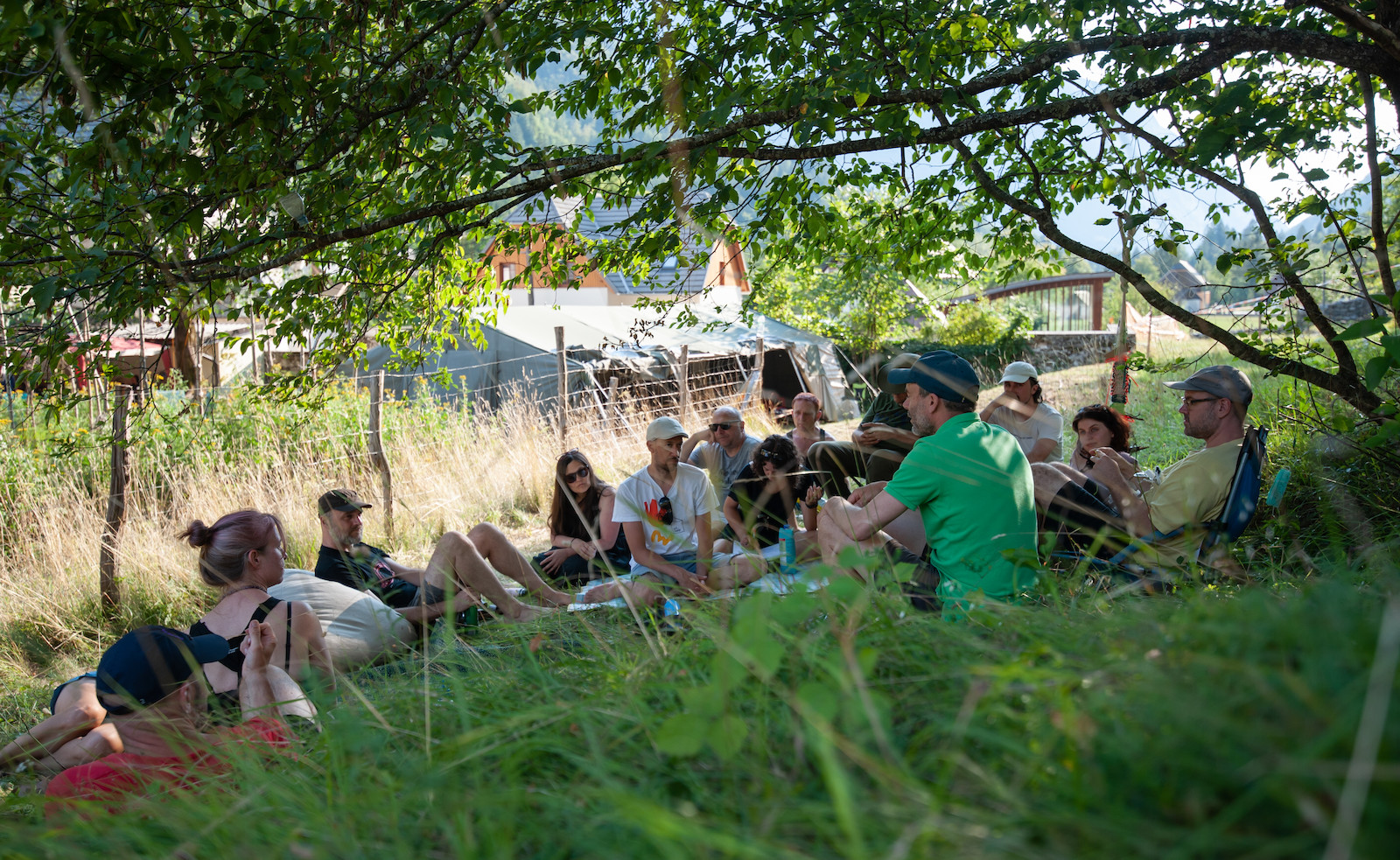
Photo: Matjaž Rušt

Along with many of the live coders you’ve already met on this blog, this year’s participants also feature a few newcomers. Laurent Malys is attending PIFcamp for the first time this year, and this week he will continue working on his performance Body to Code, which combines dance and live coding. Ironic and impractical, his transhumanist performance showcases the creativity of algorithmic electronic music while questioning the interconnections between humans and machines.

This image has an empty alt attribute; its file name is 041_KAT9475-1-1024x681.jpg

Laurent during his PIFproject presentation. Photo: Katja Goljat

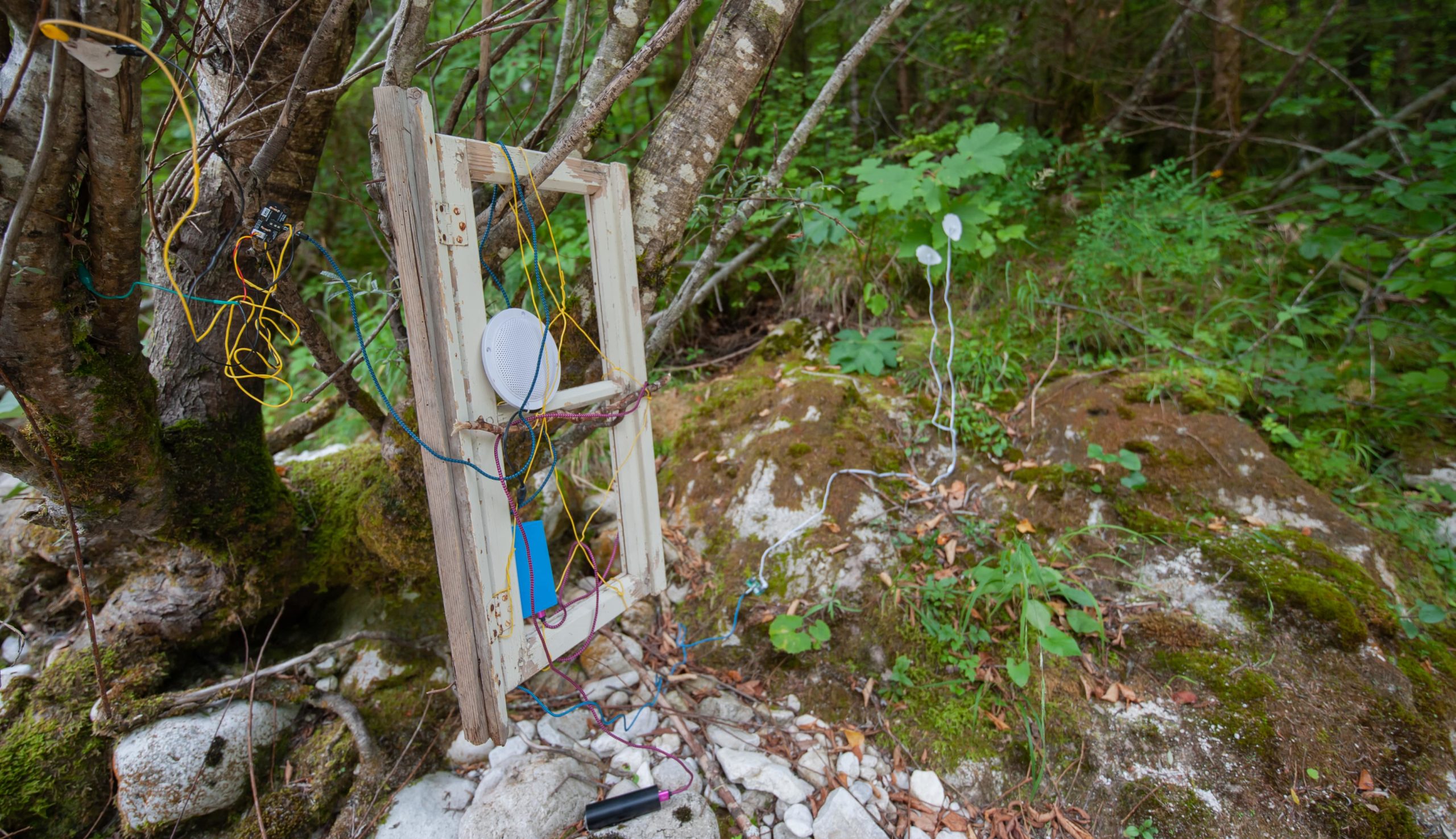
Niklas Reppel, one of the PIFcamp returnees and members of the Toplap Barcelona collective, often combines live coding with field recordings in his practice. This year, he will populate the surroundings of PIFcamp with various objects on which he is placing binaural microphones (in the shape of human ears) to explore how the world around us sounds from a non-human perspective. The project is dedicated to the memory of composer and sound artist Alvin Lucier.

Niklas and his listener – a teapot with ears. Photo: Matjaž Rušt

Blaž Pavlica, an old PIFcamp familiar, is back with his DIY sound dome project, which he has upgraded in every way this year – in addition to a brand new lightweight structure that makes assembly easier, the immersive sound dome now includes a 16-speaker system, with a canopy floating above it to protect it from the rain. The dome soundscape will be co-created by a number of PIFlars, and we’ll make sure to report on their projects in the coming days.

This image has an empty alt attribute; its file name is 082_KAT9635-1-1024x682.jpg

Dome projects planning with Blaž, its navigator. Photo: Katja Goljat

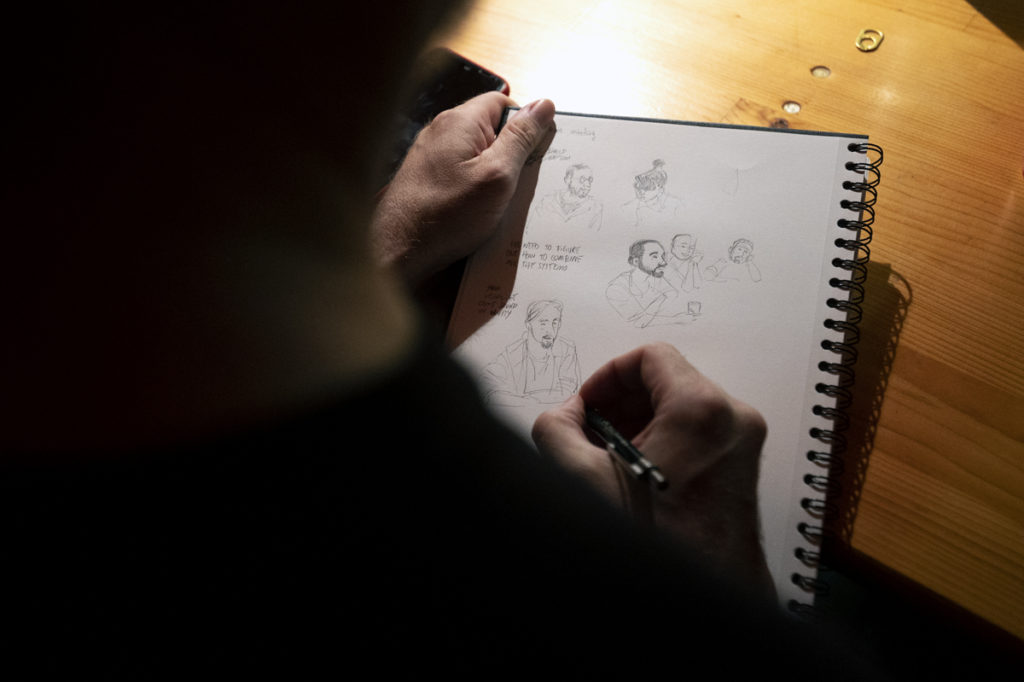
In addition to the writers of your favourite PIFlog, reporters for Makery and other documentarists are present at PIFcamp grounds. Live coder and illustrator Roger Pibernat, who was one of the more active participants last year, will be creating a visual diary for the aforementioned portal at this year’s PIFcamp. We can’t wait to see the results!

This image has an empty alt attribute; its file name is 081_KAT9632-1-1024x682.jpg

A sneak peak into Roger’s sketchbook. Photo: Katja Goljat

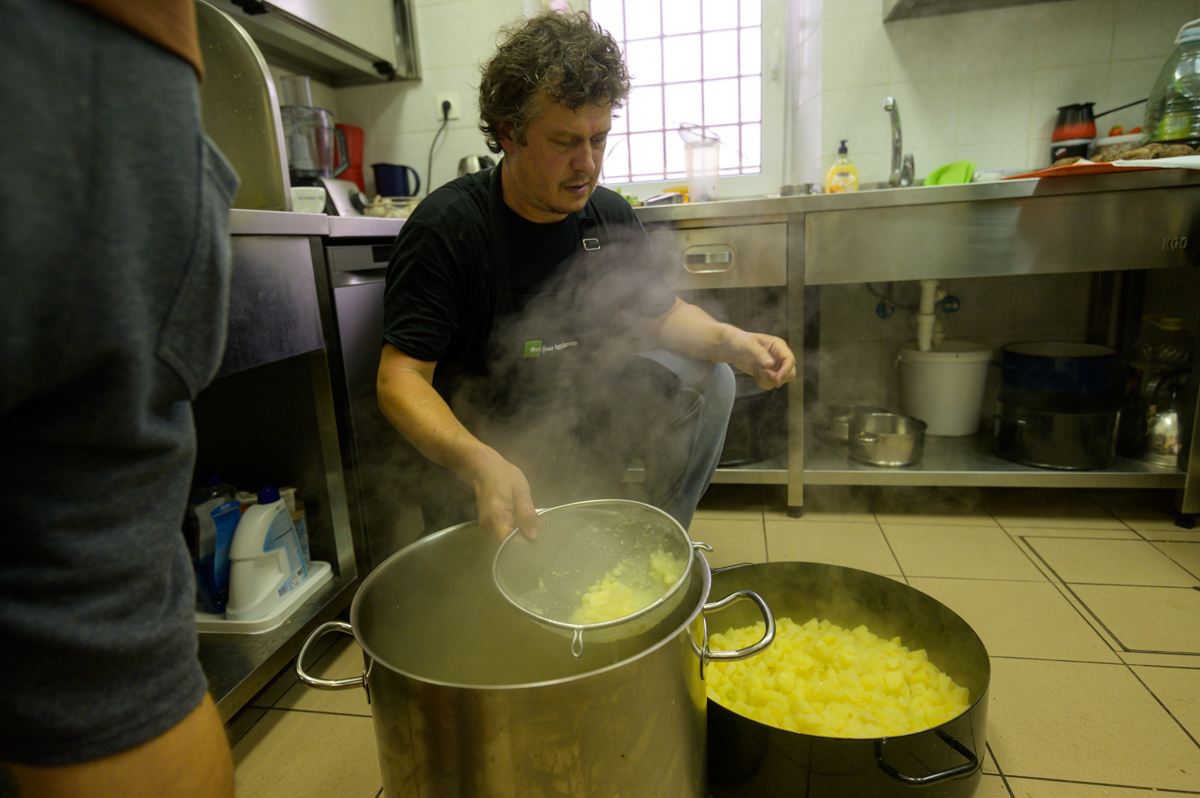
We end this introductory roundup of some of the projects with one of our favourite recurring PIFprojects – for the fifth year in a row, Klemen Košir has been researching ways to feed more than 60 hungry PIFlars. So far, it looks like he’s going to succeed yet again. Tomorrow we will report on the first workshops and the progress of the remaining projects, so stay tuned!

Chef Klemen figuring out potatoes. Photo: Katja Goljat

Let the PIFtopia begin!

PIFlars flocked to the Soča Valley from all directions to occupy the traditional PIFcamp venue for the ninth time in a row. After the official welcome speeches and a “no-no” (aka you don’t want to try this) list walk-through, more than 60 participants presented themselves and their PIFproject ideas. For the most reliable information on the progress of this year’s projects (and other PIFtopia activities and festivities) follow our PIFlog. We also kindly invite you to visit (and re-visit) the newly established blog on everything PIF and food related, PIFood, and the greatest Instagram meme account in the whole of upper Soča Valley, @pifmemes. Let the PIFtopia begin!

Traditional PIFcamp kick-off with PIFproject presentations. Photo: Matjaž Rušt

Saturday, last day at PIFcamp //PIFlog, Day 7

Bittersweet would be a perfect term to describe the last day of PIFcamp. This year’s Open Saturday started out to be more of an Open Skies Saturday, but that didn’t stop us from making the most of it.

Part 1: Morgenspaziergang to the river

Vivian’s and David’s watermill near the Soča river. Photo: Simão Bessa

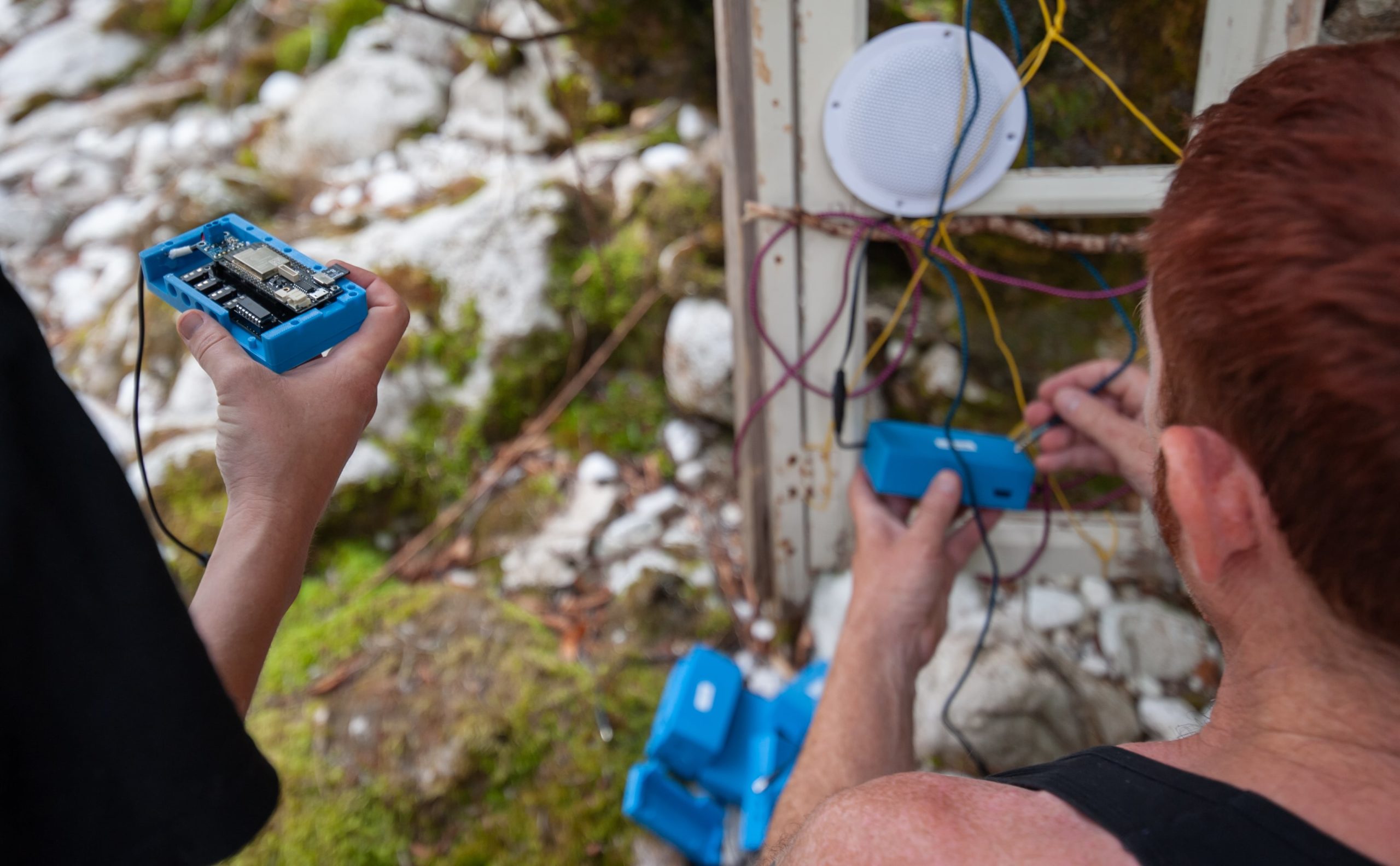
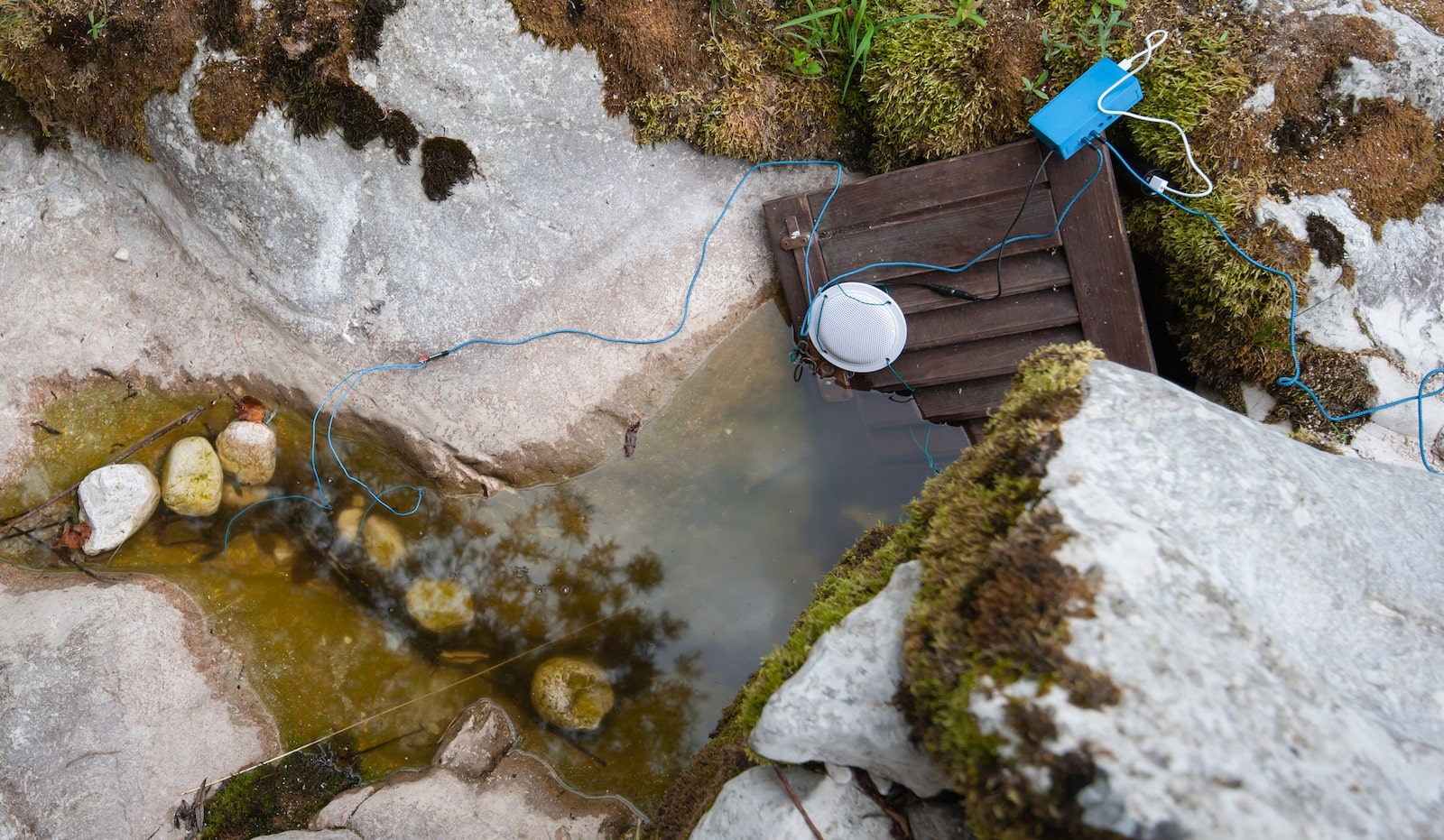
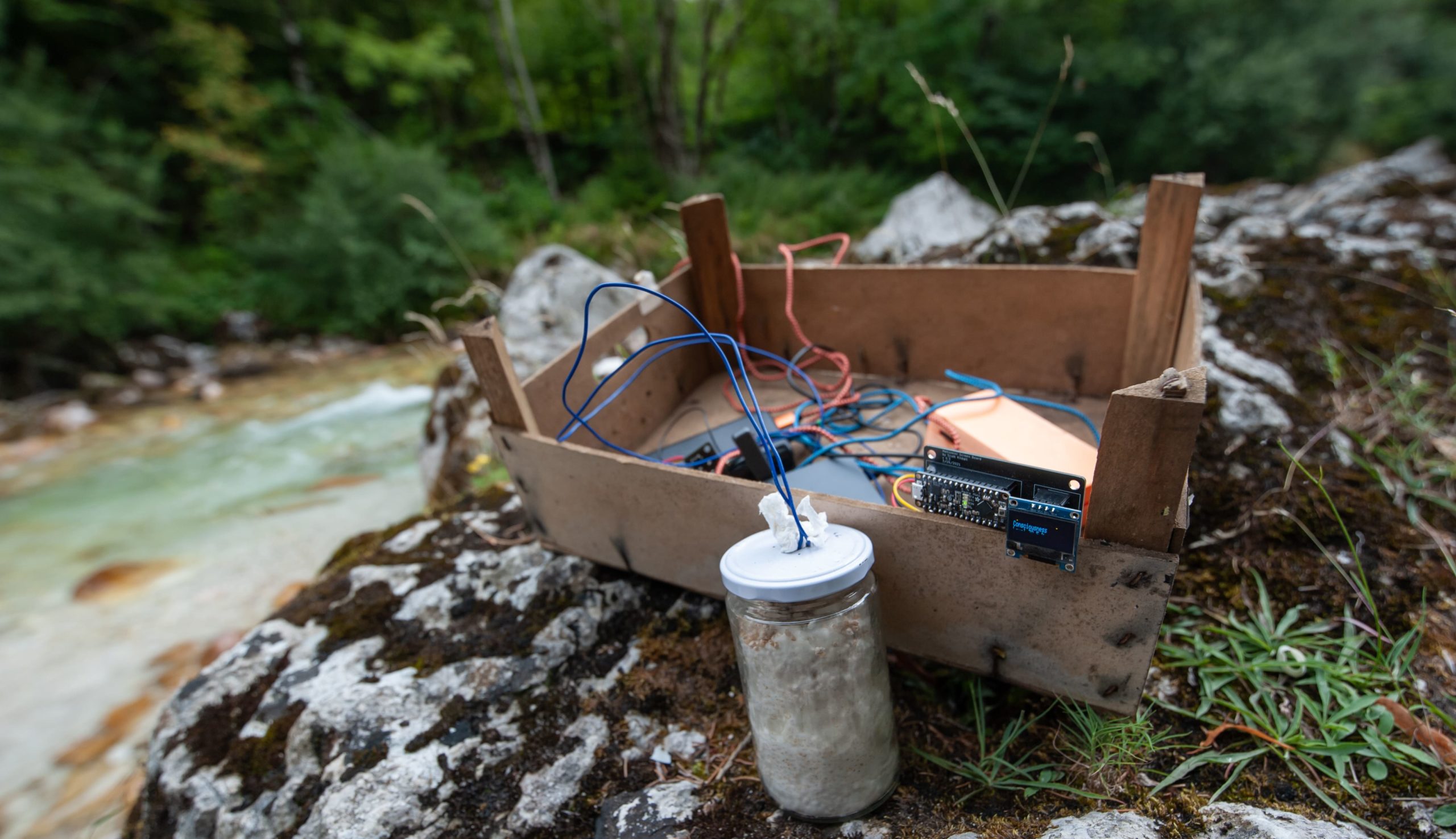
It is hard not to get inspired by the beautiful river of Soča and its surrounding nature, so after a week of hard work, some of the participants decided to install theirs on the riverbanks (and in the stream), and invite everyone for a walk down to the river. Vivian and David planted their watermill for generating electricity from the river and converting signals into sound. Upstream, Seamus installed his orchestra (made up of a mycelium conductor and plants/water/lichen musicians) with various sensors and speakers placed on debris from a building site near PIFcamp, which translates sensory data and signals into glitchy synth music to evoke nature’s distress. 

Seamus aka Scott Kildall puts his orchestra on display. Photo: Simão Bessa

Part 2: Raining cats and dogs (and T-shirts)

The PIF Lake. Photo: Simão Bessa

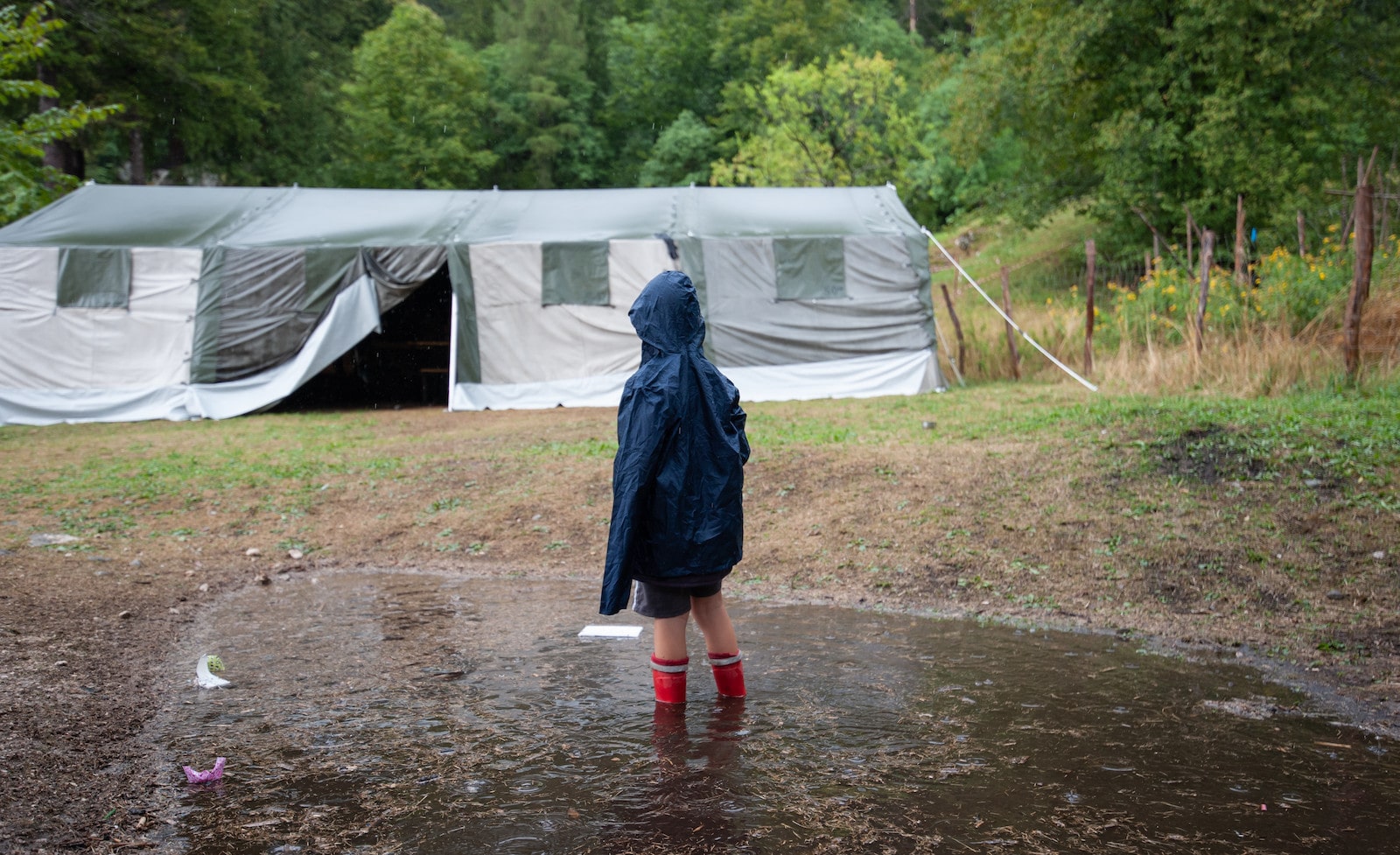
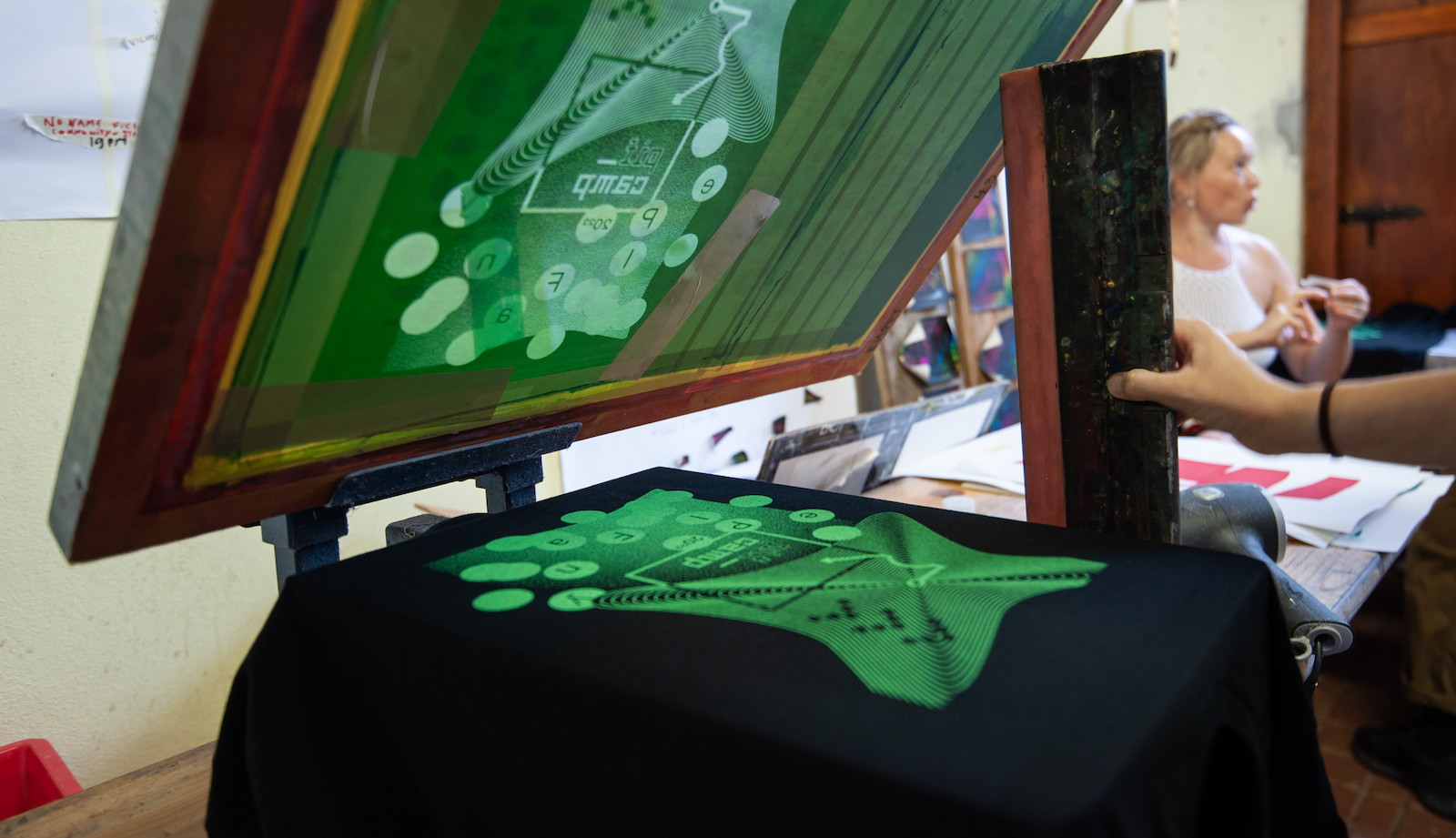
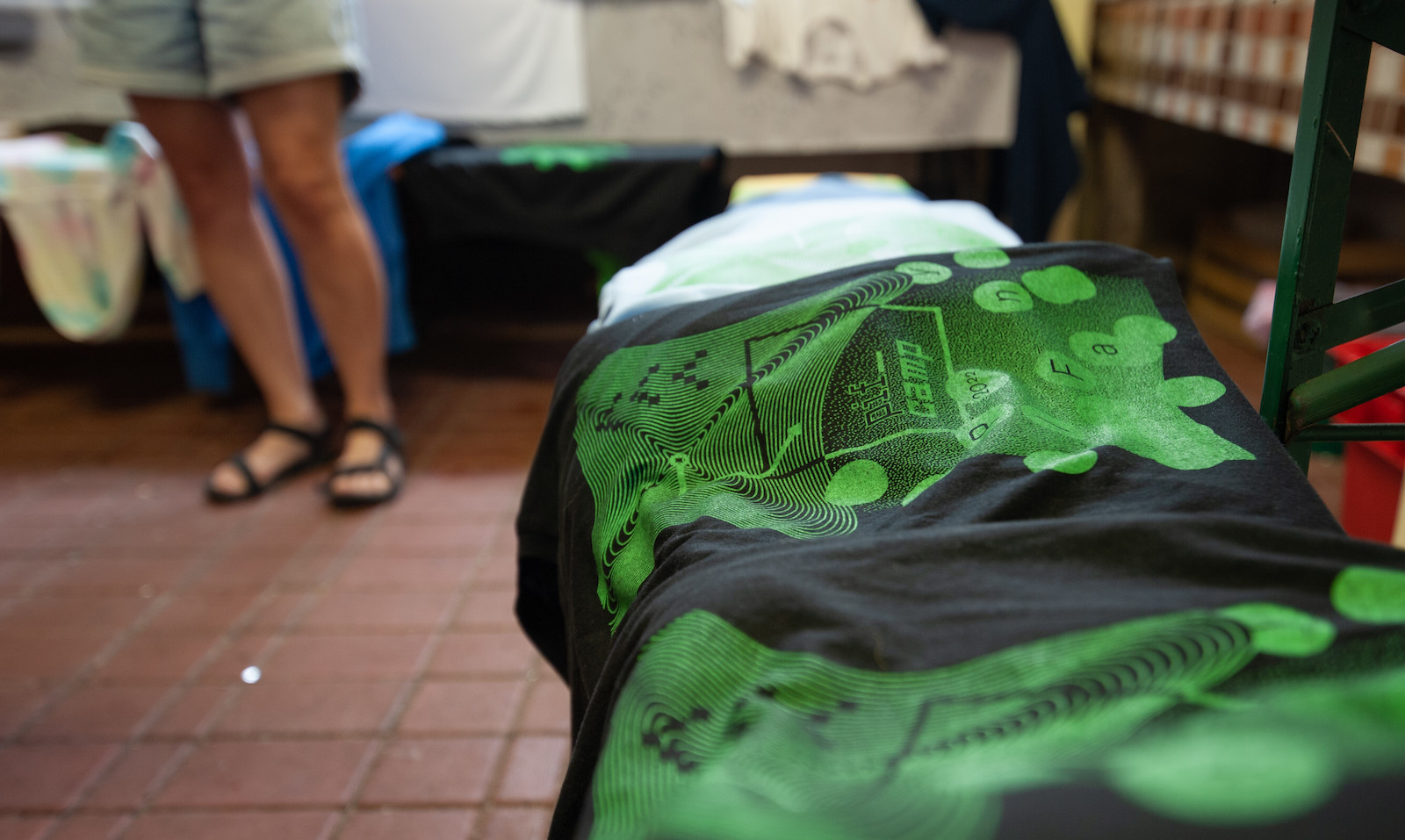
Riverside activities had to be wrapped up quickly as the rain started to pour… While the youngest enjoyed themselves in the newly formed lake, Urška was hard at work screenprinting approximately a hundred T-shirts with this years’ PIFcamp motifs.   

Part 3: Mains hum ePIFany and other community activities

All hail the 50 Hz! Photo: Simão Bessa

After the rain stopped, PIFparticipants continued with presentations of their projects, formed a 50 Hz cult, and engaged in a community broadcast. We figure this is as good as any spot to thank the amazing PIFcamp kitchen crew for their weeklong service, crowned by the Saturday’s banquet. Thank you!

Part 4: Dance the PIF away

Our incredible video team set the tone for last night at PIFcamp with the world’s premiere of two short video documentaries (ISOLABS and Live coding) made from scratch during the past 6 days. After a quick change of the tent’s function from a cinema to a concert venue, the crowd enjoyed Bernhard’s and Mitja’s performances accompanied by Aljoša’s visuals, and was thus well prepared for a night of clubbing. Under the canopy, a wonderful lineup of live coders programmed their dance steps at the (probably world’s first) terrace algorave, followed by Blažen DJ’s blissfully eclectic mix. And so, we danced the PIFcamp goodbye. Until next year!

Friday or “The calm before the storm” (of emotions) //PIFlog, Day 6

Thursday took its toll, at least on the most persistent ravers and the drink supplies. The PIFlogger didn’t spare any energy either, so she’s using visual materials to help her gather her impressions today. So what did Friday looks like at PIFcamp? Friday is the day when PIFers have one last time to try out new approaches, wrap up their projects (and side-projects) or come to terms with a (non)working prototype and get ready for Open Saturday, which was back on the schedule after another round of negative tests. But first, it’s time for the mandatory! hike and a close encounter with the freezing Soca (this year’s river temperature is a noticeably lower 12 degrees).

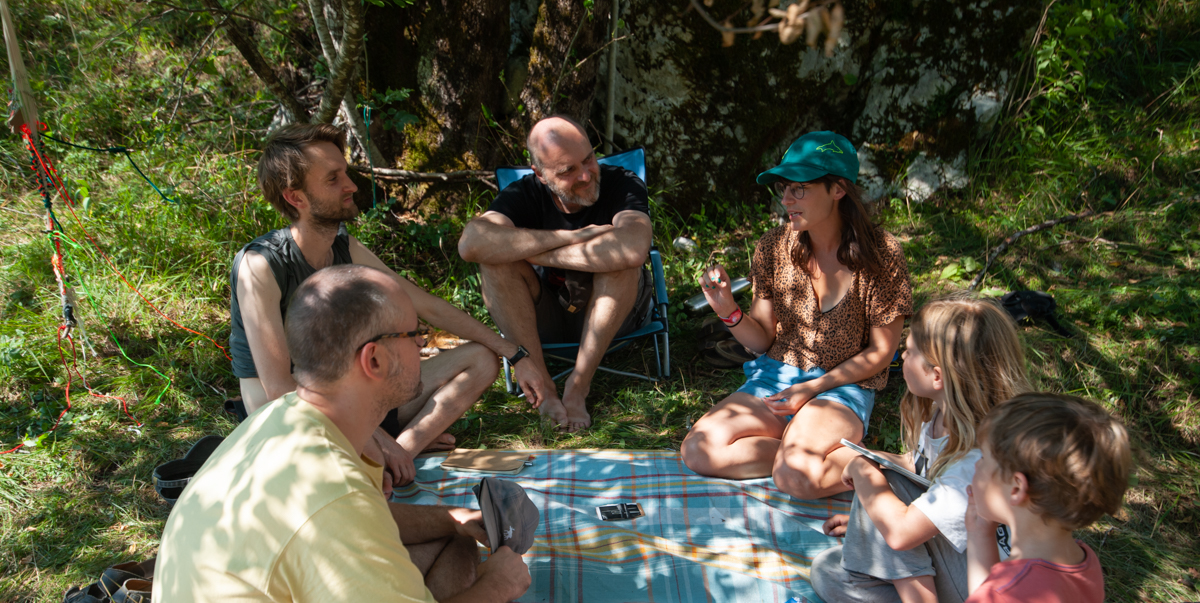
Swimming in the Soča is one of the best ways to reset, so most participants managed to get back to their normal rhythm after lunch. For those who wanted to take it easy while developing their handcraft skills, Becca and Margo’s animal embroidery workshop was a perfect choice.

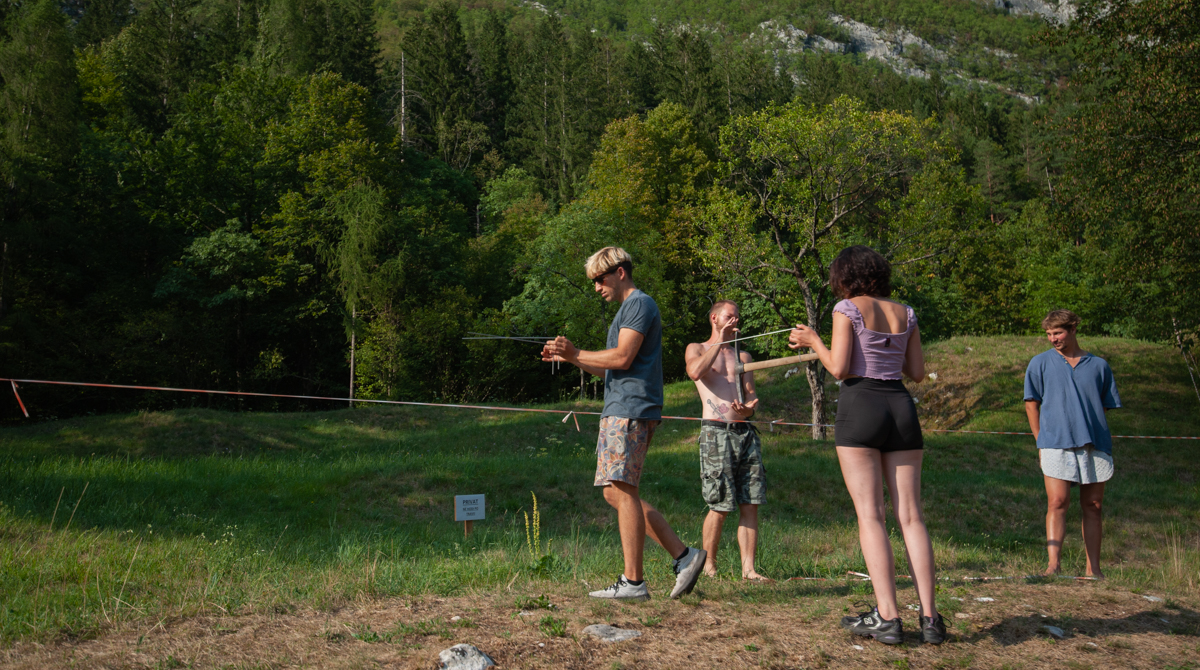
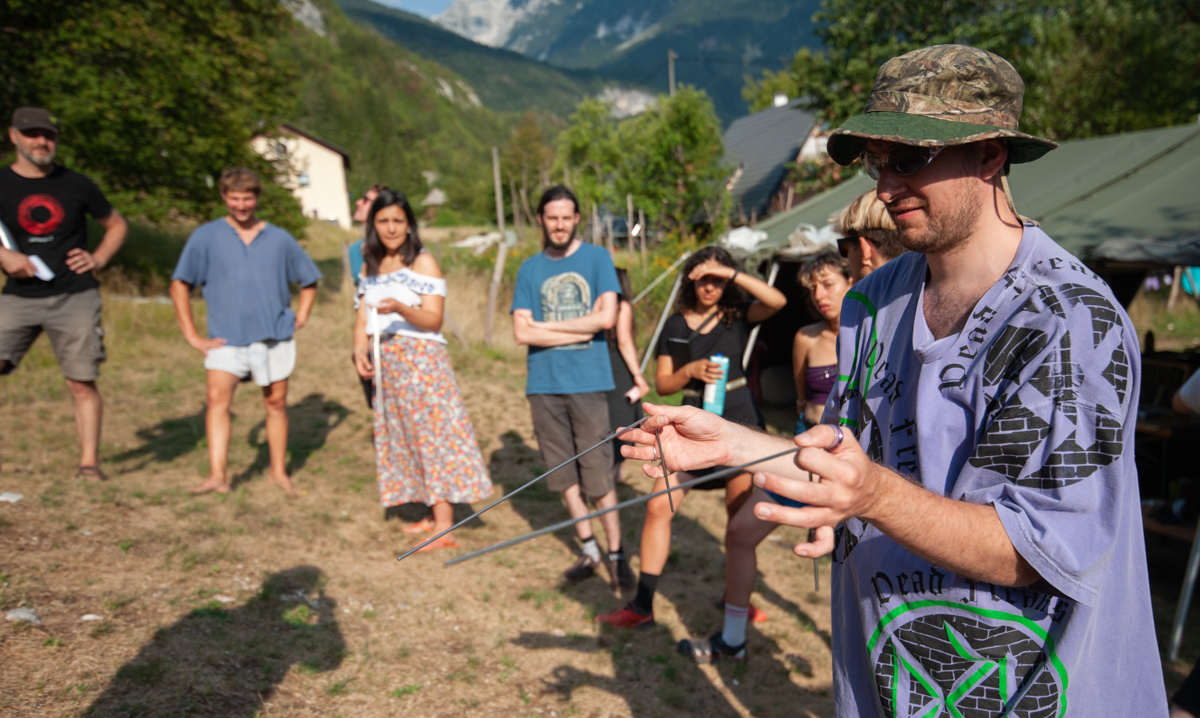
“Follow the cable” could be the guiding principle of the next activity organised by Simon, a member of the Octosens team, who invited participants to explore the underground installations around PIFcamp with dowsing rods. Judging by the happy expressions on their faces, one could dare to say that you make a PIF person happy in an instant if you put a piece of metal in their hands.

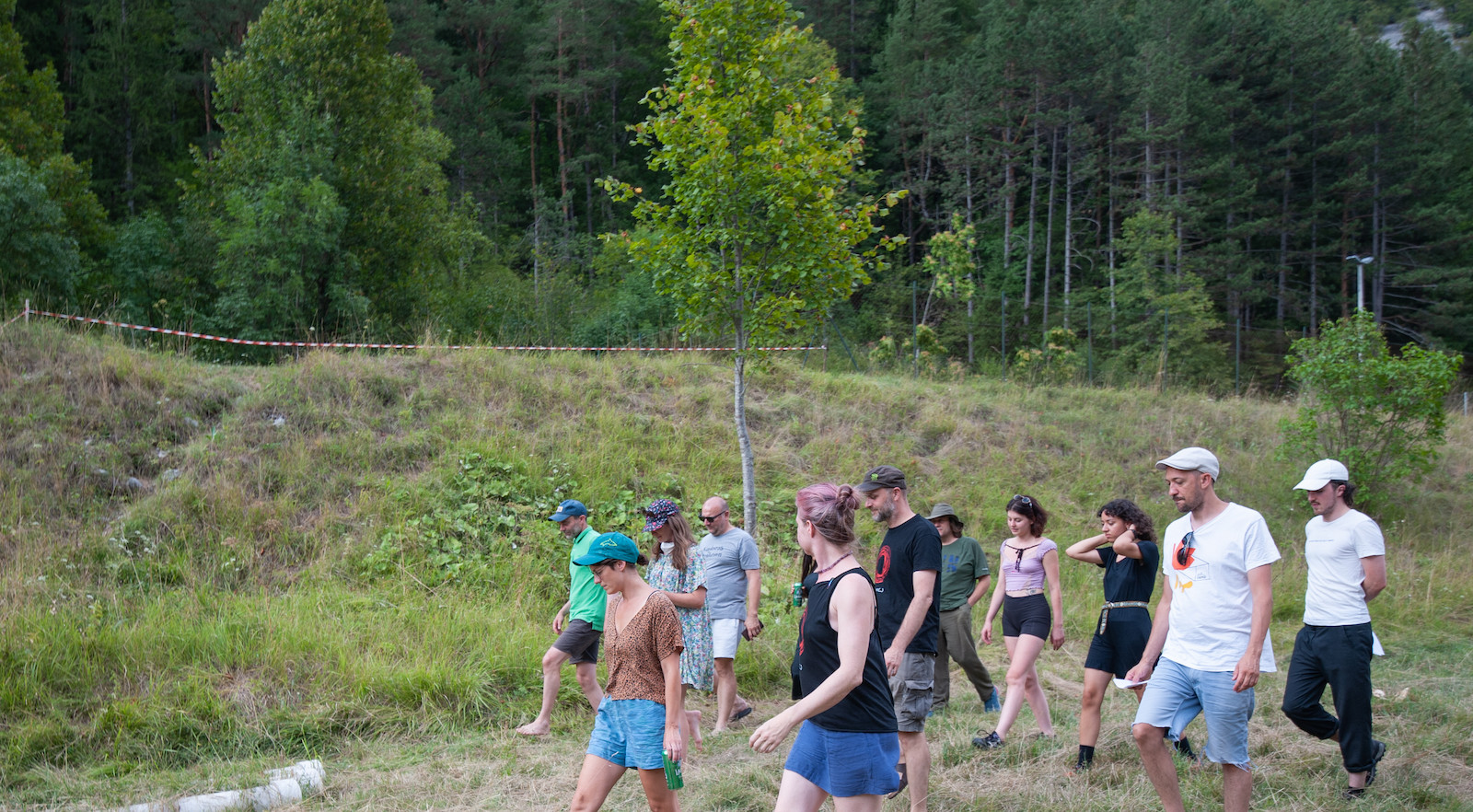
Shortly afterward, Theun invited the participants to a unique mix of exploring the surroundings of PIFcamp and a walk through the history of record-keeping. During the workshop, the participants learned how people have stored memories and knowledge, inscribed them in the landscape as we walked, and thus passed them on from one generation to the next.

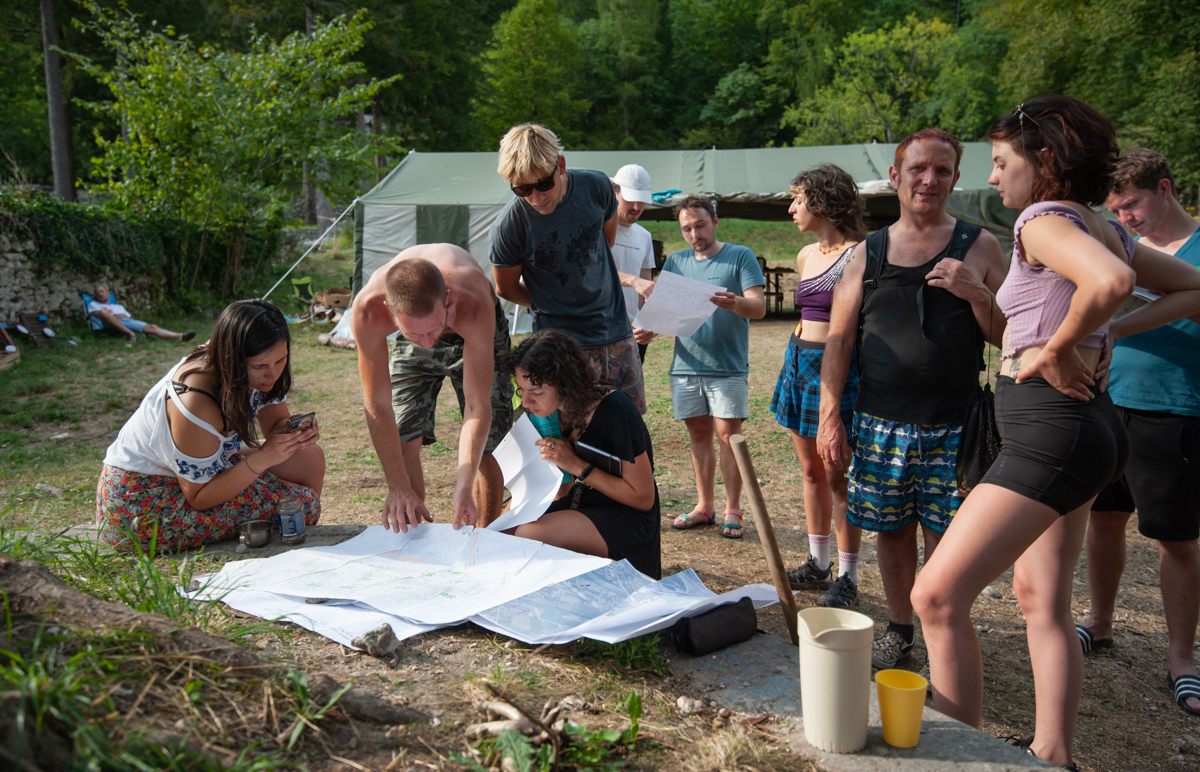
After dinner, all cam took time to reflect and talk about recent events/processes, and to plan for the Open Saturday. How did the work on the PIFprojects go? How many side-projects did the PIFers create? Are prototypes working? What will we present to the visitors of Open Saturday and how will we pack more than 30 different projects into one afternoon? Difficult questions, but not at all unsolvable for PIFers. The programme took shape smoothly and seamlessly, while we found solutions to technical, conceptual and nutritional mysteries and relaxed into the relaxed rhythm of Friday night.

According to the PIF criteria, calm does not mean idleness, just a slightly lower volume of activity. Polona organized the traditional tarot game under the tent (finally!), and Bernhard and Katja – our PIFlog writer, learned about Bernhards laser and modular systems (she mentioned it was inspiring!) and experimented with visualizations projected on the tree. Meanwhile, a group of both new and die-hard live coding enthusiasts had gathered behind us, brought together by Julien. This time it was the turn of the Foxdot environment in combination with Troop, a tool that allows the connection of multiple coders and thus one of the most important PIFthings, the jam. The PIFcamp started to empty soon after, and the participants had to recharge their batteries before Saturday’s event. Good night!

Synths, lichens and Auto-Tune. Wednesday at PIFcamp //PIFlog, Day 4

Alicia Champlin provided a meditative introduction to Wednesday, inviting the participants to a cymbal sound bath. According to Thomas, who was briefly interviewed before lunch about his experience of the fourth day of PIFcamp, Alicia completely hypnotized the group. Afterwards, the visitors lay down in a meditative state, which our interviewer describes as a wonderful, long echo.

After the camp had settled down, the 10 active participants gathered for Ludwig’s workshop on how to make preamplifiers from old vacuum tubes originally designed for use in car radios. Thomas particularly liked the pace of the workshop, with participants soldering in harmony, moving between the stages of fabrication together, and even running into a problem together at the end. But of course, in the end, they also worked together and solve it!

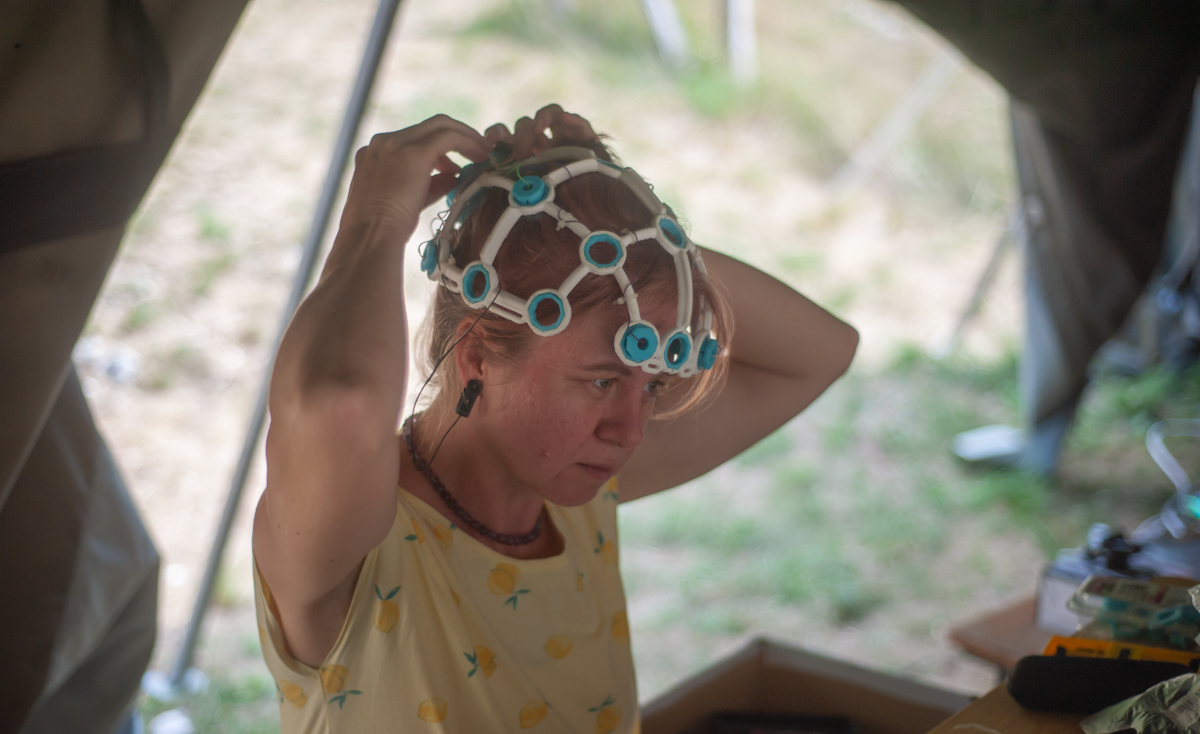
And than we moved back under the tent, where Alicia presented her brain rhythm synthesiser. She first demonstrated the sensor and the user interface that visualizes the frequencies of the brain rhythms and then presented the sonification software for the different classes of waves. As the headband sensor is entirely based on open source solutions and she wrote the program in MaxMSP, she set herself the goal of writing the program in the Pure Data environment at PIFcamp. If she succeeds, we will be able to hear the result on the eight-channel PA system in Blaž’s ambisonic dome! Hopefully soon!

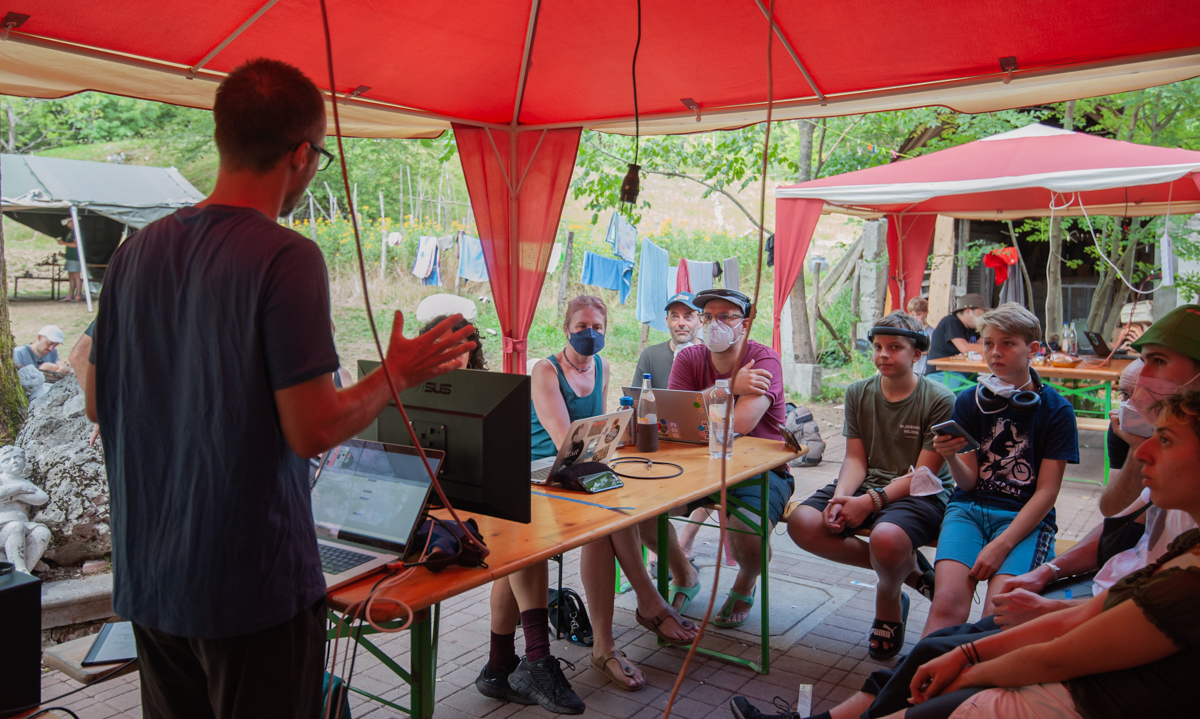
After lunch, August set up a collaborative radio station under the roof. He presented Mezcal, a browser-based tool he developed to diversify broadcasting and sound art practices, to provide alternative modes of communication for social movements and to create a new kind of technology for journalistic reporting. Roger also attended the workshop and was most impressed by August’s approach to collaborative broadcasting, which he sees as a communal sound composition. Participants also learned the principle in practice – they were divided into pairs and assigned an adjective that served as a cue for a sound improvisation. Roger and Thuen paired up to sound out the concept of health. The workshop was broadcast live by August on Mezcal and can still be heard there.

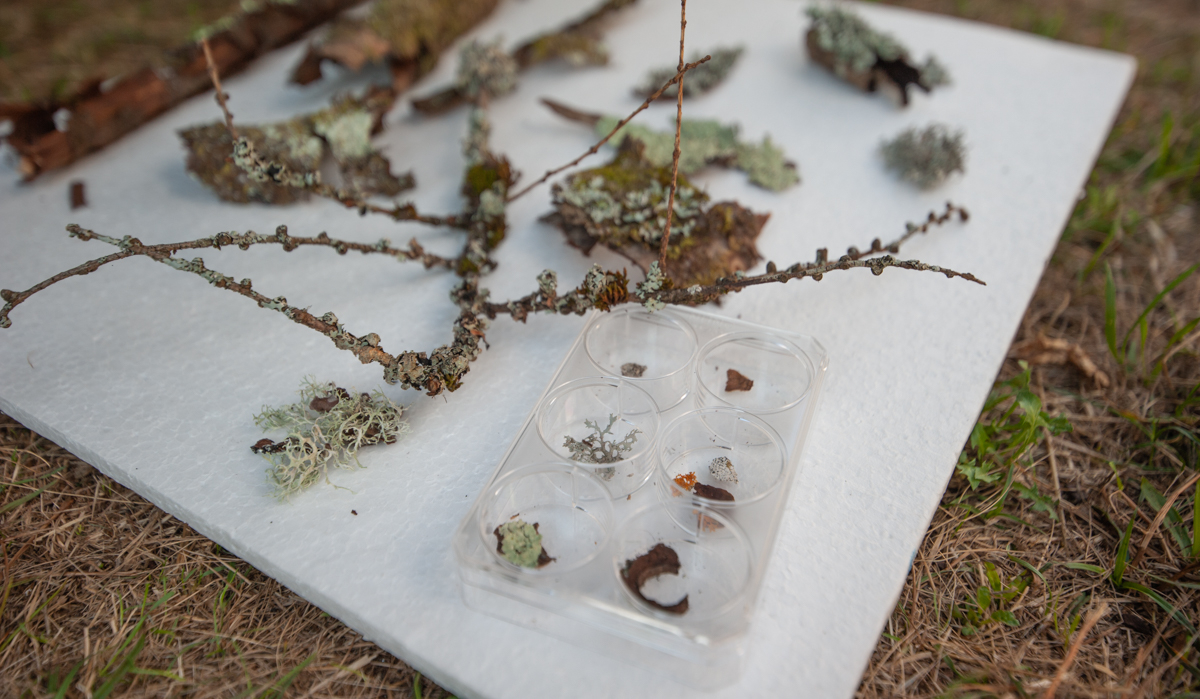
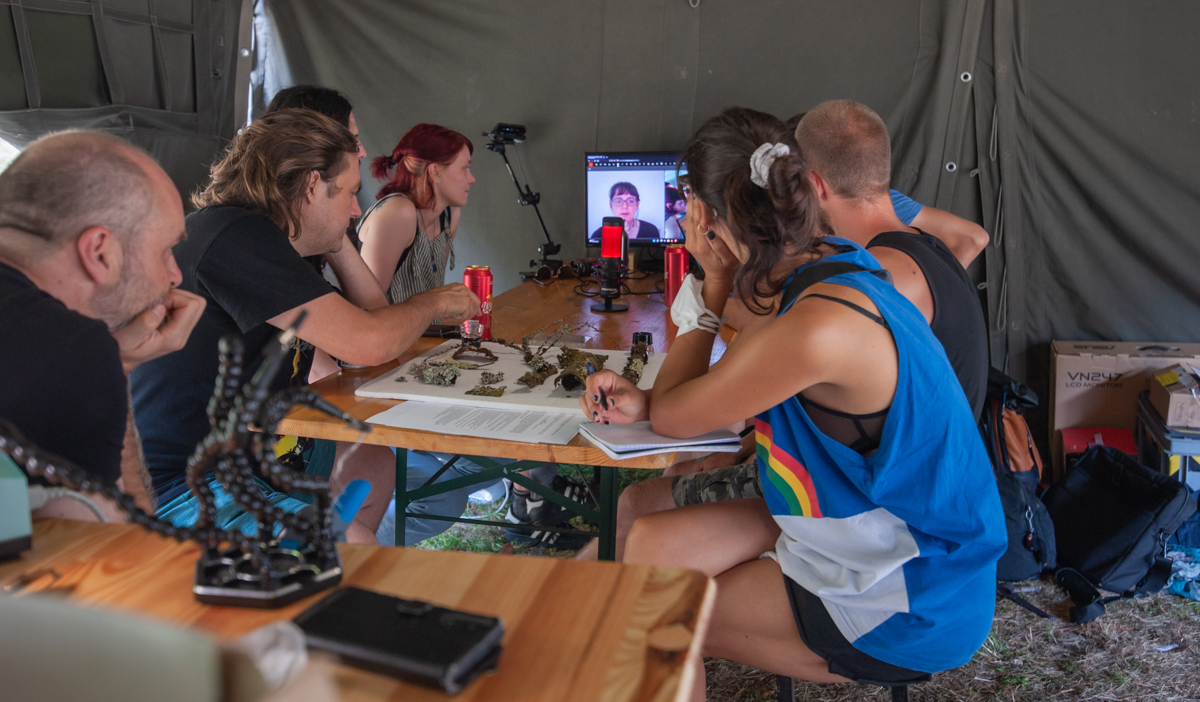
Meanwhile, artist Adriana Knouf joined us remotely via the web, from her residency in Copenhagen to present her artistic research project Foxes and Deeper Time. We talked to Eva and Nastja, two members of a team working on a prototype lichen observation system, about the event and the project itself. Adriana is a transgender artist who often focuses on space-related themes in her artwork. This offers her an escape from the sense of alienation that has been with her since childhood. Her current project links space travel with lichens, organisms that can survive in a vacuum.

Adriana is developing a spacecraft for transporting lichens and is also researching the organisms, which have rarely been the subject of scientific research. The second major part of the project is the construction of a portable observatory, consisting of various sensors for organic functions and a camera. As Nastja points out, lichens grow extremely slowly – only one to two millimeters per year – so they need to build a robust device to observe and send data to the cloud. Eva also tells us that the team has carried out two expeditions to collect lichen samples along the Soča River for the lichen archive they are preparing as part of Adriana’s multi-year project.

Before dinner, Marko Peljhan gave a comprehensive report on the recent large-scale fires in the Karst, which was listened to by a large group of PIFcampers. Marko’s company C-astral, which manufactures small unmanned aircraft systems, responded to a request from civil protection for help in mapping the fire. In just three days, they mapped some 4,500 hectares, and the images clearly show the aftermath of the devastating fire. Marko spiced up the otherwise serious subject with a number of anecdotes to entertain the gathered audience.

For the last report of the day, we returned to Thomas, who (admirable dedication! – after attending all the workshops that day) also visited Václav Peloušek‘s Auto-Tune workshop to round off the day. Václav’s excellent blend of instruction and personal experience was reinforced by numerous examples of compositions, and by presenting the history of this sometimes hated function, he showed that it can be used in so many ways that can actually add to the sound. Finally, participants tried their hand at Auto-Tune karaoke with a device that Václav launched in 2019 at PIFcamp. Fun for performers and the audience was guaranteed!

After the screening of the documentary Sisters with Transistors, most of the participants slowly went to rest, while a group of synth enthusiasts organised the opening jam session. Thursday’s event was even more varied, so you will read about it as soon as we finish processing all the impressions (short announcement: drones, lasers, synths, jam sessions, more jam sessions, breakfast rave). Don’t miss it!